

In 2026, an accurate way to think about galvanized steel sheet price is this: there is no single “market price” that fits every buyer, because the final number is driven by base steel cost, zinc coating mass, specification (ASTM, EN, JIS), thickness and width, surface condition, order volume, and the logistics and trade environment. Still, buyers can benchmark confidently: commercial hot dip galvanized (GI) sheet typically trades in the broad band of USD 650 to 1,400 per metric ton depending on region and spec, with export capable supply from China usually sitting in the lower part of the global range when specifications and risk are controlled. The practical conclusion is simple: the lowest quote rarely produces the lowest total cost, while a clearly written specification and a supplier with stable process control (such as MWalloys) usually reduces rework, claims, and schedule risk, which matters more than a small difference in ex works pricing.
What is “galvanized steel sheet” in pricing terms, and what exactly is being quoted?
A price request often says “galvanized steel sheet” but the seller must convert that phrase into a precise product definition. In practice, “galvanized sheet” can mean any of these:
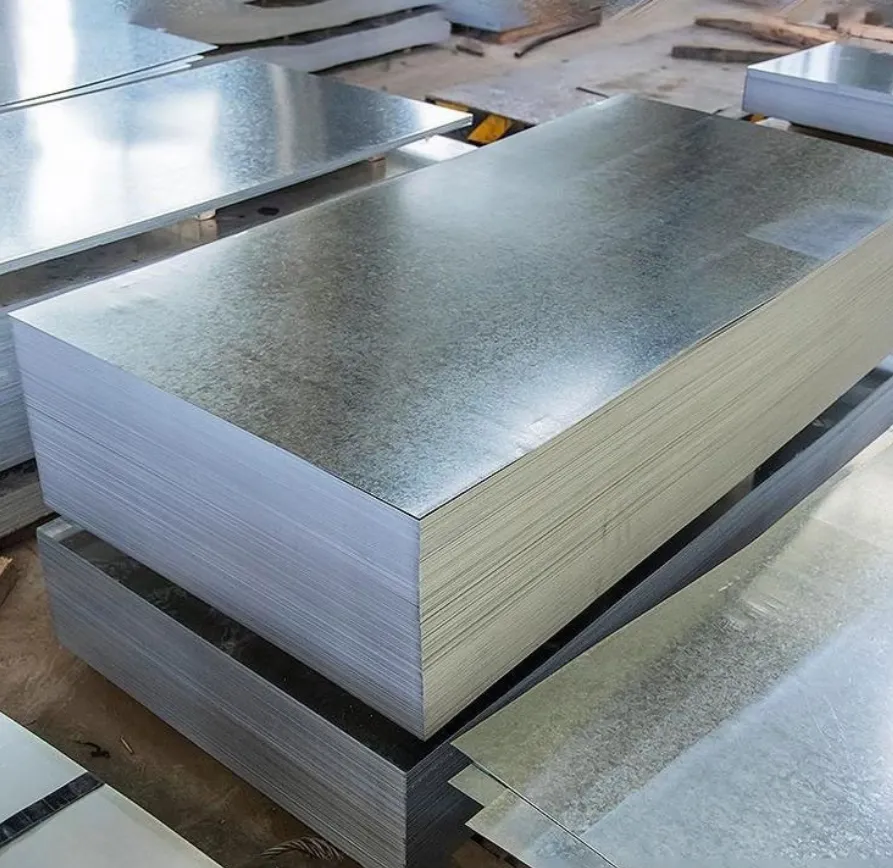
- Hot dip galvanized steel (HDG, GI): steel strip passes through a molten zinc bath, producing a metallurgical bond and a zinc coating. Most construction, ducting, appliance panels, general fabrication uses sit here.
- Electro galvanized (EG): zinc is electrodeposited; coating is usually thinner and smoother. Many automotive inner panels and electronics enclosures use EG.
- Galvannealed (GA): hot dip zinc then heat treated to form a zinc iron alloy layer; paint adhesion improves, surface becomes matte.
- Aluminum zinc coated (often called GL, Aluzinc, Galvalume type): not pure zinc; different corrosion behavior; pricing drivers differ because alloy composition and licensing vary by region.
What a supplier may quote (and why quotes look inconsistent)
Two quotes can look far apart while both remain “correct” because they may use different scopes:
- Ex works (EXW) mill: you pick up at the factory gate.
- FOB port: seller delivers to port and clears export.
- CFR/CIF: seller arranges ocean freight (insurance included in CIF).
- DDP: delivered duty paid; rare in bulk steel because trade compliance becomes complex.
A serious comparison requires the same Incoterm, the same standard, the same coating, and the same tolerance class.
What is the current market range of GI sheet pricing in 2026?
No public table can reflect daily negotiations, yet procurement teams still need a sensible benchmark. The ranges below are indicative bands used by many buyers to sanity check offers in 2026. They reflect typical commercial quality GI, common coating weights, and normal lot sizes. Specialty grades, tight tolerances, or small orders can sit outside these bands.
Table 1. Indicative 2026 GI sheet and coil price ranges (USD per metric ton)
| Region / Supply mode | Typical product assumption | Price band (USD/MT) | Notes that often explain outliers |
|---|---|---|---|
| China domestic / export capable mills (EXW/FOB varies) | DX51D or SGCC, Z60 to Z180, 0.4 to 1.5 mm | 650 to 920 | Coating mass, width, payment terms, plus trade remedies in destination market |
| India domestic | IS 277 or equivalent, common building grades | 750 to 1,050 | Domestic demand swings and zinc cost pass through can be fast |
| United States domestic | ASTM A653 CS, G60 to G90, ASTM tolerances | 1,000 to 1,400 | Higher conversion, labor, energy; trade protections change import parity |
| EU domestic (reference only) | EN 10346 DX51D, Z100 to Z275 | 900 to 1,300 | Carbon costs and energy pricing can dominate conversion cost |
How to use this table correctly: use it to detect quotes that are unrealistic (risk of quality problems or hidden scope) and to spot quotes that include extra services (slitting, cut to length, special surface, certification packages).
Which technical variables change a quotation the most?
Engineers often view galvanized sheet in terms of “thickness and coating.” Procurement sees “price per ton.” The mill sees a full set of parameters that decide yield, zinc consumption, line speed, and claim risk. Those parameters translate directly into money.
Base steel and substrate route: why CR based GI is not equal to HR based GI
GI substrate usually starts from:
- Cold rolled (CR) full hard then annealed: better surface and thickness control.
- Hot rolled pickled and oiled (HR P&O): possible on some lines, typically thicker and less surface critical.
Key cost drivers:
- Hot rolled coil (HRC) index and cold rolled premium. When CR demand is tight, GI price rises even if zinc stays flat.
- Yield loss from trimming and surface defects. Higher surface class usually means more scrap and slower line speed.
Zinc coating mass and coating type: the most obvious cost lever
Coating mass is specified in:
- g/m² total both sides in EN 10346 and many export contracts (Z100, Z180, Z275).
- oz/ft² total both sides in ASTM A653 (G60, G90).
More zinc means more corrosion protection and more cost. Yet the relationship is not perfectly linear because coating control, dross management, and wiping stability affect efficiency.
Table 2. Typical coating designations and what they mean
| Standard style | Designation | Approx. total coating mass | Typical use cases |
|---|---|---|---|
| EN / ISO style | Z100 | 100 g/m² | Indoor fabrication, light duty panels |
| EN / ISO style | Z180 | 180 g/m² | HVAC, general outdoor components |
| EN / ISO style | Z275 | 275 g/m² | Roofing, cladding, rural outdoor exposure |
| ASTM style | G60 | ~0.60 oz/ft² | Many building products, moderate exposure |
| ASTM style | G90 | ~0.90 oz/ft² | Common in North America roofing and exterior |
Procurement caution: do not accept “Z275 equivalent” without test evidence. True equivalency requires coating mass measurement and a matched tolerance basis.
Thickness, width, length, and tolerances: small changes cause big yield shifts
Pricing is sensitive to:
- Thickness: thin gauges run slower, require tighter flatness control, and can generate more off gauge scrap.
- Width: wider coils reduce trimming waste in some downstream operations, yet can increase mill risk if the galvanizing line has width related stability limits.
- Cut to length vs coil: sheet processing adds labor and yields.
Table 3. Thickness and typical processing impact on price
| Thickness range | Market reality on processing | Usual pricing behavior |
|---|---|---|
| 0.20 to 0.35 mm | Line stability and shape control become difficult | Higher conversion premium, stricter MOQ |
| 0.40 to 0.80 mm | High volume “sweet spot” in many GI lines | Most competitive pricing, many suppliers |
| 0.90 to 1.50 mm | Common structural panels, ducting, general fabrication | Stable, slightly higher zinc consumption per area depends on coating |
| 1.60 to 3.00 mm | Not every GI line can run thick | Fewer producers, premium can appear |
Surface quality, spangle, passivation, oiling: “cosmetic” details with real cost
A frequent buyer mistake is treating surface condition like decoration. In reality it changes rejection rates in stamping, painting, and visible panels.
Common options:
- Regular spangle: visible crystal pattern; often lower cost.
- Minimized spangle: reduced pattern; better appearance consistency.
- Zero spangle: tight control, often demanded by appliances or paint systems.
- Passivation (chromate free typical now): reduces white rust during shipping.
- Oiled: protects in transit; may interfere with some painting steps unless cleaned.
- Dry: cleaner handling, sometimes more white rust risk in humid routes.
Mechanical properties and formability: why “DX51D” and “DX52D” do not price the same
Many standards divide galvanized sheet by:
- Commercial quality: bending and light forming.
- Drawing quality: deeper forming and consistent r values.
- Structural quality: strength driven.
Higher formability often requires cleaner steel chemistry and tighter annealing control. Higher strength grades may need alloying and precise cooling. Both can raise cost and lead time.
How do China, India, and the United States prices compare right now?
International comparisons are popular because buyers want a quick answer: “Which country is cheapest?” The accurate answer: the country with the lowest ex works price is not always the lowest landed cost, and trade duties can erase any mill advantage.
Table 4. Country comparison snapshot (indicative, 2026)
| Country | Typical strengths | Typical risks | Where pricing often lands (USD/MT) |
|---|---|---|---|
| China | Large capacity, broad thickness range, competitive export logistics, deep supplier ecosystem | Quality dispersion between mills, documentation consistency varies by seller, trade remedies in some markets | 650 to 920 (EXW/FOB scope dependent) |
| India | Strong regional supply, growing coated capacity, good fit in South Asia, Middle East routes | Domestic demand can tighten quickly, coating consistency varies by mill | 750 to 1,050 |
| USA | Stable standards environment, short inland lead time if domestic, strong certification practices | High base price, limited import windows in tight markets | 1,000 to 1,400 |
What procurement teams should compare, not only the quote number
When comparing offers across countries, ensure these items match:
- Standard and revision year: ASTM A653, EN 10346, JIS G3302, IS 277.
- Coating mass: Z180 vs Z275, G60 vs G90.
- Surface: regular spangle vs minimized vs zero, plus passivation.
- Tolerances: thickness and width classes.
- Inspection and claims: third party inspection acceptance, claim window, evidence method.
- Incoterm scope: port charges, documentation, demurrage responsibility.
What are common sizes and grades, and how do they map to typical costs?
Buyers often ask two practical questions:
- “What thickness and width should I choose so I am not paying a premium?”
- “Which grade is the baseline in the market?”
Common GI standards and their baseline commercial grades
- EN 10346: DX51D (commercial), DX52D (drawing), S220GD to S350GD (structural).
- JIS G3302: SGCC (commercial), SGCH (structural).
- ASTM A653/A653M: CS Type B (commercial), FS, SS; plus coating designations G30 to G235.
- IS 277: common in Indian markets.
Table 5. Typical grades and where they sit in procurement reality
| Standard | Common grade | Typical selection reason | Usual cost position |
|---|---|---|---|
| EN 10346 | DX51D +Z | General fabrication, roofing base metal | Baseline |
| EN 10346 | DX52D +Z | Better forming, fewer cracks on bends | Slight premium |
| JIS G3302 | SGCC | Broad availability in Asia | Baseline |
| JIS G3302 | SGCH | Higher strength sections | Premium depends on thickness |
| ASTM A653 | CS Type B | North American baseline | Baseline in US context |
| ASTM A653 | SS Grade 50 | Higher strength | Premium; not every exporter carries |
Common sizes buyers ask about
Most traded GI is supplied in coil, then slit or cut to length.
- Thickness often requested: 0.25, 0.30, 0.35, 0.40, 0.45, 0.50, 0.60, 0.70, 0.80, 1.00, 1.20, 1.50 mm.
- Width often requested: 600, 914, 1000, 1219, 1250 mm.
- Length in sheets: 2000, 2440, 2500, 3000 mm.
Table 6. Indicative price differences by common specification packages (USD/MT adders, illustrative)
| Item relative to baseline commercial GI | Typical adder logic | Indicative adder (USD/MT) |
|---|---|---|
| Upgrade Z100 to Z180 | Higher zinc mass and coating control | +30 to +80 |
| Upgrade Z180 to Z275 | More zinc and tighter wiping stability | +40 to +110 |
| Zero spangle request | Process control, sometimes yield loss | +10 to +40 |
| Tight thickness tolerance class | Lower yield, more inspection | +15 to +60 |
| Cut to length sheets | Added processing, stacking, protection | +25 to +90 |
| Small lot under MOQ | Setup cost spread across fewer tons | +30 to +150 |
Numbers above vary by region, order size, and mill capability. The point is the structure: each “small” requirement has a cost mechanism.
How has galvanized sheet pricing moved in the last five years?
Steel pricing is cyclical. Any “best price” claim that ignores cycle position tends to fail within a quarter. A useful view is the approximate annual average, then the drivers behind changes: HRC, zinc, energy, and shipping.
Table 7. Indicative global export oriented GI annual averages (FOB style, USD/MT)
These values are representative benchmarks used in budgeting. They are not a substitute for a live quotation.
| Year | Indicative average (USD/MT) | What dominated the year |
|---|---|---|
| 2021 | 950 | Post pandemic rebound, supply disruptions, strong construction demand |
| 2022 | 1,050 | Energy shock, logistics constraints, high volatility |
| 2023 | 820 | Demand cooling, inventory correction, freight normalization |
| 2024 | 780 | More balanced supply, price competition in exports |
| 2025 | 830 | Stabilization with periodic zinc and energy spikes |
What buyers should learn from the five year pattern
- GI tracks HRC strongly, with a coating and conversion premium.
- Zinc matters most when zinc prices move sharply, yet base steel still dominates the absolute number.
- Freight can flip the ranking between countries, especially on smaller shipments.
What forces drive price swings, and why do spikes happen suddenly?
A procurement team usually sees a price chart. A mill sees constraints. The “why” sits in a small set of levers.
Raw materials: steel substrate and zinc move differently
- Hot rolled coil and cold rolled coil respond to iron ore, coking coal, scrap, capacity utilization, and regional demand.
- Zinc responds to mining output, smelter treatment charges, energy availability, and inventory in major exchanges.
When both rise together, GI pricing jumps fast.
Conversion cost: energy, labor, environmental compliance
Galvanizing lines use:
- Electricity and gas in annealing and pot heating.
- Consumables such as wiping gas, chemicals, rolls.
- Maintenance and downtime.
Regions with high energy costs usually show a structurally higher GI conversion premium.
Trade policy: duties and “effective price” in destination markets
Even a competitive FOB quote can become unworkable after:
- Anti dumping and countervailing duties.
- Safeguards and quotas.
- Local content requirements in construction projects.
- Customs valuation disputes.
Trade policy also changes lead time. When import windows close, domestic pricing gains power.
In some lanes, ocean freight can swing by tens of dollars per ton within weeks. Port congestion and equipment availability can add:
- Demurrage
- Storage
- Documentation delays
- Moisture exposure risk in humid ports.
What will pricing look like next, and what scenarios should procurement plan around?
Forecasting steel pricing is never precise, yet procurement still needs a plan. The cleanest approach is scenario planning tied to observable drivers: HRC trend, zinc trend, construction demand, energy costs, and trade actions.
Table 8. 12 to 24 month GI sheet price scenarios (budgeting bands, USD/MT)
| Scenario | Assumptions | Likely pricing direction |
|---|---|---|
| Base case | Stable construction demand, modest zinc movement, freight steady | Sideways with moderate swings |
| Upside inflation | Energy rises, zinc rises, supply disruptions | Higher, spikes possible |
| Downside | Demand softens, mills compete on exports, freight stays low | Gradual easing, but floor supported by conversion cost |
| Policy shock | New duties, quotas, sudden compliance action | Destination market price rises even if FOB stays flat |
Practical buying tactics that reduce regret
- Use indexed pricing on longer contracts when both parties accept transparency.
- Split volumes: a portion fixed, a portion floating tied to an index.
- Avoid overbuying during panic. High inventory becomes expensive quickly when the cycle turns.
- Qualify at least two mills with matching spec capability.
How should engineers write specifications so procurement buys the right coil or sheet?
Many claims disputes come from a weak specification rather than a “bad batch.” A strong spec is short, precise, and testable.
A specification checklist engineers can hand to procurement
- Standard and grade: EN 10346 DX51D, or ASTM A653 CS Type B, etc.
- Coating designation: Z180, Z275, G60, G90.
- Thickness, width, length: include tolerances and measurement method.
- Surface: regular spangle, minimized, zero spangle. State if surface is exposed in final product.
- Surface treatment: passivated, oiled, dry, anti fingerprint.
- Mechanical requirements: yield strength, tensile strength, elongation, bend test if needed.
- Coil details: inner diameter, outer diameter limit, coil weight range, camber, telescoping limits.
- Testing and documentation: mill test certificate (MTC), heat number traceability, third party inspection if needed.
- Packaging: seaworthy packing, edge protector, VCI paper, pallet type, moisture barrier.
- Intended downstream process: stamping, roll forming, welding, painting. This helps the mill pick the best process window.
Why “equivalent grade accepted” needs guardrails
Equivalency can work, yet only if you define:
- Which standard is acceptable
- Which properties must match
- Which tests prove compliance
- What happens if results sit close to limits
Without that, “equivalent” becomes a loophole.
The procurement number that matters is not the mill quote. It is landed cost per usable ton, including yield loss and financing.
The common cost stack
- Mill price (EXW, FOB, etc.)
- Inland trucking to port
- Port handling and documentation
- Ocean freight and insurance
- Import duties and customs fees
- Inland delivery at destination
- Banking charges, LC fees, financing cost
- Quality risk cost: claims, downtime, rework
- Yield loss: trimming, off gauge, surface defects
Table 9. Example landed cost worksheet (illustrative only)
| Line item | Example value | Comment |
|---|---|---|
| FOB price | 780 USD/MT | Supplier quotation scope defined |
| Ocean freight | 55 USD/MT | Lane dependent |
| Insurance and docs | 6 USD/MT | CIF style adders vary |
| Destination port and handling | 18 USD/MT | Terminal charges differ by port |
| Duty and customs | 0 to 250 USD/MT | Highly country specific |
| Inland delivery | 22 USD/MT | Distance and truck availability |
| Banking and financing | 8 USD/MT | LC, interest, fees |
| Estimated quality risk allowance | 10 to 40 USD/MT | Depends on supplier history |
| Estimated landed cost | 899 to 1,179 USD/MT | Range driven mainly by duty and risk |
A buyer comparing China vs domestic supply should compare landed cost plus risk adjusted cost, not FOB alone.
How to think about cost per square meter (or square foot)
Buyers working in roofing and ducting frequently need area based budgeting.
Approximate steel density: 7,850 kg/m³.
- 1.00 mm thickness at 1 m² weighs roughly 7.85 kg.
- If landed cost is 1,000 USD/MT, then 1.00 mm sheet costs about 1.00 USD/kg, so roughly 7.85 USD per m² (excluding cutting waste).
A thicker sheet scales linearly by thickness. Coating mass affects cost per area too.
Why do global buyers select MWalloys (China) when quality and delivery matter?
China has many galvanized suppliers. Buyers do not win by selecting “China” in general. They win by selecting a specific manufacturer and process capability that matches the application.
MWalloys positions its GI sheet supply around three procurement realities: spec clarity, repeatability, and export discipline.
Manufacturing and quality control practices buyers should demand
A competent export supplier should be able to provide:
- Standard compliant production: EN 10346, ASTM A653, JIS G3302 common packages
- Coating mass control evidence: regular checks, coating mass reports
- Mechanical test reports tied to coil ID and heat number
- Surface inspection records and agreed acceptance criteria
- Stable packaging suitable for humid ocean routes
MWalloys supports typical buyer requirements:
- Commercial GI and drawing quality in common gauges
- Coating options from light to heavy, aligned to Z and G designations
- Surface options including minimized spangle and passivation systems common in export business
- Documentation sets that reduce customs friction: invoice, packing list, MTC, certificate of origin when needed
What “value” looks like beyond a low number
Buyers often save more money through:
- Lower rejection rates in roll forming and stamping
- Fewer paint defects tied to oil or surface condition mismatch
- Reduced white rust incidents due to correct passivation and moisture barrier packing
- Predictable lead time and shipment discipline
A practical supplier evaluation scorecard (simple, effective)
Table 10. Supplier scorecard template (weighting example)
| Category | What to check | Weight |
|---|---|---|
| Specification compliance | Standard, coating mass, tolerances | 30% |
| Process control evidence | Test frequency, traceability, records | 20% |
| Export capability | Packaging, documentation, port experience | 15% |
| Claims handling | Response time, replacement policy, proof method | 15% |
| Price competitiveness | Quote stability, transparency | 10% |
| Delivery performance | On time history, realistic lead times | 10% |
MWalloys typically wins when buyers apply this type of scorecard rather than choosing on headline pricing alone.
FAQs
What is the average price of galvanized steel sheet per ton in 2026?
Why do two suppliers quote wildly different numbers on the same inquiry?
In many cases, inquiries are not truly identical. Price differences usually stem from:
- Coating Mass: Z180 vs. Z275 (more zinc equals higher cost).
- Tolerance Class: Tighter precision requirements.
- Incoterms: FOB vs. DDP (Logistics costs).
- Inspection: Scope of third-party testing.
Which matters more to price: steel substrate or zinc?
Is Z275 always better than Z180?
Not necessarily. Z275 offers superior outdoor corrosion resistance, but it can be overkill for indoor or controlled environments. Overspecifying increases the purchase price and may lead to coating flaking during aggressive forming.
Difference between GI sheet and galvanized coil pricing?
How can I compare China price vs USA price fairly?
FOB Price + Freight + Tariffs + Inland Delivery + Banking Fees.
A lower factory price can quickly disappear once high freight or anti-dumping duties are applied.
How do I reduce the risk of white rust during shipping?
To prevent Zinc Hydroxide (White Rust):
1. Specify chromate or chrome-free passivation.
2. Request moisture-barrier seaworthy packing.
3. Store in a dry, ventilated area immediately upon arrival.
What certificates should I request with galvanized sheet?
Common galvanized sheet grades used in construction?
Why might a higher priced supplier still be cheaper overall?
A closing procurement checklist (copy and paste into your RFQ)
If you want quotations that line up cleanly, include this in your RFQ:
- Standard and grade.
- Coating designation (Z or G).
- Thickness, width, length and tolerances.
- Surface type and treatment (spangle, passivation, oil).
- Coil ID, coil weight range, packaging details.
- Quantity, delivery window, destination port, Incoterm.
- Documentation: MTC, certificate of origin if required.
- Claims method: inspection window, evidence required, resolution steps.