

Custom Monel 400 springs provide one of the most dependable solutions where severe corrosion, saltwater, and fluctuating loads must be handled over long service life, and custom engineering of geometry and heat treatment usually delivers lower total cost than cheaper alloys that fail early. When engineers and procurement teams need durable springs in marine, chemical, and energy applications, correctly specified custom Monel 400 designs from a specialist such as MWalloys normally outperform standard stainless steel or carbon steel options in both reliability and lifecycle economics.
What is Monel 400 and why choose it for custom springs?
Monel 400 is a solid-solution nickel copper alloy with roughly two-thirds nickel content and one-third copper, with small levels of iron, manganese, and other elements. This chemistry yields an unusual mix of properties that fits demanding spring applications:
- Very high resistance in flowing seawater and brine.
- Excellent resistance in hydrofluoric acid and many chloride environments.
- No tendency to stress corrosion cracking in typical marine conditions.
- Good strength combined with toughness even at low temperatures.
- Stable performance in moderately elevated temperature service.
Custom Monel 400 springs take this base alloy and shape it into coils, torsion arms, flat forms, wave configurations and other geometries tuned to a specific load, deflection, and environment. Instead of forcing an application to fit a catalog spring in stainless steel or music wire, the designer can match free length, wire size, pitch, and preload exactly to site conditions.
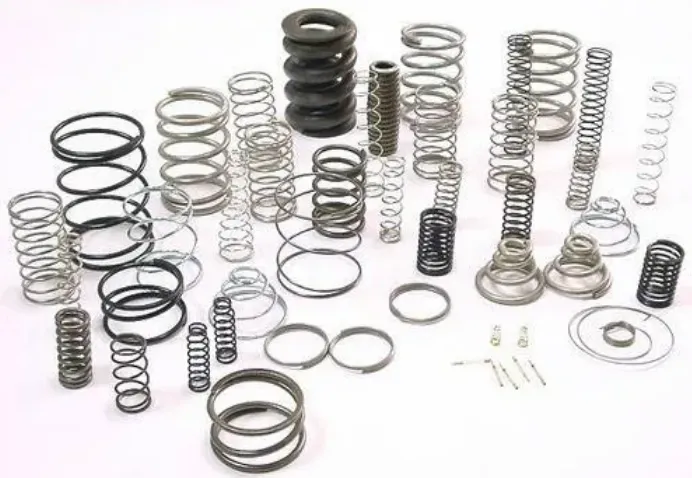
Overview of Monel 400 alloy fundamentals
Monel 400 is typically produced in accordance with standards such as ASTM B164 (rod, bar, wire) and ASTM B127 (plate, sheet, strip). When used in spring manufacture, wire or strip from these standards is cold worked to raise strength and yield stress.
A typical composition range appears in the following table.
Table 1. Typical chemical composition of Monel 400
| Element | Typical range (weight percent) | Functional role |
|---|---|---|
| Nickel (Ni) | 63 – 70 | Primary matrix, corrosion resistance, toughness |
| Copper (Cu) | 28 – 34 | Improves resistance in reducing media, strengthens solid solution |
| Iron (Fe) | Up to 2.5 | Minor solid solution strengthener |
| Manganese (Mn) | Up to 2 | Helps deoxidation, slight strengthening |
| Silicon (Si) | Up to 0.5 | Aids deoxidation during melting |
| Carbon (C) | Up to 0.3 | Must be controlled to limit grain boundary carbide formation |
| Sulfur (S) | Max ~0.024 | Kept very low to maintain toughness and weldability |
Exact limits vary slightly depending on standard and producer, yet this representation captures the key picture behind Monel 400 metallurgy.
How composition influences spring behaviour
The nearly single-phase nickel copper structure avoids the complex precipitate networks seen in age-hardenable alloys. This yields:
- Stable mechanical properties under cyclic stressing.
- Absence of brittle intermetallic phases that might trigger early cracking.
- Good ductility under forming, even in cold coiling of tight index springs.
In spring service, those traits translate to excellent fatigue life in corrosive media, especially in marine and chemical plants where chloride pitting regularly destroys high strength steels.
Why engineers select Monel 400 instead of stainless steel
Many design teams first consider austenitic stainless grades such as 304 or 316. Those materials are widely available with reasonable price levels, yet their performance has limits:
- 304 suffers in chloride rich conditions, with early pitting and crevice attack.
- 316 improves chloride tolerance with molybdenum, though not enough in hot seawater or stagnant brine.
- None of the common stainless grades match Monel 400 in hydrofluoric acid resistance.
On the other hand, Monel 400 provides:
- Outstanding seawater resistance even in splash zones, tidal ranges, and stagnant pockets
- Excellent performance in non-oxidizing acids, alkalis, and saline solutions
- Proven use history in shipbuilding, offshore, and chemical plant components over many decades
In addition, custom Monel 400 springs permit high load capacity without extreme susceptibility to stress corrosion cracking, something critical where spring failure could halt a pump, valve, or safety device in remote locations.
How does Monel 400 behave in corrosive environments relevant to springs?
From an engineering perspective, the central reason to select Monel 400 springs lies in their corrosion resistance across several aggressive environments.
Marine and seawater conditions
Monel 400 has an excellent reputation in seawater service up to roughly 100 °C, even under conditions that quickly pit stainless steel. It resists:
- Flowing seawater at high velocity
- Stagnant seawater with low oxygen content
- Splash zones exposed to alternating wetting and drying
- Brackish water and estuarine environments
For springs used in:
- Shipboard valve actuators
- Subsea connectors
- ROV components
- Mooring and tensioning devices
Monel 400 offers a level of security that typical stainless cannot match, especially when crevices, deposits, or low oxygen pockets exist.
Chemical processing and acid service
Monel 400 performs extremely well in non-oxidizing acids, particularly hydrofluoric and hydrochloric acids, where many alloys fail rapidly. The alloy also provides good resistance in:
- Alkaline solutions, caustic soda
- Neutral and mildly acidic salt solutions
- Some organic acids and salts
This combination fits springs in:
- HF acid handling systems
- Alkylation units
- Acid gas scrubbing components
- Chemical plant valves, pumps, and regulators
It is not suitable in strong oxidizing environments such as hot nitric acid or strongly oxidizing salt solutions. In such cases other nickel alloys or high alloy stainless grades might fit better.
Oil, gas, and sour service
In upstream oil and gas production, downhole and subsea components regularly require:
- Protection from chloride laden brines
- Resistance to hydrogen sulfide (H₂S)
- Robustness in mixed CO₂ / H₂S / chloride environments
Monel 400 provides:
- Good resistance to sulfide stress cracking in many conditions
- Suitable performance in sour brines when stress levels are reasonably controlled
When compliance with NACE MR0175 / ISO 15156 is needed, careful evaluation of hardness limits and environmental conditions becomes essential. Many suppliers use controlled cold work plus appropriate stress relief heat treatment to keep hardness and strength within acceptable NACE ranges.
Springs in safety valves, downhole tools, chemical injection systems, and subsea connectors can therefore rely on Monel 400 when specified correctly.
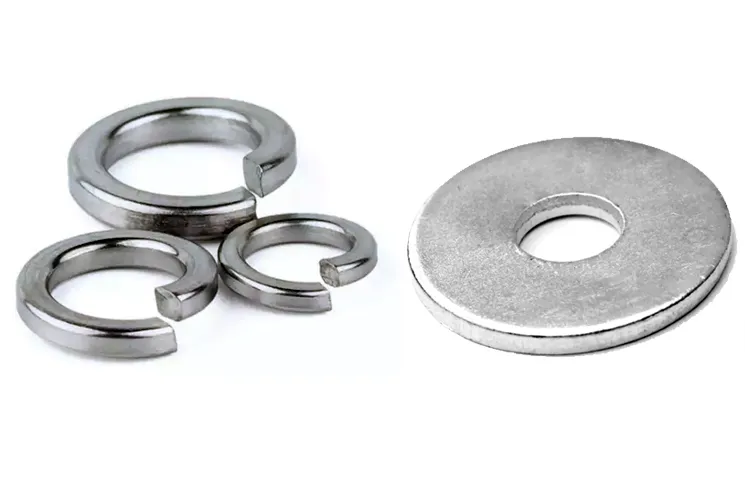
Temperature rating and stress corrosion cracking concerns
Monel 400 has a broad useful temperature span:
- Cryogenic: alloy retains toughness at very low temperatures
- Elevated: typical continuous service up to roughly 480 °C in non-oxidizing environments
In chloride bearing environments, Monel 400 springs are not susceptible to stress corrosion cracking in the manner typical of some stainless steels. This resistance arises from the single-phase nickel copper structure and lack of sensitization issues.
At higher temperatures, mechanical properties decline compared with ambient values, and design stresses must be reduced. Correct design from the outset with realistic temperature assumptions is vital.
Which spring types can be manufactured in Monel 400?
Custom Monel 400 springs can be produced in almost any spring configuration used in industrial equipment. MWalloys and similar specialists typically work with the following primary families.
Compression springs in Monel 400
Compression springs provide resistance to compressive load and are one of the most common configurations. In Monel 400, they appear in:
- Check valves and pressure relief valves
- Mechanical seals and pump cartridges
- Couplings, clamps, and fittings
Key design aspects include:
- Wire diameter
- Spring index (ratio of mean coil diameter to wire diameter)
- Number of active coils
- End style (ground, squared, closed)
Nickel copper wire handles cold coiling extremely well, even with relatively tight indices, which benefits compact valve or pump layouts.
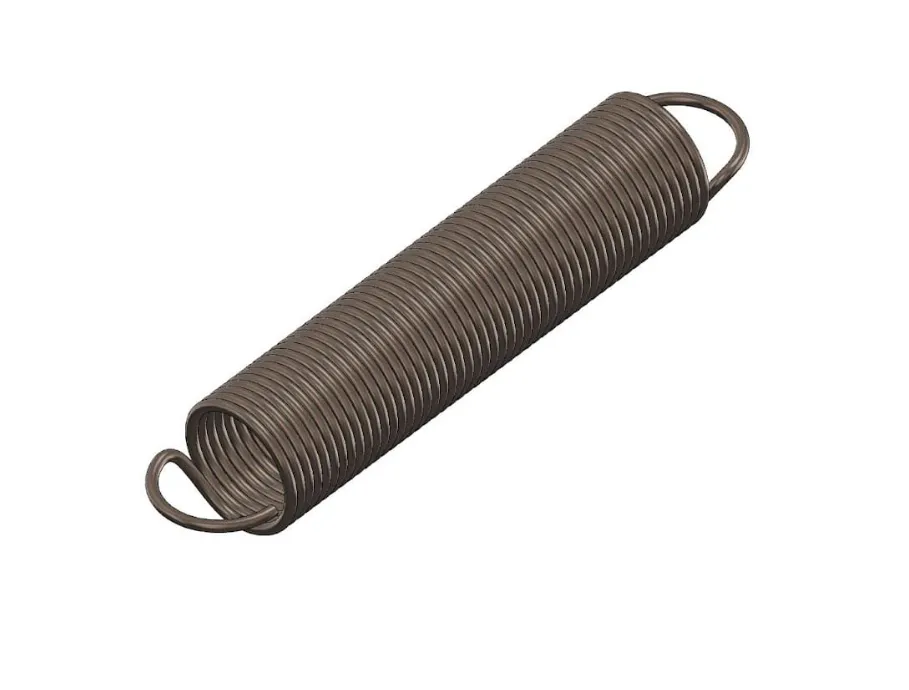
Extension springs in Monel 400
Extension springs operate in tension and include hooks or loops at each end. In corrosive environments they might be preferred in:
- Hatches, doors, and marine closures
- Control linkages in offshore or coastal plants
- Safety latches and holdback devices
Monel 400 extension springs must address:
- Stress concentration at hooks or loops
- Potential abrasion at contact points
- Preload tension to avoid unwanted slack
Reinforced ends or custom fittings in stainless or other alloys can be attached when mechanical connection requirements go beyond simple hooks.
Torsion springs in Monel 400
Torsion springs carry torque over an angular deflection and often support:
- Valve stems and actuators
- Latching systems
- Rotational controls in marine or chemical systems
In torsion applications, Monel 400’s toughness and resistance to notch effects help withstand repeated angular cycling in corrosive conditions. Engineers must set the inner diameter and leg geometry to avoid binding or interference at maximum deflection.
Flat springs, wave springs, and Belleville washers
Monel 400 strip can be slit and formed into flat spring shapes that include:
- Leaf springs
- Wave springs
- Belleville disc springs
- Custom clips and contact elements
These profiles supply:
- High load in small axial spaces
- Controlled deflection in bolted joints
- Preload to compensate relaxation or thermal expansion
Wave springs or Belleville discs in Monel 400 frequently appear in:
- Marine bolted flanges
- Subsea connector stacks
- High reliability chemical plant joints
Wire forms and shaped spring elements
Component designers sometimes need complex wire forms that do not resemble classic helical springs. Monel 400 suits:
- Retaining clips and rings
- Custom clamps and hold downs
- Electrical contact arms in humid or saline atmospheres
Cold forming followed by appropriate stress relief produces durable parts with long fatigue life under continuous vibration.
What key design factors determine performance of custom Monel 400 springs?
Correct design decisions play the largest role in spring success. Material selection alone cannot overcome poor geometry, over-stressing, or missing safety margins.
Mechanical properties of Monel 400 relevant to springs
Cold worked Monel 400 wire or strip presents a range of mechanical properties. Typical values for spring temper material appear below. Exact figures depend on degree of cold work, diameter, and supplier specification.
Table 2. Typical mechanical properties of Monel 400 spring wire (room temperature)
| Property | Typical range | Notes |
|---|---|---|
| Tensile strength | 620 – 860 MPa | Higher values with greater cold work |
| 0.2 percent yield strength | 240 – 550 MPa | Determined by temper condition |
| Elongation in 50 mm | 30 – 40 percent | Higher ductility than many stainless grades |
| Modulus of elasticity (E) | Around 179 GPa | Used in spring rate calculations |
| Shear modulus (G) | Around 69 GPa | Critical value in coil spring design |
| Density | Around 8.8 g/cm³ | Slightly higher than stainless steel |
Designers use these values to check maximum shear stress, working stress range, and possible buckling or resonance issues.
Stress levels, fatigue, and design safety margins
Proper custom spring design balances maximum operating stress with material fatigue resistance. In Monel 400 springs:
- Avoiding stress values near material yield extends fatigue life.
- Lower stress range yields many more cycles, especially under corrosive attack.
- Surface quality and absence of defects make a significant difference.
General tips:
- Keep maximum operating shear stress below roughly 30 to 40 percent of tensile strength in severe cyclic service.
- Use shot peening or other surface enhancement methods where large cycle counts occur, such as in valve springs or mechanical seals.
- Consider stress concentration at loops, ends, and contact points, not only in regular coils.
MWalloys technical teams frequently review application load spectra and propose modifications in wire size or active coil count to keep stress in a more comfortable zone.
Dimensional factors – wire size, index, pitch, and end type
Dimensional choices strongly affect both mechanical performance and manufacturability:
- Wire diameter: Thicker wire increases load capacity but may require larger coil diameter or more space.
- Spring index (D/d): Very low values below roughly 4 reduce manufacturability and can introduce bending stresses.
- Pitch: Influences solid height, working height, and possible coil clash.
- End style: Ground ends improve load distribution and stability, particularly in compression springs.
Careful combination of these elements yields a design that meets load and travel targets without pushing Monel 400 beyond comfortable forming limits.
Deflection, rate, and stiffness tuning
Spring rate (load per unit deflection) emerges from geometry and material modulus. Monel 400’s shear modulus is slightly lower than some alloy steels, leading to a modest difference in rate for identical geometry.
Design engineers should:
- Establish full working travel including tolerances, misalignment, and potential overloads.
- Select initial tension or preload where necessary to control working position.
- Model load deflection curve across the full range to avoid coil bind or torsional overstress.
Finite element simulations combined with classical spring equations can validate especially critical designs.
Surface finish, cleanliness, and treatments
Surface quality has large influence on fatigue life, especially in corrosion. Helpful practices include:
- Smooth, defect free wire or strip from reputable suppliers
- Removal of drawing lubricants and contamination before forming
- Shot peening to compress the surface and suppress crack initiation
- Optional coatings when galvanic compatibility or additional barrier function is needed
Monel 400 usually does not require heavy coatings in seawater because the base alloy already resists corrosion. Still, specific contact situations might benefit from surface protection, particularly when dissimilar metals sit in contact.
How does manufacturing control performance of Monel 400 springs?
Even an excellent design fails without solid process control. Skilled production of Monel 400 springs demands understanding of both metallurgy and spring technology.
Material sourcing and international standards
Most industrial buyers specify Monel 400 spring wire or strip referencing standards such as:
- ASTM B164
- ASTM B127
- AMS standards in aerospace environments
Technical data sheets typically include:
- Heat number and chemical composition
- Tensile and yield strength results
- Hardness range
- Surface finish and dimensional tolerances
MWalloys maintains traceability back to original mill certificates. That matters during audits in aerospace, defense, or critical energy projects.
Forming processes – cold coiling versus other forming techniques
Monel 400 wire lends itself to cold coiling into compression, extension, and torsion springs. Key considerations:
- Proper tool steel selection to handle nickel copper abrasiveness
- Correct lubrication to avoid surface scratches
- Controlled bending radii to prevent local strain concentrations
Flat springs or wave forms usually originate from strip via stamping, laser cutting, or waterjet methods followed by forming on presses or dedicated tooling.
Heat treatment and stress relief
After forming, Monel 400 springs often need a stress relief operation. Objectives include:
- Reduction of residual forming stresses
- Stabilization of geometry
- Improvement of relaxation resistance during service
Typical stress relief treatments use moderate temperatures compared with age-hardening alloys. Care must be taken not to soften the material excessively, which would compromise load capacity.
Temperature uniformity and precise time control ensure repeatable results. Engineers in procurement should confirm with suppliers that heat treatment records exist for each batch.
Inspection, testing, and quality documentation
Quality control routines for custom Monel 400 springs often include:
- Dimensional inspection of free length, coil diameter, wire size, and pitch
- Load testing at defined deflections, such as 25 percent and 75 percent of working travel
- Visual inspection of surface condition and end formation
- Hardness checks or tensile coupons when required by specification
- Non-destructive examination in aerospace or nuclear applications
Certification may include:
- Mill test reports
- Heat treatment records
- Load test curves
- Material traceability documentation
Clients in sectors such as oil and gas, shipbuilding, and chemical processing frequently require compliance with ISO 9001 or industry specific schemes. MWalloys aligns manufacturing and documentation practices with those expectations.
Where do custom Monel 400 springs typically operate in real installations?
Custom Monel 400 springs see extensive deployment in any setting where corrosion, seawater, or difficult chemicals combine with demanding mechanical duty.
Marine engineering and ship systems
In marine environments, Monel 400 springs are common in:
- Seawater pumps and strainers
- Ballast system valves
- Hull penetrations and sea chests
- Deck equipment, winches, and hatches
Exposure can include continuous immersion, splash, damp compartments, or salt-laden atmospheres. A stainless spring might appear acceptable initially yet suffer pitting after a few seasons, while Monel 400 springs typically hold load and geometry for significantly longer periods.
Offshore and subsea equipment
Offshore platforms and subsea systems feature:
- High chloride exposure
- Pressure differentials
- Limited maintenance access
Custom Monel 400 springs contribute to:
- Subsea connector preloads
- Safety valve actuation
- Instrumentation housings and closures
- Cable tensioners and clamp assemblies
High reliability becomes critical when divers or ROVs would be required to replace a failed component.
Chemical processing, pulp and paper, and refining
Chemical tanks, reactors, and pipelines often handle:
- Acids and caustics
- High salinity liquors
- Mixed process streams containing chlorides and sulfides
Monel 400 springs play roles in:
- Valve trim assemblies
- Metering pumps
- Pressure regulators
- Level control floats and linkages
In pulp and paper mills or refineries located inland, chloride rich process fluids or wash solutions still appear, making Monel 400 beneficial even outside obvious marine settings.
Power generation and nuclear installations
Cooling water intake systems, desalination plants, and nuclear facilities rely on corrosion resistant components to avoid leaks or forced outages. Monel 400’s track record in seawater cooling lines transfers directly to:
- Intake gate springs
- Pump seal spring sets
- Flow control and safety valves
In nuclear service, material certification, traceability, and strict cleanliness become central in addition to corrosion resistance.
Aerospace and defense
Where weight, reliability, and hostile atmospheres intersect, Monel 400 springs may support:
- Aircraft components used in coastal operations or carrier decks
- Naval weapon systems and sensors
- Missile and torpedo systems with seawater exposure
Here, design teams may also weigh alternatives such as Monel K-500 or other nickel alloys. Monel 400 retains a strong niche where extreme corrosion conditions outrank maximum strength requirements.
How does Monel 400 compare with alternative spring materials?
Custom spring design always involves material trade-offs. Price, strength, corrosion performance, and fabrication challenges all influence final selection.
Comparison with stainless steel and other nickel alloys
The table below outlines a simplified comparison between Monel 400, austenitic stainless 316, and a high alloy nickel chromium material such as Inconel 625 in the context of spring applications.
Table 3. Comparison of Monel 400 with 316 stainless and Inconel 625 in spring service
| Feature | Monel 400 | 316 Stainless | Inconel 625 |
|---|---|---|---|
| Primary elements | Ni-Cu | Fe-Cr-Ni-Mo | Ni-Cr-Mo-Nb |
| Seawater resistance | Excellent | Moderate to good, risk of pitting at higher temperature | Excellent |
| Hydrofluoric acid | Excellent | Poor | Fair |
| Maximum usable temperature (approximate) | ~480 °C | ~425 °C | ~650 °C |
| Strength potential | Medium to high (cold work) | Medium | High |
| Stress corrosion cracking in chlorides | Very resistant | Susceptible under tensile stress | Very resistant |
| Cost level | Higher than 316, lower than Inconel 625 | Baseline reference | Typically higher than Monel 400 and 316 |
| Typical use focus | Marine, HF acid, sour service | General corrosion, moderate chloride environments | Very high temperature, aggressive oxidizing conditions |
From this comparison, engineers can see that Monel 400 sits between stainless and premium nickel chromium alloys in cost while covering many chloride rich and acid environments where stainless alone does not provide sufficient margin. In high temperature oxidizing settings, more highly alloyed nickel materials still hold an advantage.
When to consider Monel K-500 instead of Monel 400
Monel K-500 represents an age-hardenable version of the nickel copper family, with aluminum and titanium that permit precipitation hardening. Compared with Monel 400, it delivers:
- Significantly higher tensile and yield strengths
- Greater hardness and wear resistance
However, trade-offs include:
- More complex heat treatment
- Different response in sour service where hardness limits may apply
- Possible additional lead time and cost
Monel 400 springs typically fit conditions where corrosion resistance is paramount and strength demands sit within the achievable range of cold worked 400. K-500 versions appear in high load valve springs or wear critical components where additional mechanical robustness is worth the extra cost and complexity.
Total lifecycle cost considerations
A custom Monel 400 spring might cost several times more than a basic music wire or stainless spring. Yet purchasing teams must consider:
- Downtime cost of unexpected spring failure
- Replacement labor and access costs, especially offshore or subsea
- Potential safety or environmental impact from failed valves or seals
In many marine and chemical installations, a Monel 400 spring that survives ten years without issues ends up cheaper per year of service than a low cost alternative that fails every one to two years.
MWalloys often assists clients with such lifecycle calculations during material selection and specification.
What information should buyers provide when ordering custom Monel 400 springs from MWalloys?
Clear communication between engineering, purchasing, and the spring manufacturer significantly improves outcomes. When submitting a request to MWalloys, inclusion of specific technical and commercial information assists rapid and accurate quoting.
Essential design data
At a minimum, buyers should provide:
- Spring type: compression, extension, torsion, flat, wave, wire form
- Function: valve closing, preload, vibration control, static support, etc.
- Working environment: seawater, specific chemicals, pH range, temperature range, pressure level
- Material: Monel 400, including any required standards such as ASTM or AMS
- Main dimensions: wire diameter, mean coil diameter, free length, number of coils, leg lengths, strip thickness, or any special features
- Load requirements: load at specific deflections, torque versus angle for torsion, initial tension for extension springs
- Deflection range and cycling: expected number of operating cycles, presence of shock loads or vibration
Even a preliminary sketch or drawing supports correct interpretation.
Quality and documentation requirements
Procurement staff should specify any particular quality standards, which can include:
- ISO 9001 certification
- NACE compliance in sour environments
- EN or ASME code references
- Acceptance criteria for load testing and dimensional tolerances
Documentation may cover:
- Mill certificates
- Material traceability
- Test reports
- Certificates of conformity
Clarity regarding certification expectations avoids delays during inspection and acceptance.
Commercial aspects – lead time, quantities, and logistics
Key commercial points include:
- Quantity per batch and any expected annual usage
- Preference regarding batch sizes or call-off orders
- Required delivery timeframe and any critical project deadlines
- Packaging needs, especially when springs must remain clearly separated by batch or part number
- Export control or country-of-origin constraints
MWalloys can then tailor production planning, packaging, and logistics to the project’s global footprint.
How should maintenance teams manage Monel 400 springs during service?
Although Monel 400 springs resist corrosion very effectively, no component remains immune to wear, overload, or fatigue. Thoughtful maintenance procedures extend service life and avoid surprises.
Inspection intervals and checks
Inspection practices depend on criticality:
- Safety related components in valves or relief systems often require scheduled inspection or testing intervals defined by codes or company standards.
- Less critical mechanical assemblies may be checked during normal shutdowns or overhauls.
Checks can include:
- Visual examination of coils or flat segments for cracks, extreme wear, or deformation
- Measurement of free length or installed height to detect relaxation or plastic deformation
- Functional testing of complete assemblies, such as valve opening pressure or closing force
Springs operating submerged in seawater or chemicals might be inspected when other maintenance activities bring equipment on deck or into the workshop.
Common failure modes
Even in Monel 400, some failure modes may appear:
- Mechanical overload from unexpected pressure spikes or misalignment
- Wear at contact points or seats
- Damage from foreign objects or improper handling
- Very high cycle fatigue in vibrating or oscillating equipment
Corrosion driven cracking is relatively rare in correctly selected Monel 400 springs compared with carbon or stainless steel equivalents, though galvanic situations or unusually aggressive oxidative conditions could create localized attack.
Replacement planning and spares strategy
Because custom Monel 400 springs often carry long service lives, some operators underestimate the difficulty of rapid replacement many years later, when original drawings may be lost or suppliers changed.
Best practice incorporates:
- Storage of detailed specifications and drawings for each spring design
- Maintaining a limited stock of critical spares
- Clear identification of springs during overhaul through marking or tagging where possible
MWalloys can assist in reverse engineering older springs by measuring and testing samples, yet proactive documentation still saves time and budget.
Summary table – Monel 400 spring application and selection overview
The following compact table links common application areas with typical recommended spring types and key selection notes.
Table 4. Application overview for custom Monel 400 springs
| Application area | Typical spring types | Key selection considerations |
|---|---|---|
| Seawater valves and pumps | Compression, wave, Belleville | Chloride rich seawater, continuous immersion, long cycles between maintenance |
| Offshore and subsea connectors | Wave, Belleville, wire forms | High external pressure, limited access, strict reliability requirements |
| Chemical processing with HF or chlorides | Compression, torsion, flat springs | Acid compatibility, NACE concerns, continuous operation |
| Oil and gas downhole tools | Compression, extension, torsion | Sour service limits, temperature and pressure variations |
| Marine deck equipment | Extension, torsion, wire forms | Splash exposure, mechanical shock, abrasion resistance |
| Nuclear and power plant cooling water | Compression, wave | Seawater or brackish cooling loops, compliance with plant codes |
Frequently asked questions about custom Monel 400 springs
Monel 400 Springs: Marine & High-Performance FAQ
1. Can Monel 400 springs be used in seawater without coating?
Yes. Monel 400 is world-renowned for its resistance to seawater, even in stagnant conditions where other alloys might pit. Its nickel-copper matrix forms a natural protective layer, making additional coatings unnecessary for corrosion protection.
2. What temperature range suits Monel 400 springs?
Monel 400 is highly versatile. It remains tough at cryogenic temperatures and is suitable for service up to approximately 480 degrees C in non-oxidizing environments. Above this, working stresses must be reduced to account for potential relaxation.
3. How do Monel 400 springs compare in strength to carbon steel?
4. Are Monel 400 springs magnetic?
5. Do Monel 400 springs meet NACE requirements for sour service?
Yes. Monel 400 can comply with NACE MR0175 / ISO 15156 standards. MWalloys ensures that the wire processing and final spring hardness remain within the mandatory limits for resistance to sulfide stress cracking.
6. What standards cover Monel 400 materials for springs?
7. How long can a Monel 400 spring last in a marine valve?
8. Is machining required to create Monel 400 springs?
9. Can MWalloys replicate an existing spring without drawings?
Yes. By providing a physical sample, our engineers can reverse-engineer the wire diameter, coil pitch, and load characteristics to produce an exact Monel 400 replacement that meets your original performance specs.
10. What documentation should be kept for custom Monel springs?
- Mill Test Certificates (MTC) for traceability
- Load vs. Deflection test reports
- Detailed engineering drawings with tolerances
- Hardness testing records (especially for NACE compliance)
Custom Monel 400 springs combine robust corrosion resistance, dependable mechanical performance, and proven service history in marine, chemical, and energy settings. When engineered and manufactured correctly by specialists such as MWalloys, these components provide reliable elastic elements in some of the toughest environments where standard spring materials often fall short, enabling both engineers and buyers to secure long term performance with controlled lifecycle cost.