
Custom 455 stainless (UNS S45500, commonly called “Alloy 455” or “Custom 455”) is a martensitic, precipitation-age hardenable stainless alloy engineered to deliver very high yield strength while retaining useful corrosion resistance and reasonable formability in the annealed condition. For components that need strength approaching that of specialty high-strength steels but also require stainless performance in atmospheric and fresh-water environments — think high-strength fasteners, surgical instruments, aerospace components and high-performance springs — 455 is an excellent candidate when a one-step aging treatment, tight dimensional control, and high hardness are required.
What is 455 stainless?
455 stainless steel (UNS S45500) is a precipitation-hardenable martensitic stainless steel developed to combine high strength (after aging) with the corrosion resistance of chromium/nickel stainlesss and relatively simple heat treatment. In the annealed state it is soft and formable; after a controlled single-step aging it reaches exceptionally high yield strengths and hardnesses that make it competitive with many high-strength steels while maintaining stainless behavior in common atmospheres. Typical producers and datasheets position 455 as targeted at aerospace, medical, and high-performance industrial parts.
Chemical composition
The exact formulation varies slightly by producer and lot, but the common nominal composition ranges are shown below (compiled from industry datasheets and material suppliers). This table gives the major elements and the role they play.
| Element | Typical range (wt.%) | Primary role |
|---|---|---|
| C (Carbon) | ≤ 0.05 | Controls strength/hardness and martensite formation (kept low to preserve toughness and corrosion resistance) |
| Cr (Chromium) | 11.0 – 12.5 | Provides corrosion resistance, forms martensitic matrix upon quench |
| Ni (Nickel) | 7.5 – 9.5 | Stabilizes austenite during processing, improves toughness and corrosion resistance |
| Cu (Copper) | 1.5 – 2.5 | Enhances precipitation hardenability and strength after aging |
| Ti (Titanium) | 0.8 – 1.4 | Controls carbide/precipitate formation, contributes to age hardening |
| Nb + Ta (Niobium/Tantalum) | 0.1 – 0.5 | Microalloying for stabilization and precipitation control |
| Mo (Molybdenum) | ≤ 0.5 (occasionally none) | Improves localized corrosion resistance where present |
| Mn, Si, P, S, etc. | Trace to small amounts | Process control and impurity limits |
(Sources consolidated from current datasheets and supplier literature.)
Notes on composition: copper and titanium additions (plus small amounts of niobium/tantalum) make 455 different from many “standard” martensitic or PH steels and are central to its single-step precipitation hardening mechanism.
Microstructure and hardening mechanism
-
Annealed condition: the microstructure is largely martensitic but relatively soft because carbon is low and stabilizers/solution treatment leave the matrix amenable to forming. This gives good cold/forming ability and makes machining easier in the soft state.
-
Age hardening: a controlled solution and aging or direct aging produces fine, coherent precipitates (Cu-Ti/Nb rich phases) that dramatically raise yield strength and hardness with a modest sacrifice of ductility. The precipitation mechanism enables single-step aging cycles that minimize dimensional change — a valuable trait for precision components.
Mechanical properties
Different producers publish slightly different property sets depending on temper/section size. The table below shows representative properties for common tempers (annealed vs age-hardened H1000/H950 etc.) as reported in material datasheets.
| Condition | Yield strength (0.2% offset) | Tensile strength (UTS) | Elongation (A) | Hardness (HRC) |
|---|---|---|---|---|
| Annealed (soft) | ~ 900–1,100 MPa (reports vary by gauge) | ~1,100–1,300 MPa | 6–14% | ~30–35 HRC (typical soft state reported by some vendors) |
| Age-hardened (H1000/H950/H900 typical) | ~1,100–1,900 MPa depending on temper | ~1,400–1,900 MPa | 3–14% (drops as hardness rises) | ~44–51 HRC (higher tempers → lower HRC) |
Representative datasheet values cite yield strengths often in the 1.0–1.7 GPa region after aging and UTS frequently in the 1.1–1.8 GPa region depending on heat treat; hardness can exceed HRC 50 in heavily aged tempers used for wire or spring applications. These are typical commercial values — always verify with your supplier for the exact lot and product form.
Heat treatment and common tempers
Common processing approaches used to develop the desired combination of hardness and toughness:
-
Anneal / solution treat (to make material soft and formable) — typical solution temperatures are high (refer to supplier datasheet) followed by air cooling.
-
Aging (single-step precipitation hardening) — a one-step ageing schedule (temper dependent) is applied (for example H900, H950, H1000 nomenclature used in PH steels to indicate aging conditions). Aging yields a strong, tough condition with minimal dimensional change (valuable for precision components). Aging time and temperature are alloy/section specific; use manufacturer cycles.
Practical tips: dimensional change after aging is low (~-0.001 in/in reported), which permits close tolerance machining in the annealed state followed by aging. However, final machining of heavily aged parts is difficult; plan process sequences accordingly.
Machinability, forming and welding
-
Machining: Machinable in the annealed state; hardness increase after aging will dramatically reduce machinability. Low work-hardening rate combined with the ability to finish-machine in soft condition makes it suitable for precision components. Use carbide tooling and rigid set-ups for toughened tempers.
-
Cold forming: Good in annealed condition thanks to relatively low work hardening; deep drawing operations may need intermediate anneals.
-
Welding: Can be welded similarly to precipitation-hardenable stainless grades; post-weld solution and controlled aging treatments may be required to restore properties. Avoid excessive heat input or uncontrolled cooling that may produce brittle zones.
Corrosion resistance
Custom 455’s chromium (≈11–12.5%) plus nickel content provides good resistance to atmospheric corrosion and fresh water. It is not as resistant as austenitic grades (304/316) in many chloride-rich environments, but its stress-corrosion cracking resistance is often better than some PH grades depending on temper and environment. For marine or aggressive chemical exposures, evaluate protective coatings or switch to higher-alloy stainlesses (15-5PH, 17-4PH, duplex, or superaustenitics) as required.
455 stainless vs 17-4 PH
455 tends to achieve higher yield strengths in certain tempers with comparable or sometimes slightly better chloride stress-corrosion resistance, while 17-4PH (UNS S17400 / ASTM A564 Grade 630) is more widely available, with long production history and broad supplier base. Cost and availability can therefore favor 17-4 for many applications; 455 is selected when the specific combination of higher strength, required aging response, or specific corrosion performance is compelling.
Key contrasts
-
Strength: 455 often attains higher yield/UTS in high tempers; both are PH grades and can be tailored.
-
Corrosion: 17-4PH has well-known behavior; 455 can offer improved resistance to certain chloride SCC conditions depending on composition and temper.
-
Availability & cost: 17-4 is more commonly stocked; 455 may cost more or less depending on supplier and quantity — market prices fluctuate. One vendor comparison notes 455 can be less expensive in some circumstances, but always check quotes.
Standards, specifications and common forms
-
UNS number: S45500 (Custom 455)
-
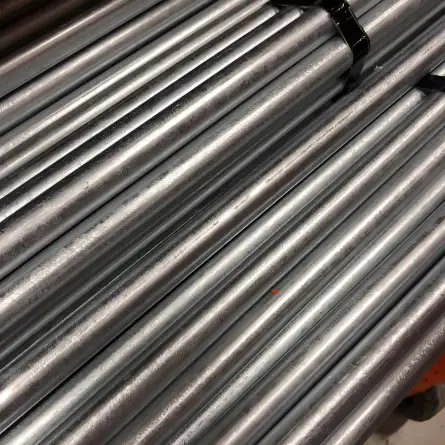
Common product forms: bar, wire, strip, plate, forgings — often VIM/VAR melted for aerospace or critical uses.
-
Industry standards: parts are supplied to various client specifications; specific AMS or ASTM references may be used depending on the application and supplier (consult supplier data sheet and purchase order).
Typical applications
Because of its strength/corrosion balance and age-hardening simplicity, common uses include:
-
High-strength fasteners and studs where stainless resistance is required.
-
Spring and wire appllications where high elastic limit is needed.
-
Aerospace fittings and structural components where a combination of high yield and corrosion resistance is essential.
-
Medical instruments and devices requiring high strength in small cross-sections.
-
High performance shafts, pins and precision components.
Surface treatment, passivation and finishing
-
Passivation: As with other stainless alloys, passivation treatments (citric or nitric acid processes) remove free iron and improve surface chromium oxide. Use the vendor-recommended passivation for 455 to maintain corrosion resistance.
-
Coatings: For highly corrosive environments, consider nitriding (limited benefit on martensitics), PVD/CVD coatings, or sacrificial protection. For decorative or low-maintenance parts, standard electropolishing and passivation are effective.
-
Grinding/Polishing: High hardness in aged tempers demands appropriate grinding wheels and coolant. Final surface finish affects localized corrosion performance — smoother surfaces usually improve life in chloride environments.
Market & pricing considerations
-
No fixed “street price”: Price is influenced by form (wire/bar/strip), melt route (VIM/VAR increases cost), temper, lot size, and supply chain dynamics.
-
Comparison to 17-4: Some sellers position 455 as cost-competitive with 17-4, but market quotes vary — for procurement, request up-to-date quotes from multiple vendors and include processing costs (heat treat, testing) in the total.
-
Buying tips: specify required temper/age condition, required dimensional tolerances after aging, and any melt/traceability requirements (e.g., VIM/VAR, mill test reports) in the RFQ to avoid surprises.
Selection checklist
Choose 455 if most of the following apply:
-
You need very high yield strength (in the >1 GPa range) combined with stainless behavior.
-
You require minimal dimensional change after heat treatment (tight tolerances).
-
The part geometry benefits from soft machining and final ageing rather than machining hardened steel.
-
The operating environment is atmospheric or fresh water (not heavily chloride-dominated marine immersion without additional protection).
-
You can control or specify the heat treatment process and supplier testing.
If you need maximal corrosion resistance in aggressive chloride service, consider duplex stainless or superaustenitics; for broader availability and established supply, 17-4PH may be a better logistical choice.
Quick vendor / procurement notes
-
Request mechanical test reports (MTRs) for each heat/lot covering tensile, hardness and chemistry.
-
For safety-critical parts ask for non-destructive testing and melt certifications (VIM/VAR) if required by contract.
-
If close tolerance parts are machined in soft condition and aged later, provide detailed instructions for allowed dimensional change and tolerances post-aging.
Frequently asked questions
1. What is the main advantage of Custom 455 over 17-4PH?
Higher achievable yield strength in certain tempers and a single-step aging response that permits high strength with good toughness; selection still depends on availability and corrosion needs.
2. Can I weld components made from 455?
Yes, with care. Welding behaviors are similar to other precipitation-hardenable stainless steels; welding can locally alter properties and post-weld heat treatment schedules may be required to restore strength or toughness in the heat-affected zone.
3. What tempers are commonly used and what do H900/H1000 mean?
H900, H950, H1000 indicate typical ageing designations (temperature in °F roughly) used to denote temper/aging treatment. Hardness and strength differ between these tempers; consult supplier data for exact values.
4. Does Custom 455 resist seawater?
It resists atmospheric and fresh-water corrosion well, but for continuous seawater or highly chloride environments, use caution and evaluate protective coatings or more corrosion-resistant alloys.
5. Is 455 supplied in wire and spring forms?
Yes — wire, strip, and spring forms are common; in wire/spring applications special tempers and cold-working methods are used to obtain desired elastic properties.
6. What melting practices are common for aerospace or medical uses?
VIM + VAR (vacuum induction melt + vacuum arc remelt) is common for critical aerospace/medical applications to reduce inclusions and ensure uniformity.
7. How much dimensional change occurs during aging?
Dimensional change is small (order of -0.001 in/in reported by suppliers), allowing finish-machining in the annealed state before aging for many parts. Confirm with supplier for your geometry.
8. Are there standard international equivalents?
The common identifier is UNS S45500 (Custom 455). Seek AMS or other spec references if required for procurement; cross-reference tables with vendors can confirm equivalence.
9. What testing should I request from a supplier?
Chemical analysis (MTR), tensile and hardness tests in specified temper, and where necessary non-destructive testing and microstructure/precipitation checks if the application is critical.
10. How should I store and handle 455 stock material?
Store in dry conditions to avoid surface contamination; if surface corrosion or free iron appears, clean and passivate per standard stainless procedures before fabrication.
Final procurement checklist
-
Specify UNS S45500 and required temper/aged condition.
-
Define allowable dimensional change after heat treat.
-
Request MTR and heat-treatment report.
-
Specify required melt route if critical (VIM/VAR).
-
Confirm surface finish and passivation process.
-
Check vendor lead times and get multiple quotes (price varies by form and temper).
Closing notes
Custom 455 is a specialist stainless that should be chosen with clear performance targets in mind. If your project requires exceptionally high yield strength combined with stainless corrosion resistance and you can control heat treatment, 455 routinely delivers. If procurement simplicity or extreme chloride resistance is the top priority, evaluate 17-4PH, 15-5PH or higher-alloy stainless alternatives—each alloy has tradeoffs between cost, availability, corrosion resistance and achievable mechanical performance. When moving from conceptual selection to production, consult your mill/supplier’s datasheet and request sample lot testing to validate performance in the actual section sizes and environments you will use.