
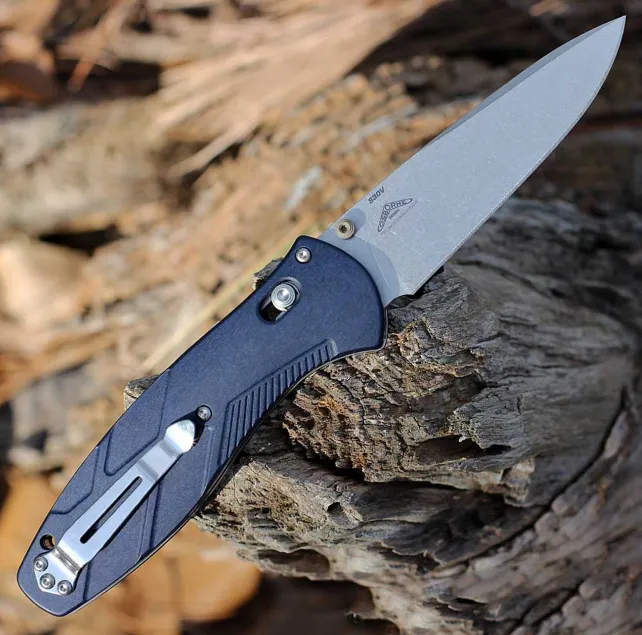
CPM S30V is still one of the most reliable high end stainless knife steels in current production, and we rate it as a benchmark choice when long edge life, strong corrosion resistance, refined carbide structure, and proven commercial credibility all need to exist in one alloy. It is not the newest steel on the market, and it is not the single best answer in every category, yet it remains one of the smartest specifications when a knife maker, engineer, purchasing team, or serious user wants balanced performance with very few unpleasant surprises. In real cutting, good S30V continues to justify its reputation.
If your project requires the use of CPM S30V Steel, you can contact us for a free quote.
At MWalloys, we look at blade steels through two lenses at the same time. One lens is metallurgical truth: chemistry, carbide type, hardness response, toughness, corrosion behavior, and heat treatment sensitivity. The second lens is business reality: supply consistency, machining difficulty, market acceptance, sharpening expectations, warranty risk, and buyer confidence. CPM S30V scores well in both views, which helps explain why it became a modern classic and why it still holds shelf space even in a market crowded with newer names.
What is CPM S30V steel, and why does it still matter?
CPM S30V is a powder metallurgy martensitic stainless steel developed specifically with knife performance in mind. It was designed to provide a better balance of wear resistance, corrosion resistance, and toughness than many older stainless grades that knife makers had relied on in earlier decades.
The letters matter:
- CPM means Crucible Particle Metallurgy.
- S30V is the grade designation used by Crucible Industries.
The steel earned a strong reputation because it gave users something they had wanted for years: premium edge retention without the severe brittleness and difficult finishing often linked to some high carbide stainless steels made through conventional ingot routes.
CPM S30V at a glance
| Item | Key Facts |
|---|---|
| Steel type | Powder metallurgy martensitic stainless steel |
| Developer | Crucible Industries, with input from Chris Reeve Knives |
| Primary purpose | High performance knife blades |
| Typical hardness | 58 to 61 HRC |
| Main strengths | Edge retention, wear resistance, corrosion resistance, fine carbide structure |
| Main tradeoffs | Sharpening is slower than simpler steels, toughness is good but not extreme |
| Best known uses | Premium folding knives, hunting knives, fixed blades, EDC knives |
Why does S30V still matter in 2026?
We think its relevance comes from six practical reasons.
- The balance still works
S30V does not win every metric chart, yet it avoids major weakness better than many specialist alloys. - The market understands it
Makers, heat treaters, and customers know what S30V means. That lowers risk. - Its processing route is mature
Heat treatment knowledge is far better today than in its early years. - Its resale and branding value remain strong
Buyers still recognize S30V as an upper-tier stainless blade steel. - It cuts well in ordinary ownership
Cardboard, rope, food prep, plastic, leather, and general utility work all fit its strengths. - It remains commercially rational
It usually costs less than many headline super steels while still delivering very strong performance.
In short, S30V still matters because it solved a real materials problem and continues to solve it well.
How was CPM S30V developed, and what problem did it solve?
The history of S30V matters because it explains why the steel was so influential. Before S30V became widely known, knife makers often had to choose between stainless grades with moderate wear resistance and tool steels with stronger edge life but lower stain resistance. There were stainless options with high alloy content, but they often brought coarse carbides, processing difficulty, and less predictable edge behavior.
Why did the knife industry need a new stainless steel?
The knife world needed a steel that could do four things at once:
- Hold an edge significantly longer than mainstream stainless grades.
- Resist corrosion in daily carry and food contact.
- Stay tough enough to support thin cutting geometry.
- Benefit from a refined carbide structure instead of coarse segregation.
S30V arrived at the right moment. It is widely viewed as one of the earliest stainless powder metallurgy steels developed specifically with knife blades at the center of the design target.
Who helped shape S30V?
S30V was developed by Crucible Industries with direct input from Chris Reeve Knives. That detail is important because it shows the steel was not simply adapted from another industrial application. Knife performance was part of the design brief from the beginning.
What problem did powder metallurgy solve here?
Traditional ingot metallurgy can produce coarse carbides and chemical segregation in high alloy steels. That becomes a problem when the edge is thin. Large carbides can reduce edge stability, increase polishing difficulty, and hurt toughness.
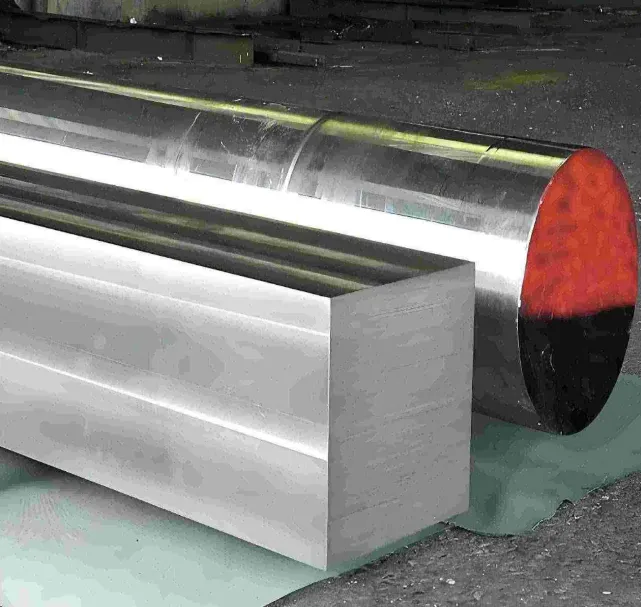
The powder route changed that picture. By atomizing the molten steel into fine powder, then consolidating it under controlled conditions, Crucible created a far finer and more uniform carbide distribution. That gave S30V an immediate advantage over many older stainless grades.
Why did S30V become a benchmark so quickly?
A few reasons stand out.
- Knife users felt the edge retention in actual cutting.
- Makers saw that it could be ground and finished with more predictability than some earlier high alloy grades.
- The steel fit the growing premium knife market perfectly.
- It gave brands a clear upgrade path over 440C, ATS-34, and 154CM.
S30V was not just another catalog line. It changed what buyers expected in a modern stainless knife.
What is the chemical composition of CPM S30V steel, and what does each element do?
The chemistry of S30V explains why the steel behaves the way it does. It is a high carbon, high chromium, high vanadium stainless alloy with molybdenum support. That recipe gives it hard carbides, strong hardness response, good corrosion resistance, and excellent wear characteristics.
Typical chemical composition of CPM S30V
| Element | Typical Content | Main Role in the Steel |
|---|---|---|
| Carbon (C) | 1.45% | Supports hardness and carbide formation |
| Chromium (Cr) | 14.0% | Provides stainless behavior and supports hardenability |
| Vanadium (V) | 4.0% | Forms very hard carbides, boosts wear resistance, helps refine grain |
| Molybdenum (Mo) | 2.0% | Improves corrosion behavior, hardenability, and secondary hardening response |
| Manganese (Mn) | 0.5% | Supports steelmaking and hardenability |
| Silicon (Si) | 0.5% | Deoxidation and strength support |
| Iron (Fe) | Balance | Matrix base |
Why is carbon so important in S30V?
Carbon is essential because it allows the steel to harden and it combines with alloying elements to create carbides. In S30V, the carbon level is high enough to support strong edge retention without pushing the steel into an impractical range when the heat treatment is handled correctly.
What does chromium really do here?
Chromium gives S30V its stainless nature, but this point needs context. Not all chromium remains free in the matrix. Some of it gets tied up in carbides. That means S30V resists rust and staining very well in ordinary carry, food prep, and outdoor use, yet it does not sit in the absolute highest corrosion tier reached by certain newer nitrogen rich or marine focused steels.
Why is vanadium a big deal in S30V?
Vanadium is one of the defining elements of S30V. It forms extremely hard vanadium carbides, which improve wear resistance and contribute heavily to long edge life in abrasive cutting. Those carbides are much harder than chromium carbides, and they are a major reason S30V became famous.
What does molybdenum add?
Molybdenum supports corrosion behavior, improves hardenability, and helps maintain strength during heat treatment. In practice, it adds depth to the stainless performance and contributes to overall property balance.
How should buyers interpret this composition?
We would summarize it this way:
- Carbon provides hardness potential.
- Chromium provides stainless behavior.
- Vanadium provides premium wear resistance.
- Molybdenum stabilizes the package.
That combination is why S30V still feels modern, even though newer steels have joined the conversation.
How does powder metallurgy change the microstructure of S30V?
This question sits at the heart of S30V’s success. Two steels can carry roughly similar alloy content on paper and still perform differently at the edge because microstructure matters just as much as bulk chemistry.
What happens in a conventional ingot steel?
In conventional high alloy stainless steels, slow solidification can encourage carbide segregation. That can leave larger carbides or less uniform carbide distribution. In a knife, those coarse features can reduce edge stability, limit toughness, and create more inconsistency during grinding and polishing.
What changes with the CPM process?
The CPM process breaks the molten steel into tiny droplets, which solidify rapidly into powder particles. Those particles are then consolidated into solid steel stock. The result is a much more even carbide distribution and a finer microstructure than older ingot methods typically produce in high alloy grades.
Why does that matter at the cutting edge?
A knife edge is microscopic. Tiny differences in carbide size and placement can change how the apex behaves under load. A refined powder metallurgy structure helps with:
- More stable thin edges.
- Better wear consistency.
- Lower chance of large carbide pullout.
- Improved grind response.
- Better toughness relative to older high alloy stainless steels.
What carbides are most important in S30V?
The key carbides include vanadium carbides and chromium carbides within a hardened martensitic matrix after proper heat treatment. Vanadium carbides are especially significant because they are extremely hard and help the steel resist abrasion during cutting.
Why do engineers care about carbide size, not just carbide volume?
A steel with very high carbide volume can still disappoint if those carbides are large, uneven, or poorly distributed. Fine carbides spread more evenly through the edge and support better stability. That is one reason why S30V gained a lasting place in knife design, rather than being replaced quickly by every newer grade.
How good are S30V edge retention, toughness, corrosion resistance, and hardness in real use?
This is where internet discussions often become oversimplified. Real performance depends on heat treatment, edge geometry, blade thickness, sharpening finish, and cutting media. Still, we can evaluate S30V with confidence because its field history is very long and very well documented.
Practical performance scorecard
| Property | Relative Rating | What We Usually See in Real Use |
|---|---|---|
| Edge retention | High | Strong slicing life in cardboard, rope, plastics, leather |
| Wear resistance | High | Clearly better than mainstream stainless steels |
| Toughness | Medium | Adequate to good in normal knife geometry, not a hard impact specialist |
| Corrosion resistance | High | Very good in everyday carry, food prep, humid conditions |
| Sharpening ease | Medium to medium-low | Easier than ultra wear resistant grades, slower than simple stainless steels |
| Polish response | Good | Can take attractive finishes with proper abrasives |
| Edge stability | Good | Strong in sensible geometry with competent heat treatment |
How good is S30V edge retention?
S30V holds an edge very well. In abrasive cutting media such as cardboard, rope, and synthetic materials, it tends to outperform simpler stainless steels like 440C, AUS-8, 8Cr13MoV, and often VG-10, assuming comparable geometry and hardness.
Why? The answer is mainly vanadium carbides plus good hardness. Those carbides resist wear longer than the carbide structures found in many mainstream steels.
Still, one caution matters: edge retention is not a single trait. A steel may resist abrasive wear well yet lose slicing aggression if the edge becomes rounded or damaged. S30V usually performs well because it offers both wear resistance and acceptable apex stability.
Is S30V tough, or is it chippy?
S30V is tougher than many older users once assumed, yet it is not a high impact tool steel. In thin edges with sound heat treatment, it performs well in cutting tasks. If the knife is used like a pry bar, driven into knots, twisted in hard wood, or pushed into impact work, chipping can happen.
We usually describe S30V toughness this way:
- Better than many older high wear stainless steels made through conventional methods.
- Lower than modern toughness focused steels like MagnaCut, CruWear, or 3V.
- Slightly less forgiving than S35VN in many knife applications.
That means S30V is excellent in well designed folding knives and many fixed blades, but it is not the best choice when repeated shock loading is the main demand.
Also read: S35VN Steel: The Ultimate Metallurgical Guide, Performance Analysis (2026).
How corrosion resistant is S30V?
Corrosion resistance is one of S30V’s biggest strengths. In pocket carry, kitchen prep, hunting use, rainy weather, sweat exposure, and ordinary outdoor conditions, it performs very well.
Still, we do not place it in the same corrosion category as steels built with extreme wet environments in mind. Saltwater neglect, bait work, and marine duty can expose its limits faster than they would with steels like Vanax, LC200N, or MagnaCut.
Surface finish also matters. A polished or finely finished blade often resists staining better than a rough belt finish because moisture and residue have fewer crevices to occupy.
What hardness range suits S30V best?
Many quality knives land between 58 and 61 HRC, with a large share of production knives sitting near 59 to 60.5 HRC.
| Hardness Range | Typical Knife Behavior |
|---|---|
| 58 to 59 HRC | Slightly tougher, easier to maintain, still excellent edge life |
| 59 to 60 HRC | Strong all around balance, common in good production work |
| 60 to 61 HRC | Better wear resistance and crisp edge feel when heat treat is well controlled |
| Above 61 HRC | Possible in special protocols, but less common in mainstream production |
We usually like S30V close to 60 HRC when the blade is intended for premium everyday cutting.
How should CPM S30V be heat treated, ground, machined, and sharpened?
A steel grade tells only part of the story. Heat treatment decides whether S30V becomes impressive or merely expensive. Poorly processed S30V can underperform a lower cost alloy that was handled well.
What does a common heat treatment route look like?
Exact settings vary by equipment, stock thickness, and target hardness, but many quality S30V protocols include:
- Proper austenitizing in the recommended range.
- Fast cooling through vacuum, plate quench, or similar controlled practice.
- Sub-zero or cryogenic treatment to reduce retained austenite.
- Double tempering
Typical heat treatment framework
| Process Step | Common Practice | Why It Matters |
|---|---|---|
| Austenitizing | Roughly 1900°F to 2050°F | Sets hardness and carbide solution level |
| Quench | Rapid controlled cooling | Forms martensite and controls final structure |
| Cryogenic step | Common in premium work | Reduces retained austenite, stabilizes hardness |
| Tempering | Usually double temper | Improves toughness and dimensional stability |
| Final hardness | Usually 58 to 61 HRC | Determines edge behavior and wear response |
Why is cryogenic treatment often recommended?
Cryogenic treatment helps convert retained austenite into martensite. In high alloy steels like S30V, that can improve hardness consistency and edge stability. Many serious makers treat it as part of the normal premium process rather than an exotic upgrade.
Is S30V difficult to machine?
Compared with simple stainless steels, yes. Compared with extreme wear steels like S90V or S110V, it is more manageable. Shops often find S30V demanding but workable.
Practical shop observations include:
- It wears belts faster than simpler steels.
- Good cooling discipline matters during grinding.
- Carbide aware tooling improves efficiency.
- Fine finishing is achievable with the right abrasives and patience.
Is forging common with S30V?
Not usually. Most S30V knife production is done by stock removal. The steel can be hot worked by specialists under strict control, but the most dependable route in production remains stock removal from mill stock.
Is S30V hard to sharpen?
This question appears constantly. The honest answer is: it is not easy, but it is not a nightmare either.
Relative sharpening difficulty looks like this:
- Easier than S90V, S110V, or some M390 class examples.
- Harder than 14C28N, 440C, 154CM, or VG-10.
- Very manageable with diamond or CBN abrasives.
What sharpening approach works best?
| Sharpening Element | Best Practice |
|---|---|
| Abrasive type | Diamond or CBN stones work very well |
| Edge angle | Match the knife to the task, not internet bragging |
| Finish level | Medium tooth often works very well in utility cutting |
| Maintenance style | Touch up early rather than waiting for deep dullness |
| Burr control | Keep burr small and remove it carefully |
A coarse to medium finish often gives S30V excellent bite in cardboard and rope. A finer finish can be great in push cutting or kitchen use. The best finish depends on the job, not on theory alone.
How does S30V compare with S35VN, S45VN, M390, Elmax, D2, VG-10, 154CM, and MagnaCut?
Comparisons are useful only when they stay grounded in actual use. A steel with better lab wear resistance does not always make the better knife. Heat treatment, geometry, and user expectations still shape the outcome.
Comparison table
| Steel | Edge Retention | Toughness | Corrosion Resistance | Sharpening Ease | Typical Position |
|---|---|---|---|---|---|
| CPM S30V | High | Medium | High | Medium to medium-low | Benchmark premium stainless |
| CPM S35VN | High | Medium to medium-high | High | Medium | S30V with more toughness and easier production |
| CPM S45VN | High | Medium to medium-high | Very high | Medium | Refined successor with corrosion improvement |
| M390 / 20CV / 204P | Very high | Medium | Very high | Medium-low | Wear and corrosion focused premium class |
| Elmax | High to very high | Medium to medium-high | High | Medium | Very strong all round competitor |
| MagnaCut | High | High | Very high | Medium | Modern balance leader |
| 154CM | Medium | Medium | Medium to high | Medium-high | Proven classic, easier to sharpen |
| D2 | Medium to high | Medium | Medium-low | Medium | Budget workhorse, semi-stainless behavior |
| VG-10 | Medium | Medium | High | Medium-high | Mainstream stainless with easier maintenance |
S30V vs S35VN
This remains one of the most searched comparisons. S35VN was developed partly to improve on S30V’s toughness and workability. In practical terms:
- S30V often holds a slight edge in wear resistance.
- S35VN often feels a bit tougher.
- S35VN may be slightly easier in manufacturing and sharpening.
- Corrosion resistance is very close.
If a buyer wants a classic benchmark with long proven performance, S30V is still excellent. If a maker wants a bit more toughness and a slightly friendlier production experience, S35VN often wins.
S30V vs S45VN
S45VN pushed the family further with corrosion improvements and a refined balance. It is often viewed as the modern step above S30V in broad performance. Still, S30V remains attractive because it is widely available, well understood, and often lower in cost.
S30V vs M390, 20CV, and 204P
The M390 family typically offers higher wear resistance and stronger corrosion performance. In exchange, many users find S30V easier to sharpen and more approachable in real ownership. We would choose M390 class steels when maximum edge life and stainless prestige matter most. We would choose S30V when a more balanced and familiar premium package makes better business sense.
S30V vs Elmax
This is a close contest. Elmax is another powder metallurgy stainless steel with strong all around behavior. Depending on hardness and geometry, the two can feel very close. Elmax can look slightly better on toughness in some data sets, while S30V retains its status as a deeply proven knife industry standard.
S30V vs D2
S30V is clearly more stainless, more refined in microstructure, and more premium in edge feel and finish quality. D2 remains useful due to lower cost, but it does not sit in the same quality tier when corrosion and fine carbide structure matter.
S30V vs VG-10
VG-10 sharpens more easily and costs less. S30V holds an edge longer and generally feels more advanced in premium blade applications. That is the main trade.
S30V vs 154CM
154CM was a major benchmark before S30V rose to prominence. It is still good steel. S30V usually beats it in wear resistance and edge holding, while 154CM is easier to sharpen and often less expensive.
S30V vs MagnaCut
MagnaCut has changed the premium stainless conversation because it combines high corrosion resistance with strong toughness and solid edge retention. In strict technical balance, MagnaCut often comes out ahead. Yet S30V still matters because it is established, easier to source in many channels, and trusted by the market. That trust has economic value.
Which knives and cutting tasks suit CPM S30V best?
S30V works best when a knife is expected to cut a lot, stay stainless in normal use, and hold a refined edge without entering ultra-specialist territory.
Best fit applications
| Application | Suitability | Why It Fits |
|---|---|---|
| Everyday carry folding knives | Excellent | Strong edge life, high corrosion resistance, good user confidence |
| Premium hunting knives | Very good | Handles hide, meat, rope, and outdoor exposure well |
| General utility fixed blades | Very good | Great cutting performance with sensible geometry |
| High end production knives | Excellent | Mature processing knowledge and strong market recognition |
| Custom folders | Excellent | Premium steel name with real performance backing |
| Kitchen knives | Good to very good | Stainless and wear resistant, though some users prefer easier sharpening steels |
| Heavy choppers | Fair | Not the best choice when repeated shock load dominates |
Why is S30V so common in EDC knives?
Everyday carry knives live in a mixed environment. They cut cardboard, packages, cord, food, tape, plastic, leather, and wood shavings. They spend time in sweaty pockets and sometimes get neglected. S30V thrives in this kind of mixed-use reality.
Is S30V good in hunting knives?
Yes. Hunters like it because it combines stain resistance with prolonged cutting life when skinning and processing game. Blood, tissue, moisture, and field conditions are a good test of a stainless knife steel, and S30V passes that test well.
Is S30V good in kitchen knives?
It can be very good, especially in Western style premium knives. It resists corrosion and keeps working during repeated prep. Still, some chefs prefer steels that sharpen faster or take very fine low-angle edges with less effort.
Where does S30V make less sense?
We think buyers should hesitate in these cases:
- Saltwater or marine rescue use.
- Heavy batoning and impact-heavy blades.
- Very low budget product lines.
- Users who sharpen only with basic soft stones and do not want diamond abrasives.
In these situations, another steel may give a better total result.
What should engineers, OEM brands, and procurement teams check before buying CPM S30V?
This topic is often missing from consumer articles, yet it matters a great deal in real manufacturing. A steel choice is never just chemistry. Buyers need repeatability, traceability, machinability, heat treat compatibility, and commercial stability.
At MWalloys, we encourage procurement teams to evaluate S30V with a structured checklist rather than relying on brand reputation alone.
Procurement and technical checklist
| Item to Verify | Why It Matters | What We Recommend |
|---|---|---|
| Mill certification | Confirms chemistry and production source | Request certificates linked to each lot |
| Product condition | Annealed stock behaves differently from hardened stock | Confirm delivery condition before order |
| Thickness tolerance | Affects yield, grinding time, and fit | Put tolerance in the purchase spec |
| Flatness | Important in blade blank cutting and grinding | Inspect incoming material |
| Surface quality | Affects finishing labor and scrap rate | Define finish level in advance |
| Heat treatment path | Final properties depend on it | Align raw stock purchase with actual HT capability |
| Cryogenic capacity | Important in premium S30V processing | Verify in house or outsourced capability |
| Traceability | Critical in quality complaints and audits | Maintain lot-level records |
| MOQ and lead time | Influences planning and price stability | Lock forecast volumes when possible |
| Hardness validation | Protects brand reputation | Test finished lots, not just raw stock |
Why do two S30V knives sometimes feel very different?
Because the alloy name is only one part of the system. Differences can come from:
- Heat treatment quality.
- Final hardness.
- Blade geometry.
- Edge thickness behind the apex.
- Grinding temperature control.
- Surface finish.
- Sharpening method.
A weakly heat treated S30V blade can feel average. A well executed S30V blade can feel outstanding.
What should OEM buyers ask heat treat vendors?
We suggest asking clear process questions:
- What hardness window do you target after final processing?
- Is cryogenic treatment part of the normal cycle?
- How do you control soak time and quench consistency?
- How do you check lot-to-lot hardness variation?
- What steps reduce decarburization and edge overheating?
Is S30V still commercially sensible compared with newer steels?
Yes. It often sits in a useful middle ground:
- Higher status than mid-tier stainless grades.
- Lower risk than jumping directly to every newer trend alloy.
- Broad consumer recognition.
- Stable production knowledge across many factories.
That makes it attractive in premium production programs where both performance and brand positioning matter.
What are the main limitations and common myths about CPM S30V steel?
A useful article should not turn into a sales brochure. S30V is excellent, yet it has real limits.
This is probably the most important caveat. S30V is not intended to be an impact specialist. If toughness is the top priority, steels like MagnaCut, CruWear, or 3V can be better choices depending on the environment.
Limitation 2: It is not the easiest steel to sharpen
Users coming from 8Cr13MoV, 440C, or 14C28N often notice the slower abrasion rate quickly. Diamond stones solve much of this problem, but it is still a harder steel to maintain than simpler stainless options.
Limitation 3: Corrosion resistance is strong, not absolute
S30V is stainless, not immune to abuse. Saltwater neglect, acidic contamination, and rough finishes can still lead to staining or corrosion spots.
Limitation 4: Heat treatment quality strongly affects performance
One of the biggest myths in knife buying is that steel name alone predicts performance. It does not. Poor S30V can feel underwhelming.
Common myth: “S30V chips too easily”
This statement is exaggerated. Chipping usually involves geometry, hardness, poor heat treatment, misuse, or a combination of those factors. In normal cutting roles, S30V performs well.
Common myth: “S30V is impossible to sharpen”
Also exaggerated. It is slower to sharpen than simple steels, but with diamond or CBN abrasives it is entirely manageable at home.
Common myth: “Newer steel names always make S30V obsolete”
Not true. Many newer steels improve one or two metrics, but S30V remains competitive because it still offers a strong overall package with mature process knowledge behind it.
Is CPM S30V still worth the money in 2026?
Yes, especially when buyers want proven premium performance rather than chasing every fresh alloy release. We still view S30V as a strong value in the upper stainless category because it offers meaningful gains over mainstream steels without always demanding the price premium tied to newer flagship grades.
Value comparison by steel class
| Steel | Relative Cost | Performance Profile | Value View |
|---|---|---|---|
| 154CM | Medium | Balanced, easier maintenance | Good lower premium value |
| D2 | Low to medium | Budget wear resistance, weaker corrosion | Strong economy value |
| CPM S30V | Medium-high | Proven premium stainless balance | Excellent established value |
| CPM S35VN | Medium-high | Slight refinement over S30V | Excellent value when pricing is close |
| M390 class | High | Strong wear and corrosion | Good value in high end positioning |
| MagnaCut | High | Outstanding broad balance | Excellent technical value, higher entry cost |
Who should choose S30V today?
We recommend S30V when a buyer wants:
- A respected upper-tier stainless steel with long market validation.
- Better edge retention than mainstream stainless grades.
- Strong corrosion resistance in ordinary field and pocket use.
- A steel that supports brand credibility.
- Lower adoption risk than less familiar alloys.
Who should skip it?
A buyer may want something else if they need:
- Maximum toughness under hard use.
- Maximum corrosion resistance in marine duty.
- The easiest possible field sharpening.
- The lowest raw material cost.
The right answer depends on the job. That is true in metallurgy, and it is just as true in purchasing.
FAQs about CPM S30V Steel
CPM S30V Steel: The Gold Standard FAQ
Endurance, Corrosion Resistance, and Market Legacy
1. Is CPM S30V a good knife steel?
Yes. We consider it one of the best-established premium stainless knife steels. It earned its reputation by offering a high level of wear resistance, very good corrosion resistance, and decades of proven market credibility. For many, it remains the standard by which all other premium steels are measured.
2. Is S30V stainless steel?
Yes. S30V is a true stainless steel containing approximately 14% chromium. While a portion of that chromium is tied up in carbides to help with wear resistance, there is plenty of "free chromium" remaining in the matrix to resist corrosion exceptionally well in normal daily and outdoor use.
3. Is S30V better than D2?
In most premium knife applications, yes. S30V offers significantly better corrosion resistance (D2 is only "semi-stainless"), a much finer powder metallurgy carbide structure which aids in edge stability, and a more refined overall performance profile that makes it superior for high-end folding and fixed blades.
4. Is S30V better than S35VN?
Not in every way—they are "siblings." S30V often has slightly stronger wear resistance (it may stay sharp slightly longer in abrasive cutting). However, S35VN was designed to offer a bit more toughness and is generally easier for manufacturers to process. For the end-user, both are excellent, and the difference is often hard to notice in daily tasks.
5. Does S30V rust easily?
6. Is S30V hard to sharpen?
7. What hardness should a good S30V knife have?
Most high-quality S30V knives are heat-treated to a range between 58 and 61 HRC. A target of 59 to 60.5 HRC is considered the "sweet spot" by many top makers, as it maximizes edge retention without making the steel too brittle for hard use.
8. Is S30V good in kitchen knives?
9. Is there an exact AISI, DIN, or JIS equivalent to S30V?
10. Why do some S30V knives feel much better than others?
Because geometry cuts, but heat treat sustains. The steel name is just the ingredient list; the "chef" (the manufacturer) must execute the heat treatment perfectly. Additionally, factors like the thinness of the grind behind the edge and the final sharpening angle significantly change how "sharp" and "durable" the steel feels in your hand.
Final verdict: why does CPM S30V still deserve respect?
If we remove marketing noise and focus on metallurgy plus ownership reality, CPM S30V still stands out as one of the defining knife steels of the modern era. It brought powder metallurgy stainless performance into the mainstream knife market, it raised buyer expectations around edge life and stainless reliability, and it continues to serve well in premium folders, hunting knives, and general utility blades.
At MWalloys, our view is straightforward: CPM S30V remains a benchmark stainless steel because it gets the important things right. It holds an edge well, resists corrosion with confidence, responds strongly to competent heat treatment, and carries a depth of real-world validation that many newer steels are still building. It may no longer be the freshest name on the spec sheet, yet it remains one of the safest and smartest choices when balanced premium knife performance is the true goal.