
When your application demands a material that simply will not chip or break under extreme stress, CPM 3V steel is the definitive answer. Manufactured by Crucible Industries using their proprietary Particle Metallurgy (CPM) process, 3V is a high-alloy tool steel designed to provide maximum resistance to breakage and chipping in a high-wear environment.
If your project requires the use of CPM 3V Steel, you can contact us for a free quote.
But what separates CPM 3V from traditional shock-resisting steels like S7 or A2?
At MWalloys, our metallurgical testing shows that CPM 3V occupies a unique "Goldilocks zone" in the tool steel world: it offers the impact toughness of an S7 shock steel while maintaining wear resistance approachingD2 tool steel. This makes it the premier choice for everything from competition cutting blades and survival knives to heavy-duty industrial punches and dies.
Key Performance Metrics: Why 3V Stands Alone
The secret lies in its fine-grained microstructure. Unlike conventionally cast steels, the CPM process ensures a uniform distribution of small vanadium carbides, which prevents the stress concentrations that lead to edge failure.
CPM 3V Technical Profile at a Glance:
-
Primary Attribute: Extreme Impact Toughness (High Charpy C-notch values).
-
Chemical Composition: 2.75% Vanadium – For balanced wear resistance.
-
Corrosion Resistance: Moderate (Requires maintenance; not a true stainless steel).
-
Recommended Hardness: 58–62 HRC (Optimizing for either toughness or edge holding).
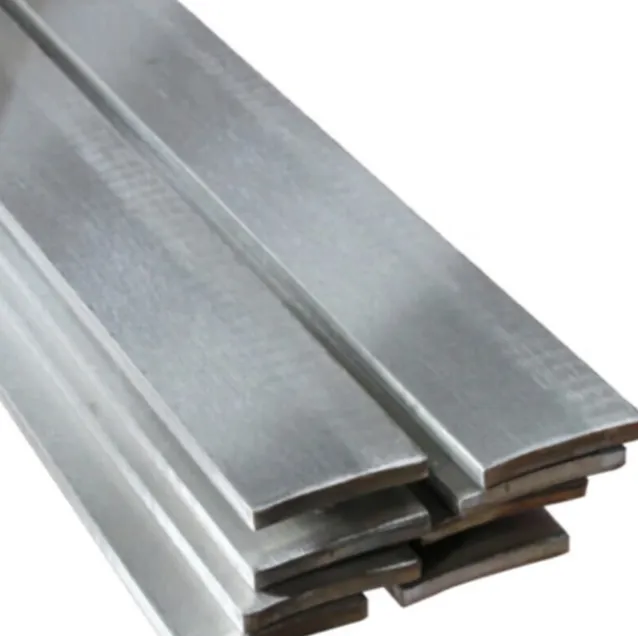
What is CPM 3V steel, and why does it still matter?
CPM 3V is a powder metallurgy cold work tool steel developed by Crucible Industries. It was designed to combine very high toughness with solid wear resistance, a pairing that is difficult to achieve in traditional tool steels. In knife language, that means it can take hard use with much less risk of chipping or catastrophic edge failure than many wear focused alloys. In industrial tooling language, it means longer service life in applications that punish the edge through impact, pressure, and intermittent shock.
CPM 3V in one quick snapshot
| Item | Key Facts |
|---|---|
| Steel type | Powder metallurgy cold work tool steel |
| Producer family | Crucible CPM series |
| Stainless or not | Not stainless |
| Typical knife hardness | 58 to 61 HRC |
| Core strength | Exceptional toughness |
| Secondary strengths | Good wear resistance, stable edge behavior, strong compressive strength |
| Main limitation | Corrosion resistance is modest |
| Typical knife uses | Survival knives, hard use fixed blades, camp knives, heavy duty folders |
| Typical industrial uses | Punches, blanking tools, slitter knives, shear parts, wear components |
Why does CPM 3V still matter in 2026?
We see six main reasons.
- Its toughness remains elite
Even after many new steel releases, CPM 3V still sits near the top when resistance to breakage and chipping is the main concern. - Its wear resistance is better than simple tough steels
It does not sacrifice wear performance the way some pure shock steels do. - Its powder metallurgy structure gives it a refined edge
The steel can support thinner, cleaner cutting geometry than many older high toughness tool steels. - Heat treatment knowledge is mature
Good makers now know how to bring out the best in 3V. - It fits both knife and industrial demand
That dual relevance helps keep it commercially important. - Real users keep coming back to it
Steel trends come and go, yet people who use knives hard still ask for 3V.
Where does CPM 3V sit in the steel landscape?
If we simplify the market, tool steels and blade steels usually lean toward one of four directions:
- Maximum wear resistance.
- Maximum corrosion resistance.
- Maximum toughness.
- Balanced all around performance.
CPM 3V leans strongly toward toughness first, then adds enough wear resistance to stay highly useful in long cutting sessions. That is why it often wins in rough work even when another steel looks better on a wear chart.
How was CPM 3V created, and what problem did it solve?
CPM 3V did not appear by accident. It was designed to solve a classic tooling problem: many steels resist abrasion well but crack or chip under shock, while very tough steels may wear too quickly in sustained service. Crucible aimed to bridge that gap.
What gap existed in older tool steels?
Before powder metallurgy grades like 3V became widely used, buyers often had to pick from familiar categories:
- Shock resistant steels, such as S7, which offer excellent toughness but only modest wear resistance
- Cold work wear steels, such as D2, which offer strong abrasion resistance but lower toughness
- Balanced older grades, such as A2, which sit somewhere in the middle
Those steels still matter, yet none of them gives exactly what 3V gives. CPM 3V pushed toward the toughness end of the chart while keeping significantly better wear resistance than classic shock grades.
What was the original engineering idea?
The design target was straightforward in concept, difficult in execution:
- Keep carbide volume under better control.
- Use alloying that supports wear without making the steel brittle.
- Use powder metallurgy to refine carbide size and distribution.
- Deliver a steel that survives impact and still keeps working edge length.
That combination made CPM 3V attractive in industrial tooling first, then the knife world adopted it enthusiastically.
Why did knife makers become so interested in 3V?
Knife makers are often trying to solve a similar problem. A knife edge can fail two ways:
- It can wear down gradually.
- It can chip, roll, or crack under stress.
In hard use knives, the second failure mode is often more serious. A steel that lasts slightly longer in cardboard is not always the better field steel if it chips when the user hits bone, staples, knots, antler, or hard wood. CPM 3V became popular because it resists that kind of failure very well.
How is CPM 3V different from a simple carbon survival steel?
Many survival knife users grew up with 1095. That steel is inexpensive, easy to sharpen, and familiar. CPM 3V takes the concept much further by offering:
- Far greater wear resistance
- Much higher toughness in many heat treatments.
- Better edge stability at high hardness.
- More refined microstructure
- Better retention of a working edge over longer cutting sessions.
The tradeoffs are cost, more demanding heat treatment, and slower sharpening than simple carbon steels.
What is the chemical composition of CPM 3V steel, and what does each element do?
The composition of CPM 3V is one reason it behaves so differently from both stainless super steels and older tool steels.
Typical chemical composition of CPM 3V
| Element | Typical Content | Main Contribution |
|---|---|---|
| Carbon (C) | 0.80% | Hardness potential, carbide formation, wear support |
| Chromium (Cr) | 7.50% | Hardenability, wear contribution, limited corrosion support |
| Vanadium (V) | 2.75% | Hard vanadium carbides, wear resistance, grain refinement |
| Molybdenum (Mo) | 1.30% | Hardenability, high temperature strength, secondary hardening support |
| Manganese (Mn) | 0.40% | Deoxidation and hardenability support |
| Silicon (Si) | 0.90% | Deoxidation and strength support |
| Iron (Fe) | Balance | Matrix base |
What does this chemistry tell us right away?
Three things stand out.
Carbon is moderate, not extreme
At 0.80% carbon, CPM 3V is not trying to become a high carbide wear monster. That matters. The steel is aimed at toughness, so the carbon level stays controlled.
Chromium is not high enough to make it stainless
The chromium level is well below typical stainless knife steels, and much of it is tied up in carbides anyway. This is why 3V can stain or rust if neglected.
Vanadium plays a key role
Vanadium adds wear resistance through hard vanadium carbides, but in 3V it does so without pushing the steel into the brittle behavior often linked to much higher carbide volumes.
Why does CPM 3V feel different from D2 on the stone and at the edge?
D2 gets much of its wear behavior from large chromium carbides. CPM 3V, by contrast, uses a more refined powder metallurgy structure with vanadium carbides and lower total carbide load. That leads to a different personality:
- 3V is tougher
- 3V often gives a more stable, less chippy edge.
- D2 often wins in pure abrasive wear.
- 3V usually sharpens into a cleaner working apex.
Does CPM 3V chemistry favor edge stability?
Yes. That is one of its biggest strengths. The steel was not built to chase extreme wear values. It was built to survive, keep cutting, and avoid failure. That design logic shows up clearly in the chemistry.
How does Crucible Particle Metallurgy change CPM 3V microstructure?
The CPM route is central to the behavior of 3V. Without powder metallurgy, a steel with this kind of intended property balance would be much harder to achieve.
What happens in conventional ingot metallurgy?
In traditional high alloy tool steels, slower solidification can cause carbide segregation and coarse carbide networks. Those large carbides can reduce toughness, weaken fine edges, and make the steel less predictable in grinding and service.
What changes in the CPM process?
In the Crucible Particle Metallurgy route, molten steel is atomized into fine powder droplets. These droplets solidify rapidly, which limits segregation. The powder is then consolidated into dense solid stock. This creates:
- Smaller carbides.
- More uniform carbide distribution.
- Better isotropy.
- More consistent behavior across the section.
Why does that matter in knives?
A knife edge is tiny. Carbide size and spacing matter tremendously there. A finer structure can support:
- Better apex stability.
- Lower chipping tendency.
- Smoother sharpening response.
- More predictable behavior in thin grinds.
- Improved toughness relative to older ingot steels with similar targets.
Why does that matter in tooling?
In cold work tooling, edge consistency and crack resistance are critical. A refined microstructure helps the tool survive cyclic loading and intermittent shock while still resisting wear.
What does the matrix look like after proper heat treatment?
After hardening and tempering, CPM 3V becomes a martensitic matrix containing finely distributed carbides. The matrix supplies strength and toughness. The carbides supply wear resistance. The balance between those two elements is what gives 3V its reputation.
How tough is CPM 3V in real cutting and impact work?
This is the section where CPM 3V really separates itself from many other popular steels. If the question is simple toughness, 3V is one of the best answers in premium knife steel discussions.
What do we mean by toughness?
In this context, toughness means resistance to cracking, chipping, and fracture under impact or lateral stress. It is not the same thing as hardness, and it is not the same thing as wear resistance.
A tough steel can absorb more abuse before failing. In real knives, that means the edge and blade body can tolerate rough treatment much better.
Why do hard use knife makers trust CPM 3V?
Because it forgives mistakes better than many premium steels. Users do not always cut clean rope on a bench. They baton wood. They hit knots. They contact dirt, bone, frozen material, staples, and metal clips. They twist a blade while cutting roots or hide. In those moments, toughness matters more than a chart showing who wins in controlled abrasion.
Real world toughness profile
| Feature | CPM 3V Behavior |
|---|---|
| Edge chipping resistance | Excellent |
| Crack resistance | Excellent |
| Lateral stress tolerance | Very high |
| Stability in thin edges | Very good when heat treated well |
| Large knife survivability | Outstanding |
| Heavy duty folder suitability | Strong, with good design and lock strength |
Does CPM 3V chip?
Any steel can chip if the edge is too thin, hardness is too high, heat treatment is weak, or the use is abusive enough. Still, 3V chips less readily than many steels people compare it with. That is one reason why it has become a favorite in bushcraft, survival, and tactical fixed blades.
Does high toughness make the edge feel dull sooner?
Not necessarily. This is where many buyers get misled. A steel with lower abrasion resistance may still feel like it holds a working edge longer because it does not chip and lose chunks from the apex. CPM 3V often behaves this way. The edge may lose razor aggression gradually, yet it stays useful and intact through hard tasks.
How should we think about CPM 3V in large knives?
Large knives put more stress into the steel because they are used harder and experience more leverage. CPM 3V is extremely well suited to this role. Choppers, camp knives, and heavy field blades often benefit more from 3V than from a high wear stainless alloy.
How good are wear resistance and edge retention in CPM 3V?
This part requires nuance. If someone only reads wear charts, they may underestimate 3V. If someone only hears fans talk about hard use blades, they may overestimate it in pure slicing contests. The truth sits in the middle.
How should we separate wear resistance from edge retention?
They are related, yet not identical.
- Wear resistance measures how well the steel resists material loss through abrasion.
- Edge retention in real use includes wear, deformation, chipping, and apex stability.
CPM 3V has good to very good wear resistance, but not extreme wear resistance on the level of M4, S90V, or high vanadium stainless super steels. Its real strength is that it combines decent wear with excellent edge integrity.
Practical wear and edge behavior
| Property | Relative Level | Real Use Comment |
|---|---|---|
| Abrasive wear resistance | Medium to high | Better than simple carbon steels and many shock steels |
| Working edge retention | High in hard use | Stays functional because the apex remains stable |
| Fine edge stability | Very good | Useful in utility and field cutting |
| Edge rolling resistance | Strong | Depends on hardness and geometry |
| Chipping resistance | Excellent | Core reason people choose 3V |
Where does CPM 3V perform especially well?
We usually see excellent results in:
- Wood processing.
- Rope and webbing.
- Hide and meat work in field conditions.
- Dirty utility cutting.
- Hard material contact where cleaner steels might chip.
- Long sessions with mixed media rather than one clean lab medium.
Where might another steel outcut 3V?
In long cardboard slicing tests or highly abrasive media, steels with much higher wear resistance may last longer. M4, S90V, and certain M390 class steels can beat 3V in that narrow setting. Yet those steels often give back toughness or sharpenability.
Is CPM 3V a good fine edge steel?
Yes, much better than many people assume. The refined PM structure lets 3V take a clean edge and keep it surprisingly well. It may not be the first choice in a laser thin kitchen slicer, but it is not a crude steel either.
Is CPM 3V stainless, or does it rust easily?
CPM 3V is not stainless. This is one of the first things any buyer should understand. It contains some chromium, but not enough free chromium in the matrix to behave like true stainless blade steels.
How much corrosion resistance does 3V really have?
It has modest to moderate corrosion resistance, better than many simple carbon steels, yet clearly below stainless grades. The exact experience depends on environment, finish, coating, and maintenance.
Corrosion behavior in common situations
| Environment | CPM 3V Response |
|---|---|
| Dry indoor carry | Usually no issue |
| Humid pocket carry | Needs occasional wiping |
| Food prep | Fine if cleaned and dried soon after use |
| Hunting use | Blood and tissue should be cleaned promptly |
| Marine or salt exposure | Poor choice unless coated and carefully maintained |
| Long term storage in damp conditions | Oil or protectant strongly recommended |
Why does 3V rust less than some people expect, yet more than stainless?
The answer sits in chemistry and finish quality.
- The steel has some chromium, which gives a little help.
- The chromium is not high enough, and not free enough, to create stainless behavior.
- Coatings, stonewash, satin, or polished surfaces can shift the practical result a lot.
- Oils, waxes, and basic maintenance make a real difference.
What maintenance does CPM 3V need?
Good habits are simple:
- Clean after food, blood, sap, or acidic contact.
- Dry the blade before storage.
- Apply a light protectant if the knife lives in humidity.
- Be extra careful with leather sheaths in damp climates.
- Touch up any rust spot early.
Is corrosion the main reason some buyers skip 3V?
Yes. Many people love the mechanical performance of 3V, then choose MagnaCut, S35VN, or similar stainless options because they do not want maintenance responsibility. That is a rational decision. The right steel depends on the actual environment.
What hardness range lets CPM 3V perform best?
Hardness has a huge influence on how 3V feels. One of the reasons reviews differ so much is that not every maker runs the same hardness target.
Typical hardness windows
| Hardness Range | Expected Behavior |
|---|---|
| 57 to 58 HRC | Very tough, very forgiving, ideal in large impact heavy blades |
| 58 to 59 HRC | Strong hard use balance, common in survival knives |
| 59 to 60 HRC | Excellent all around performance in many fixed blades |
| 60 to 61 HRC | Better edge holding with still strong toughness in smaller blades |
| Above 61 HRC | Possible with strict control, usually less common in rough use knives |
What hardness do we like in CPM 3V knives?
Our view at MWalloys is simple:
- Large choppers and hard use field knives often perform best around 58 to 59 HRC.
- General purpose fixed blades usually feel excellent around 59 to 60 HRC.
- Smaller utility blades can work very well around 60 to 61 HRC if heat treatment is solid.
Why not push 3V too hard?
Because one of its greatest advantages is toughness. Pushing hardness upward without a clear reason can reduce the very property that makes 3V special. Good steel selection means respecting the role of the knife, not chasing the highest possible HRC number.
How should CPM 3V be heat treated, machined, ground, and sharpened?
This is where great 3V and mediocre 3V separate. The steel has tremendous potential, but heat treatment and finishing practice must support that potential.
What does a typical heat treatment route look like?
Exact recipes vary by stock thickness, equipment, and target hardness, but many high quality cycles include:
- Controlled preheat stages.
- Austenitizing in the recommended range.
- Fast quench or plate quench.
- Optional cryogenic or subzero treatment.
- Double tempering.
Common heat treatment framework
| Step | Typical Practice | Main Goal |
|---|---|---|
| Austenitizing | Roughly 1900°F to 2050°F | Build desired hardness and matrix structure |
| Quench | Fast air, plate, or vacuum route | Form martensite with low distortion |
| Cryogenic step | Optional but useful in premium work | Reduce retained austenite and stabilize hardness |
| Tempering | Usually double temper | Improve toughness and dimensional stability |
| Final hardness target | Usually 58 to 61 HRC | Match service role |
Does cryogenic treatment help CPM 3V?
Yes, it can. Many premium heat treaters use a cryogenic or subzero step to improve transformation and final consistency. Whether it is mandatory depends on the process and target hardness, yet it often improves the result.
Is CPM 3V easy to machine?
Compared with simple steels, no. Compared with extreme wear grades, yes, relatively speaking. Shops often find 3V much friendlier than steels like M4, S90V, or S110V. Belt life, tool wear, and cutting rates still need attention, but 3V is not a monster in production.
How does CPM 3V behave in grinding?
Grinding response is one reason many custom makers like it. It offers:
- Better grindability than many super wear steels.
- Good belt response.
- Less frustration in finishing than some high carbide alloys.
- Reliable edge stability if overheating is avoided.
Still, edge overheating during grinding can damage any premium steel. Thin edges need discipline.
Is forging common with CPM 3V?
Stock removal remains the dominant path. Forging is possible under controlled conditions, but most knife and tool makers prefer bar stock and disciplined thermal processing. That route gives better repeatability.
Is CPM 3V hard to sharpen?
It is easier to sharpen than many people expect. It is not in the easy class with 1095 or 14C28N, yet it is noticeably more manageable than high wear super steels.
Sharpening best practices
| Sharpening Factor | What Works Well |
|---|---|
| Abrasive choice | Diamond or CBN stones work very well |
| Edge finish | Medium tooth often gives excellent field bite |
| Edge angle | Match angle to knife role and thickness |
| Maintenance timing | Touch up early rather than waiting until very dull |
| Burr control | Keep burr small and remove it carefully |
What edge finish suits 3V best?
A medium finish often works beautifully in actual field use. It bites rope, wood, hide, and fibrous material well. A highly polished edge can work too, especially on smaller utility knives, but many hard use users prefer a toothier finish.
How does CPM 3V compare with CruWear, M4, D2, A2, 1095, S35VN, and MagnaCut?
This is the section many readers care about most. Comparisons only help when they respect actual use. A steel that wins one lab category can still be the worse choice in a given knife.
Comparison table
| Steel | Toughness | Wear Resistance | Corrosion Resistance | Sharpening Ease | Typical Personality |
|---|---|---|---|---|---|
| CPM 3V | Very high | Medium to high | Low to medium | Medium | Hard use specialist with elite toughness |
| CruWear | High | High | Medium | Medium | Balanced tough tool steel with better wear |
| CPM M4 | High | Very high | Low | Medium to low | Wear focused non stainless PM steel |
| D2 | Medium to low | High | Medium | Medium | Budget wear steel with lower edge stability |
| A2 | High | Medium | Low | Medium high | Older balanced tool steel |
| 1095 | Medium to high | Low | Low | High | Simple carbon steel, easy upkeep on stones |
| S35VN | Medium to high | High | High | Medium | Balanced premium stainless |
| MagnaCut | High | High | Very high | Medium | Modern stainless with unusually strong balance |
CPM 3V vs CruWear
This is one of the closest comparisons in the non stainless premium category.
Choose 3V if you want:
- More toughness.
- Better insurance against chipping.
- A safer choice in larger hard use blades.
Choose CruWear if you want:
- Higher wear resistance.
- Better corrosion behavior.
- More all around balance in medium use knives.
CruWear often feels like a broader utility steel. 3V feels like a hard use specialist. Both are excellent.
CPM 3V vs M4
M4 usually wins in wear resistance and edge retention in clean abrasive cutting. 3V usually wins in toughness and forgiveness.
M4 advantages
- Stronger abrasive wear resistance.
- Longer slicing life in cardboard and rope tests.
3V advantages
- Much lower risk of chipping in hard contact.
- Better fit in survival and impact oriented knives.
If the user sharpens often and uses the knife brutally, 3V can be the smarter choice. If the user mainly wants long slicing life and accepts maintenance, M4 may appeal more.
CPM 3V vs D2
This comparison matters because many buyers still jump from D2 into premium tool steels.
3V advantages
- Vastly better toughness.
- Finer microstructure.
- Better edge stability.
- Cleaner performance in rough work.
D2 advantages
- Often cheaper.
- Strong abrasive wear.
- Slightly better corrosion behavior, though still not stainless.
In our view, 3V is a much more advanced steel. D2 remains useful in cost sensitive projects.
CPM 3V vs A2
A2 was long respected as a balanced tough tool steel. CPM 3V generally outperforms it in both toughness and wear, thanks largely to powder metallurgy.
This is one of the clearest upgrade paths in cold work steel selection.
CPM 3V vs 1095
1095 remains popular because it is affordable, easy to sharpen, and easy to heat treat. Yet on raw performance, 3V is in another class.
3V over 1095
- More toughness at equivalent quality levels.
- Better wear resistance.
- Better edge retention.
- Better strength in thin edges.
- More stable heat treatment window in premium processing.
1095 over 3V
- Lower cost
- Easier field sharpening.
- Easier coatings and simpler production in budget knives.
CPM 3V vs S35VN
This comparison usually comes down to environment and task.
Pick 3V when:
- Toughness and survival performance matter most.
- The knife may see impact, twisting, or hard contact.
- A large fixed blade is the main tool.
Pick S35VN when:
- Corrosion resistance matters more.
- The knife will live in a pocket or kitchen.
- A stainless premium steel suits the user better.
S35VN is the more balanced stainless. 3V is the tougher workhorse.
CPM 3V vs MagnaCut
MagnaCut changed the market because it brought high toughness into stainless territory. This makes it one of the few steels that seriously challenges 3V in hard use discussions.
3V advantages
- Often greater absolute toughness in heavy impact roles.
- Deep trust in the hard use fixed blade community.
- Long field history in rough outdoor knives.
MagnaCut advantages
- Huge corrosion advantage.
- Better all climate practicality.
- Excellent all around performance in both folders and fixed blades.
If rust prevention matters, MagnaCut is often the better buy. If maximum toughness remains the top goal, 3V still deserves strong consideration.
Also read: CPM S30V Steel: Technical Properties and Industrial Performance Analysis.
Which knives and industrial tools suit CPM 3V best?
This is where steel choice becomes practical. CPM 3V shines when the workload includes impact, lateral stress, dirty cutting, or long mixed use sessions.
Best knife applications
| Knife Type | Suitability | Why It Works |
|---|---|---|
| Survival knives | Excellent | High toughness, stable edge, low chipping risk |
| Camp knives | Excellent | Handles wood, food, rope, and hard contact well |
| Hard use fixed blades | Excellent | One of the best fits in this class |
| Heavy duty folders | Very good | Strong if design and lock are robust |
| Bushcraft knives | Very good | Tough and reliable, though maintenance matters |
| Hunting knives | Good to very good | Great edge integrity, clean after blood and tissue |
| Kitchen knives | Fair to good | Works, but corrosion and sharpening profile may not suit every user |
Best industrial applications
| Industrial Use | Suitability | Why Buyers Choose It |
|---|---|---|
| Blanking punches | Excellent | Strong wear plus crack resistance |
| Piercing tools | Excellent | Handles repeated impact loads |
| Shear blades | Very good | Tough edge with useful wear life |
| Slitter knives | Very good | Stable edge under demanding cycles |
| Trim dies | Excellent | Toughness reduces failure risk |
| Chipper and recycler blades | Very good | Good fit in impact and wear mix |
| Wear components | Very good | Long service in shock loaded parts |
Why does CPM 3V work so well in survival and field knives?
Because survival knives face unpredictable work. One minute the blade slices cord. The next minute it splits kindling or scrapes a ferro rod. Later it may process meat, trim branches, or pry lightly. That kind of mixed stress punishes brittle steels. 3V handles it with confidence.
Where does CPM 3V make less sense?
We would think twice in these situations:
- Marine use or saltwater fishing.
- Low budget production lines.
- Users who want zero maintenance.
- Applications dominated by clean abrasion rather than impact.
- Very thin food prep blades where stainless behavior matters more than shock resistance.
What should engineers and procurement teams check before buying CPM 3V?
Many pages about 3V focus only on knife buyers. That leaves out a major part of the market. Engineers, OEM teams, and purchasing managers need data, consistency, and supply discipline.
Procurement checklist
| Item to Check | Why It Matters | What We Recommend |
|---|---|---|
| Mill certification | Confirms chemistry and origin | Request certs tied to each lot |
| Product form | Plate, flat bar, round bar, ground stock change process cost | Match stock form to manufacturing route |
| Annealed condition | Influences machining and heat treatment | Confirm delivery condition in writing |
| Thickness tolerance | Affects grinding allowance and yield | Define tolerance before order |
| Flatness | Important in blade blanks and die work | Inspect incoming stock |
| Surface quality | Impacts finishing time and scrap | Set clear cosmetic expectations |
| Decarb allowance | Important in heat treat and grinding plans | Leave proper stock allowance |
| Heat treatment capability | 3V needs controlled processing | Verify internal or external vendor skill |
| Traceability | Important in quality systems | Maintain batch records |
| Lead time and MOQ | Influences planning and margin | Build forecast with supplier early |
Why does lot consistency matter so much?
Because CPM 3V often enters demanding products where failure is costly. A hard use knife that chips in service creates brand damage. A punch that cracks early stops production. Good procurement is not just about buying the cheapest bar.
What should OEM buyers ask heat treat vendors?
Useful questions include:
- What hardness range do you target on finished parts?
- Do you use cryogenic treatment or subzero conversion?
- How do you monitor quench consistency?
- What tempering window do you use with this section size?
- How do you test lot to lot hardness and distortion?
What should knife brands verify before launch?
We recommend checking:
- Final hardness by lot.
- Edge thickness behind the apex.
- Corrosion warning language in product pages.
- Sheath interaction in damp environments.
- Field testing on wood, rope, and dirty media.
- Sharpening feedback from actual users.
This last point matters. CPM 3V can look perfect on paper and still disappoint if the final geometry is too thick.
What limitations and myths should buyers understand before choosing CPM 3V?
No steel is perfect, and honest selection always starts with limitations.
Limitation 1: CPM 3V is not stainless
This is the biggest practical drawback. Neglect it in wet conditions and it will remind you quickly.
Limitation 2: It is not the king of pure abrasion
If a buyer wants the longest possible edge life in cardboard, some other steels will usually outlast it.
Limitation 3: Cost is much higher than simple carbon steels
You are paying not only for alloy content but also for powder metallurgy and processing quality.
Limitation 4: Heat treatment still matters
A bad heat treat can waste the entire promise of 3V.
Common myth: “3V is only good in huge knives”
Not true. It works exceptionally well in medium fixed blades and even some heavy duty folders.
Common myth: “3V edge retention is poor”
Also false. Pure wear numbers do not tell the full story. In rough work, 3V often keeps a useful edge very well because it stays intact.
Common myth: “3V is impossible to sharpen”
Not accurate. It sharpens more easily than many high wear PM steels. Good abrasives make the job straightforward.
Common myth: “Any rust means the steel is bad”
No. Rust behavior simply reflects the design target. 3V prioritizes toughness, not stainless performance.
Is CPM 3V still worth the price in 2026?
Yes, when the application needs its specific strengths. We do not recommend 3V because it is fashionable. We recommend it when a user, maker, or engineer needs a steel that can absorb punishment without losing structural integrity.
Who gets the best value from CPM 3V?
- Hard use knife makers.
- Survival and field knife users.
- Industrial buyers dealing with shock loaded cutting tools.
- Brands that want a premium non stainless toughness story.
- Users willing to maintain the steel properly.
Who may be happier with another steel?
- Marine and saltwater users.
- Buyers who hate blade maintenance.
- People focused mainly on cardboard wear tests.
- Budget driven OEM programs.
- Users who want stainless convenience above all else.
When specified correctly, 3V gives excellent value. When chosen blindly, it can be the wrong tool.
FAQs about CPM 3V Steel
CPM 3V Steel: The Resilience Champion FAQ
Impact Resistance, Edge Stability, and Survival Performance
1. Is CPM 3V a good knife steel?
Yes. We rate CPM 3V extremely high for hard-use knives because it combines elite-level toughness with good wear resistance and very stable edge behavior. It is designed to withstand significant abuse without catastrophic failure, making it a favorite for heavy-duty outdoor tools.
2. Is CPM 3V stainless steel?
3. Does CPM 3V rust easily?
It rusts much more readily than stainless steels, especially in humid, salty, or acidic conditions. With normal care—such as keeping the blade dry and occasionally applying a light coat of oil—it behaves well. However, neglect will inevitably lead to surface staining, patina, or active corrosion.
4. Is CPM 3V better than D2?
In terms of hard-use performance, yes. CPM 3V is significantly tougher, much less prone to chipping, and maintains a more refined edge under stress. D2 typically only wins on lower material cost and in specific situations involving pure abrasive wear without impact.
5. Is CPM 3V better than CruWear?
6. Is CPM 3V better than MagnaCut?
7. What hardness should a good CPM 3V knife have?
8. Is CPM 3V easy to sharpen?
9. Is CPM 3V good in survival knives?
Absolutely. This is one of its strongest and most appropriate roles. It handles extreme impact, twisting, wood processing (batonning), and mixed field tasks with much less risk of chipping or breaking compared to almost any stainless steel. It is the "peace of mind" steel for wilderness survival.
10. Is there a direct AISI or DIN equivalent to CPM 3V?
Final verdict: why does CPM 3V still deserve serious attention?
If we strip away marketing noise and focus on what really matters in the field and on the shop floor, CPM 3V remains one of the most trustworthy high toughness steels in modern use. It was engineered to survive abuse, and that design goal still defines it. The steel resists chipping, handles lateral stress, keeps a useful edge through ugly work, and offers a microstructural refinement older tough steels could not match.
At MWalloys, we see CPM 3V not as a universal steel, but as a highly purposeful one. When toughness, structural reliability, and hard use cutting integrity come first, CPM 3V stays near the top of the shortlist. If corrosion resistance ranks first, choose something else. If brutal work and edge survival matter most, 3V remains a serious answer, and in many cases, still one of the best.