

436 stainless steel (UNS S43600 / 1.4526) is one of the smartest material choices when an exhaust component needs better corrosion resistance than 409, lower nickel exposure than 304, solid thermal cycling behavior, and stable manufacturing cost. In real production, Type 436 usually fits muffler shells, catalytic converter shells, intermediate pipes, tailpipes, and other exhaust parts exposed to condensate, road salt, chloride splash, and repeated heating. Its ferritic structure, chromium content, molybdenum addition, and niobium stabilization give it a practical balance of oxidation resistance, corrosion durability, formability, weld stability, and price control. The main engineering conclusion is clear: 436 is a high value ferritic stainless grade built to handle demanding exhaust environments, yet it is not the first choice in the very hottest manifold zones or in severe chemical immersion where higher alloy materials may be needed.
If your project requires the use of 436 Stainless Steel, you can contact us for a free quote.
As a global metal distributor, MWalloys offers high-quality ASTM A240 Type 436 stainless steel coils and sheets. Our material features superior deep-drawing properties and thermal fatigue resistance, suitable for complex forming operations without compromising weldability or structural integrity.
Technical Highlights & Supply Capabilities:
-
Standard Specifications: Fully compliant with ASTM A240 / A240M and EN 10088-2.
-
Corrosion Advantage: Molybdenum addition (0.75-1.25%) outperforms standard 430 grade in chloride environments.
-
Stabilization: Titanium and Niobium stabilization ensures excellent weld zone ductility.
-
Core Applications: Automotive exhaust manifolds, catalytic converter shells, and appliance trim.
-
Processing Capabilities: Precision coil slitting, edge conditioning, precision blanking, and protective film application.
-
Alloy Stability: Niobium-stabilized to prevent intergranular corrosion in weld zones.
-
Corrosion Resistance: Superior to 430 and 434 in chloride environments due to Molybdenum content.
-
Temperature Resistance: Excellent oxidation resistance for service up to 800℃ (1472℉).
-
Available Forms: Precision-rolled sheets, strips, and coils in 2B, BA, and No. 4 finishes.
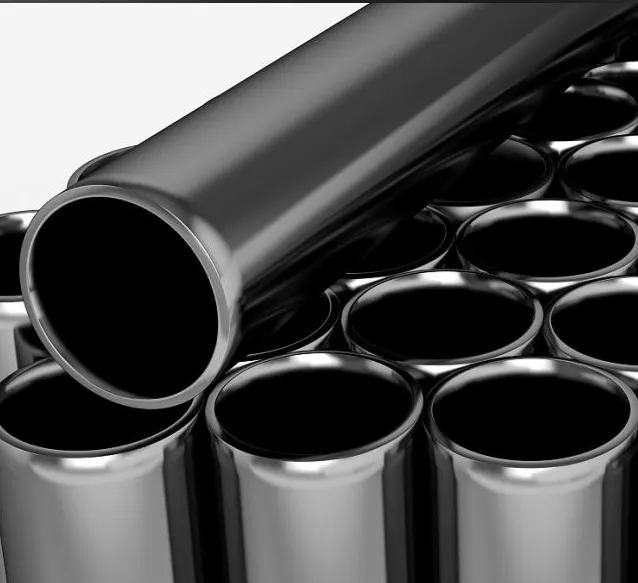
What is 436 stainless steel, and why is it widely used in exhaust systems?
Type 436 stainless steel is a ferritic chromium stainless grade developed to improve corrosion resistance and service reliability in settings where plain ferritic grades may fall short. It sits in the family of low to near-zero nickel ferritic alloys and is normally described by its chromium level near 16 to 18 percent, its molybdenum addition near 1 percent, and its stabilizing niobium content. That chemistry matters because each element contributes to a specific performance target.
Chromium builds the passive surface film that gives stainless steel its corrosion resistance. Molybdenum helps protect against pitting and condensate related attack, especially when chlorides and acidic deposits are present. Niobium stabilization helps control sensitization and improves microstructural stability during welding and thermal cycling. The ferritic matrix brings lower thermal expansion than austenitic grades, which reduces cyclic thermal stress in heated automotive parts.
That combination is exactly why 436 is so common in exhaust work. An exhaust system is not exposed to one simple condition. It sees road salt on the outer surface, acidic condensate inside the muffler during short trip operation, moisture, vibration, stone impact, warm idle periods, occasional high speed heat peaks, and repeated cooling. A grade used in that setting must survive both corrosion and temperature fluctuation.
Quick technical snapshot
| Item | Typical Market Description |
|---|---|
| Grade | Type 436 stainless steel |
| UNS | S43600 |
| Family | Ferritic stainless steel |
| Key alloy features | Chromium plus molybdenum plus niobium stabilization |
| Magnetic | Yes |
| Heat treatment hardening | Not hardenable by heat treatment |
| Main strength in service | Exhaust corrosion and thermal cycling balance |
| Typical industrial use | Automotive exhaust components, appliance trim, heat resistant sheet parts |
| Common supply form | Coil, sheet, strip, welded tube input stock |
| Relative cost position | Above 409, often below 304 and 316 |
One useful way to think about 436 is this: it occupies the middle ground between economy exhaust grades and premium corrosion resistant grades. That makes it especially attractive when OEMs want longer life than 409 can offer, yet want to avoid the nickel volatility tied to 300 series material.
Which standards, designations, and equivalents should buyers check before ordering 436 stainless steel?
The grade name alone is not enough on a purchase order. Stainless materials move through global supply chains, and the same nominal grade may appear under multiple standards, product forms, and regional references. A serious buyer should confirm the grade designation, the governing product specification, the form of supply, and the exact chemistry on the mill test certificate.
Common identifiers linked with 436 stainless steel
| Identifier Type | Common Reference |
|---|---|
| UNS designation | S43600 |
| ASTM product references | ASTM A240 sheet, plate, strip; other product specs may apply by form |
| General family | Ferritic stainless steel |
| Commercial cross reference | Type 436, 436 SS, 436 ferritic stainless |
| European cross reference in many charts | Often linked with 1.4526, though chemistry should be verified |
| Automotive use language | Exhaust grade stainless, muffler stainless, catalyst shell stainless |
The ASTM product specification matters because it defines the chemistry limits, mechanical expectations, testing rules, and supply condition. In flat rolled form, buyers often call out ASTM A240 or ASTM A240M. A tubing buyer may use a different ASTM standard depending on seam welded or seamless route. The point is simple: the alloy name identifies the grade family, while the product standard identifies the acceptance framework.
What should appear on a clear purchase order?
| Purchase Order Item | Why It Matters |
|---|---|
| Grade | Confirms 436 rather than 409, 439, 441, or 444 |
| Product standard | Clarifies chemical and mechanical baseline |
| Thickness and width | Core dimensional requirement |
| Form | Coil, sheet, strip, cut blank, tube feedstock |
| Finish | 2B, BA, polish, pickled, mill finish |
| Edge | Mill edge or slit edge |
| Coil ID and max OD | Needed when the buyer runs decoilers or roll lines |
| Surface protection | Film or paper may reduce transit damage |
| Certification | MTC, EN 10204 style report if requested |
| Special notes | No transit welds, tighter flatness, burr limit, forming critical |
A second point often missed by non specialist buyers concerns equivalence. Commercial cross reference charts can be useful, but they are not a substitute for chemistry verification. Two grades may look close on paper, yet differ enough in molybdenum, stabilization method, or carbon and nitrogen control to affect weld behavior and corrosion life.
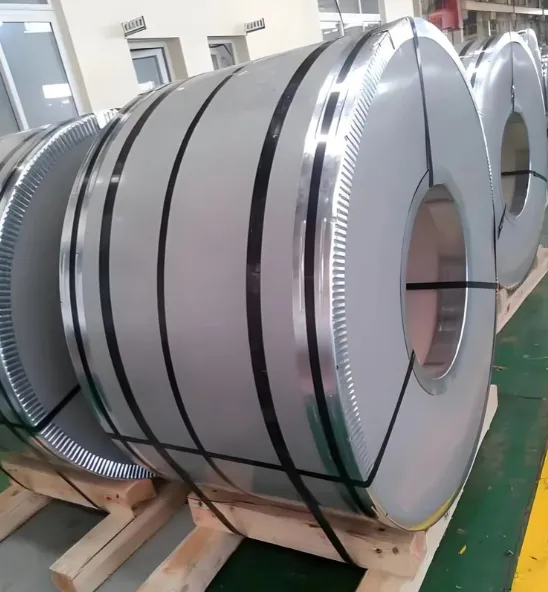
What chemistry gives 436 stainless steel its exhaust and corrosion performance?
Chemistry is the heart of the grade. When engineers compare 436 with 409 or 304, they are really comparing different balances of chromium, nickel, molybdenum, carbon, and stabilizing elements. Type 436 is built around a ferritic chromium base with molybdenum and niobium added to improve service behavior.
Published chemistry limits can vary slightly by product specification and producer route, so buyers should always rely on the certified mill report tied to the actual heat. Still, the broad commercial chemistry profile remains consistent across the market.
What is the typical commercial chemistry profile of 436 stainless steel?
The commercial chemistry of 436 stainless steel is built around a ferritic chromium base with added molybdenum and niobium stabilization. This alloy design is the main reason Type 436 performs better than basic ferritic grades in exhaust condensate, chloride splash, and cyclic heat service. In practical buying and engineering work, the exact composition should always be confirmed on the mill test certificate, since small variations within the allowed range can affect weld behavior, corrosion life, and forming consistency.
Typical commercial chemistry profile of 436 stainless steel
| Element | Typical Commercial Limit or Range | Function in 436 Stainless Steel |
|---|---|---|
| Carbon, C | 0.12% max | Lower carbon helps reduce sensitization risk and supports weld area stability |
| Manganese, Mn | 1.00% max | Assists steelmaking and supports hot workability |
| Silicon, Si | 1.00% max | Used mainly as a deoxidizing element during production |
| Phosphorus, P | 0.040% max | Kept low to support toughness and overall quality |
| Sulfur, S | 0.030% max | Controlled to limit inclusions and improve corrosion cleanliness |
| Chromium, Cr | 16.00% to 18.00% | Main source of stainless corrosion and oxidation resistance |
| Nickel, Ni | 0.50% max, often residual only | Usually very low, which helps control alloy cost |
| Molybdenum, Mo | 0.75% to 1.25% | Improves pitting resistance and strengthens performance in acidic condensate and salt exposure |
| Niobium plus Tantalum, Nb + Ta | 5 × (C + N) min to 0.80% max | Stabilizes the ferritic structure and improves weld zone reliability |
| Nitrogen, N | Typically controlled at low level, verify on MTC if critical | Helps influence structure and stabilization balance |
| Iron, Fe | Balance | Base metal |
Why these elements matter in exhaust applications
| Alloy Feature | Practical Benefit in Service |
|---|---|
| 16 to 18% chromium | Gives 436 its baseline stainless behavior and oxidation resistance |
| 0.75 to 1.25% molybdenum | Improves resistance to road salt, chloride splash, and corrosive exhaust condensate |
| Very low nickel | Helps reduce raw material cost volatility compared with 300 series stainless |
| Niobium stabilization | Supports better weld performance and better durability during thermal cycling |
| Low carbon control | Reduces the chance of weld area degradation in thin exhaust parts |
Procurement note
When ordering 436 stainless steel, buyers should not rely only on a generic grade name. The safest practice is to request full chemistry on the mill test certificate and verify chromium, molybdenum, and niobium stabilization levels before production release. This is especially important in automotive exhaust, muffler shells, catalytic converter shells, and chloride exposed sheet applications.
Niobium stabilization is another key difference. In ferritic stainless steel, stabilization helps tie up carbon and nitrogen, which supports weld zone integrity and improves corrosion behavior after thermal exposure. That becomes important in shell seams, hanger attachments, brackets, and tube welds.
Why chemistry matters in real field life
| Chemistry Feature | Real Service Benefit |
|---|---|
| Higher chromium than economy grades | Better atmospheric and oxidation resistance |
| Molybdenum addition | Better chloride and acidic condensate resistance |
| Low nickel content | Lower price volatility than 300 series |
| Ferritic matrix | Low thermal expansion, good heat cycling response |
| Niobium stabilization | Better weld area performance |
A buyer who reads only the grade name misses a lot. One heat may sit near the upper end of molybdenum and present stronger corrosion behavior than another heat still inside the same nominal grade. That is why experienced quality teams read the MTC rather than only checking the label.
How strong is 436 stainless steel, and what physical property data matter in design work?
436 is usually selected due to environmental resistance and thermal behavior, yet its mechanical and physical profile is equally important in design. Exhaust system parts are thin, drawn, rolled, welded, vibrated, and heated repeatedly. Sheet behavior during stamping, shell rolling, seam welding, and hanger attachment matters just as much as corrosion rating.
Typical mechanical properties of annealed 436 sheet or strip
| Property | Typical Published Value Range |
|---|---|
| Tensile strength | About 415 to 560 MPa |
| Yield strength, 0.2% offset | About 205 to 300 MPa |
| Elongation | About 20 to 30 percent |
| Hardness | Often below 90 HRB in annealed condition |
| Formability | Good in ferritic class, though below deep draw level of many austenitic grades |
| Work hardening rate | Lower than 300 series stainless |
These are typical market values, not a design code substitute. Exact requirements can shift by thickness, temper, product standard, and mill route. A stamped shell producer should confirm actual incoming property data on the certificate, especially when part geometry is tight or draw depth is high.
Typical physical properties relevant to exhaust engineering
| Property | Typical Value |
|---|---|
| Density | About 7.7 g/cm³ |
| Magnetic response | Magnetic |
| Elastic modulus | Near 200 GPa |
| Thermal conductivity | Roughly 23 to 26 W/m·K |
| Coefficient of thermal expansion | Roughly 10 to 11 µm/m·K over moderate temperature range |
| Specific heat | About 450 to 470 J/kg·K |
| Electrical resistivity | Roughly 0.60 µΩ·m |
The lower thermal expansion of ferritic stainless is one of the main reasons exhaust engineers like grades such as 436. Austenitic stainless steels expand more when heated. That higher expansion can increase distortion, buckling tendency, weld stress, and fatigue load in thermally cycled assemblies. Ferritic grades hold shape better under repeated heat input, which supports durability in welded thin gauge parts.
Mechanical meaning in shop practice
| Shop Operation | What 436 Usually Delivers |
|---|---|
| Roll forming | Stable shape, lower springback than many austenitic grades |
| Stamping | Good productivity with proper die condition |
| Tube forming | Widely used where seam welding quality is controlled |
| Resistance welding | Generally favorable |
| Laser cutting | Clean edge with correct parameter setup |
| Deep drawing | Good, but tooling should be tuned to ferritic behavior |
A practical note from production floors: ferritic grades often feel easier to control in thermal distortion than 304, but they do not forgive dirty tooling, poor lubrication, or rough die surfaces. Surface galling and local tearing can still occur if the forming route is not tuned to the grade.
Why does 436 stainless steel perform so well in automotive exhaust service?
Exhaust systems are a classic multi factor environment. The material must handle internal chemistry, external splash, heat, thermal cycling, vibration, and manufacturing economy. Type 436 works well because its property package lines up closely with those conditions.
Key exhaust system demands
- Internal condensate resistance
During cold starts and short trips, water vapor condenses inside the exhaust. That moisture mixes with sulfur compounds, nitrogen species, chloride contamination, and particulate residue. The resulting liquid can be surprisingly aggressive. - External road salt resistance
Winter deicing salts attack the outer surface, especially on mufflers, pipes, and hemmed or creviced joints. - Thermal cycling
Vehicles move from ambient temperature to several hundred degrees Celsius and back, again and again, often many times in a single week. - Fabrication efficiency
Automotive supply chains need material that can be stamped, rolled, welded, and supplied in large coil volumes with predictable cost.
436 checks these boxes better than basic ferritic grades due to its molybdenum boosted corrosion performance and stabilized ferritic structure.
Exhaust zone selection matrix
| Exhaust Zone | Main Damage Mode | Typical Temperature Band | 436 Suitability |
|---|---|---|---|
| Manifold and very hot front zone | Oxidation, thermal fatigue, scaling | Often very high, peaks may exceed 850°C | Conditional, often not first choice |
| Catalytic converter shell | Heat, road salt, thermal cycling | Medium to high | Very good in many designs |
| Front pipe and intermediate pipe | External chloride, heat, vibration | Medium to high | Good to very good |
| Resonator and muffler shell | Internal condensate plus outer salt splash | Low to medium | Excellent fit |
| Tailpipe | Appearance plus corrosion | Low to medium | Very good, especially when appearance retention matters |
Why 436 often beats 409 in exhaust parts
| Property Area | 409 | 436 |
|---|---|---|
| Corrosion resistance | Basic exhaust grade | Higher due to more chromium and molybdenum |
| Condensate durability | Adequate in economy systems | Better in longer life systems |
| Road salt resistance | Moderate | Stronger |
| Cost | Lower | Higher, yet often still economical |
| Thermal expansion | Low | Low |
| Surface appearance retention | Lower | Better |
This is the economic logic behind the grade. If a vehicle platform or aftermarket product needs better life than 409 can offer, yet full 304 is too expensive or unnecessary, 436 becomes an attractive middle position.
How much heat can 436 stainless steel handle, and what temperature data matter in exhaust design?
A common search question asks whether 436 is a “high temperature stainless.” The accurate answer is more nuanced. Type 436 handles elevated temperature and repeated heat cycling well within the operating range of many exhaust components. Still, it is not a universal answer in the hottest sections of every exhaust architecture.
Published oxidation limits vary by test method, gauge, atmosphere, and cycle profile. Engineers should therefore avoid copying one simplified temperature number into every design decision. Better practice is to look at the component zone, its heating and cooling pattern, and the dominant failure mode.
Useful thermal behavior summary
| Thermal Factor | 436 Performance |
|---|---|
| Oxidation resistance | Good in many exhaust ranges |
| Cyclic heating resistance | Good due to ferritic structure |
| Thermal expansion | Lower than 304 and other austenitic grades |
| Thermal fatigue tendency | Generally favorable in thin exhaust parts |
| Very high front end exposure | May require higher alloy ferritic or austenitic grade |
Practical temperature view by component
| Component | Typical Service Comment |
|---|---|
| Manifold or turbo adjacent part | Grade selection becomes more demanding; 441 or higher heat resistant material is often preferred |
| Converter shell | 436 often performs well when design controls skin temperature and thermal shock |
| Pipe sections behind catalyst | 436 is widely used and technically sound |
| Muffler shell | Temperature is usually well inside the comfort zone of 436 |
| Tailpipe and trim zone | 436 performs strongly when corrosion and appearance both matter |
The lower thermal expansion coefficient is critical here. Repeated heating makes metal grow and shrink. Ferritic grades grow less than austenitic grades, which means lower strain at weld seams, brackets, and formed edges. That translates into longer fatigue life in many exhaust designs.
A realistic engineering note belongs here: the grade does not fail only due to peak temperature. Hold time, scale formation, condensate chemistry, weld design, seam geometry, and road salt all interact. One supplier may blame corrosion while the root cause actually lies in thermal fatigue or trapped wet crevices. Type 436 succeeds best when the whole exhaust design is reviewed, not just the alloy line on the bill of materials.
How does 436 compare with 409, 434, 439, 441, 444, and 304 stainless steel?
This is one of the most important decision points in both engineering and purchasing. Buyers almost never evaluate 436 in isolation. They compare it with nearby grades in cost, corrosion life, weldability, and heat capability.
Grade comparison table
| Grade | Family | Typical Strengths | Main Limits | Common Exhaust Position |
|---|---|---|---|---|
| 409 | Ferritic | Lowest cost, good basic exhaust service | Modest corrosion resistance | Economy pipes and mufflers |
| 434 | Ferritic with Mo | Better corrosion than 430 family | Less stabilized than 436 | Appliance and some heat exposed sheet parts |
| 436 | Ferritic with Mo and stabilization | Strong balance of corrosion, thermal cycling, cost | Not ideal in hottest manifold service | Converter shells, pipes, mufflers, tailpipes |
| 439 | Stabilized ferritic | Good weldability, solid heat resistance | Less chloride resistance than 436 in many cases | Tubes and exhaust components |
| 441 | Stabilized ferritic | Higher heat capability, strong thermal fatigue behavior | Cost above 409 and often above 439 | Hotter front end exhaust areas |
| 444 | High chromium high Mo ferritic | Excellent chloride and corrosion resistance | Higher price, not always needed in standard exhaust | Severe chloride or condensate exposure |
| 304 | Austenitic | Strong general corrosion resistance, good appearance | Higher thermal expansion, nickel exposure, cost | Decorative tips, premium systems |
436 versus 409
When buyers move up from 409, they usually want one thing: longer corrosion life. 436 delivers that through higher alloying and better resistance to chloride and acidic condensate attack. The tradeoff is higher material cost.
436 versus 439
439 is a strong exhaust grade with good weldability and thermal performance. In many chloride heavy or condensate heavy cases, 436 gains an edge because of molybdenum. If the main concern is heat rather than condensate corrosion, 439 or 441 may compete well depending on the exact zone.
436 versus 441
441 often appears in hotter exhaust positions due to excellent thermal fatigue and oxidation performance. 436 still wins many decisions when corrosion from salts and condensate is the bigger concern in mid and rear exhaust sections.
436 versus 304
304 carries the reputation of premium stainless, yet that does not mean it is always the best exhaust choice. Ferritic 436 has lower thermal expansion, lower nickel exposure, and good exhaust durability at a more controlled cost point. 304 still has an appearance advantage in some decorative and consumer visible parts.
Simple selection matrix
| Project Priority | Likely Best Fit |
|---|---|
| Lowest material cost | 409 |
| Better corrosion life without moving to 300 series | 436 |
| Hotter exhaust front end | 441 or other high heat ferritic grade |
| Very aggressive chloride or condensate environment | 444 or higher alloy option |
| Decorative polished exhaust tip | 304 or selected polished ferritic grade |
What corrosion resistance should engineers expect from 436 in road salt, condensate, and outdoor service?
Corrosion is the reason many buyers step up into 436. Yet “corrosion resistance” is too broad unless the environment is defined. Exhaust systems present three distinct corrosion challenges: internal condensate, external chloride splash, and crevice attack at hems, seams, and trapped joints.
Typical corrosion behavior by environment
| Environment | 436 Performance | Practical Note |
|---|---|---|
| Rural atmosphere | Very good | Low chloride exposure makes life easier |
| Urban atmosphere | Good to very good | Pollution can increase staining risk, yet 436 performs well |
| Road salt splash | Good to very good | Better than 409, often selected due to this |
| Exhaust condensate | Good | Molybdenum helps |
| Seawater immersion | Not recommended as a universal answer | This grade is built mainly around exhaust and atmospheric service |
| Crevices with wet deposits | Moderate risk | Design still matters greatly |
| Chloride stress corrosion cracking | Better than many austenitic grades | Ferritic structure is advantageous |
Ferritic grades also resist chloride stress corrosion cracking better than common austenitic stainless steels. That is a meaningful advantage in hot chloride environments, though it should not be turned into a blanket immunity claim.
Real corrosion mechanisms seen in exhaust components
| Failure Mode | Typical Trigger | Relevance to 436 |
|---|---|---|
| Pitting | Salty moisture, concentrated deposits | Reduced relative to lower alloy ferritic grades |
| Crevice corrosion | Hem flanges, overlaps, clamps, packed salt | Can still occur if design traps moisture |
| General surface rust staining | Iron contamination or severe salt retention | Better resistance than 409 |
| Internal muffler attack | Condensate sitting after short trips | One of the reasons 436 is chosen |
| Weld area attack | Poor welding or contamination | Stabilization helps, process control still needed |
A useful field lesson: many corrosion failures start in design details, not in bulk alloy chemistry. Drainage, seam geometry, spot weld layout, and mud retention around brackets can decide the real service life of an exhaust part. A well designed 436 muffler often lasts much longer than a poorly designed higher alloy part with trapped corrosive liquid.
Can 436 stainless steel be welded, formed, rolled, and fabricated without major problems?
Yes, 436 is a production friendly stainless grade when the shop uses ferritic stainless practice rather than treating it exactly like 304. Welding, roll forming, resistance welding, shell rolling, stamping, and tube making are all common with this alloy. Still, fabricators should understand its specific behavior.
Fabrication behavior summary
| Process | 436 Response |
|---|---|
| Press forming | Good with correct lubrication and die condition |
| Roll forming | Good, with stable shape control |
| Resistance welding | Common and suitable |
| TIG or laser welding | Good when heat input is controlled |
| Deep drawing | Possible, though not equal to highly ductile austenitic grades |
| Polishing | Acceptable, depends on finish and end use |
Ferritic stainless tends to have lower work hardening than austenitic grades. That can help with tool load and springback control. At the same time, ferritic sheet may show ridging or directional behavior depending on rolling history, die path, and part geometry. Production engineers should test actual incoming material rather than relying only on generic datasheet language.
Welding notes that matter in real production
| Welding Topic | Practical Recommendation |
|---|---|
| Heat input | Keep controlled; excessive heat can coarsen grain structure |
| Filler choice | Depends on joint design and property target; qualified WPS should control the decision |
| Cleanliness | Surface contamination must be removed before welding |
| Weld discoloration | May need cleaning in visible or corrosion critical parts |
| Fixturing | Lower expansion than austenitic grades helps distortion control |
| Post weld treatment | Depends on component duty and appearance target |
Niobium stabilization gives 436 an advantage over unstabilized ferritic grades in welded service. Still, no ferritic grade should be welded casually. Excessive heat input can reduce toughness in the heat affected zone. Thin exhaust strip production lines usually control this well through resistance welding and carefully tuned seam processes.
Forming advice linked with exhaust component manufacture
- Use clean tooling dedicated to stainless work.
- Watch draw bead setup and lubrication quality.
- Test actual coil direction if shell drawing is critical.
- Confirm edge condition in slit strip since rough edges can start cracks during forming.
- Check springback on first article parts, even though ferritic grades often spring less than 300 series.
Which product forms, finishes, and stock details matter when sourcing 436 stainless steel?
A grade can be technically correct and still fail on the shop floor if the supply form does not match the process. Exhaust manufacturers buy 436 in coil, slit strip, sheet, blanks, and tube feedstock. Surface finish, edge condition, and dimensional stability all influence productivity.
Common product forms
| Product Form | Typical Use |
|---|---|
| Coil | High volume stamping, roll forming, tube production |
| Slit strip | Narrow shell components, clamps, brackets, profiles |
| Sheet | Prototype work, cut parts, low volume production |
| Cut blanks | Shell stamping and drawn parts |
| Tube strip feedstock | Welded tube and pipe production |
Common finishes and their meaning
| Finish | Description | Typical Value in Exhaust Manufacturing |
|---|---|---|
| 2B | Smooth cold rolled matte finish | Standard industrial choice |
| BA | Bright annealed finish | Better appearance, certain decorative uses |
| Pickled or mill finish | Functional surface | Used when appearance is not the main target |
| Polished finish | Controlled visual effect | Decorative tips or visible trim pieces |
Supply details buyers should define early
| Supply Detail | Why It Matters |
|---|---|
| Thickness tolerance | Direct impact on drawability and weld consistency |
| Width tolerance | Critical in roll forming and tube mills |
| Coil ID and OD | Must match line equipment |
| Surface cleanliness | Prevents weld issues and cosmetic defects |
| Edge condition | Burr can create handling and forming trouble |
| Flatness and coil set | Important in stamping and blanking |
| Transit weld policy | Some lines reject welded coils |
Exhaust supply chains run on repeatability. A buyer should ask more than “Can you supply 436?” The better questions are: What thickness range is stocked? What width tolerance can be held? Can slit strip carry full heat traceability? Can surface protection be applied? Can the supplier provide stable monthly releases?
This is where MWalloys can add value. Reliable material supply is not only about metal chemistry. It also includes consistent coil geometry, complete certification, controlled slitting, and packaging that protects thin gauge stainless during transport and line loading.
How should engineers write a correct 436 material callout, and what should be checked on the mill certificate?
A precise material callout saves time, prevents substitutions, and reduces incoming inspection disputes. Many commercial problems begin with short, vague purchase descriptions such as “436 stainless sheet” without thickness tolerance, finish, form, or certification requirements.
Example of a clear flat rolled callout
ASTM A240 Type 436 stainless steel, annealed, 2B finish, 1.2 mm × 1219 mm coil, slit edge, no transit welds, MTC required, heat traceability maintained after slitting.
That type of language tells the supplier exactly what matters. If the part is weld critical, appearance sensitive, or drawn deeply, the PO should say so. If the buyer needs a specific grain direction or max burr level, that also belongs in the order.
Mill certificate checkpoints
| Certificate Item | What the Buyer Should Verify |
|---|---|
| Grade | Type 436, not 434 or 439 |
| Heat number | Must match coil tag and labels |
| Product standard | ASTM or customer spec reference |
| Chemistry | Chromium, molybdenum, carbon, stabilization elements |
| Mechanical data | Yield, tensile, elongation where listed |
| Dimensions | Thickness, width, coil weight |
| Condition | Annealed, finish type, delivery state |
| Country of melt or origin | Needed in many approved vendor systems |
| Inspection signatures | Supports quality documentation |
Incoming inspection checklist
| Checkpoint | Reason |
|---|---|
| Surface scratches or roll marks | Cosmetic and forming impact |
| Edge burr | Safety and forming quality |
| Coil telescoping | Handling risk |
| Rust or contamination | May indicate poor storage or mixed metal exposure |
| Dimensional check | Confirms usable stock |
| Label clarity | Essential in traceability programs |
Procurement teams often look at price first. Engineering and quality teams usually look at the MTC first. Both views matter, but long term performance depends more on correct material identity than on a small unit cost difference.
When is 436 stainless steel the wrong grade to choose?
No stainless grade solves every problem. Type 436 performs best when corrosion from exhaust condensate and road salt is the dominant challenge, while temperature remains within the practical range of stabilized ferritic material. There are clear cases where another alloy may be a better answer.
Situations where another grade may fit better
| Service Need | Better Direction |
|---|---|
| Extreme front end exhaust heat | 441 or other higher heat resistant grade |
| Very severe chloride immersion | 444, duplex, or selected austenitic grade depending on chemistry |
| Premium mirror finish decorative appearance | 304 or higher finish specialty grade |
| Non magnetic requirement | Austenitic grade |
| Very aggressive acid process media | Material review required; 436 is not a chemical universal alloy |
Another limit concerns fabrication complexity. If the part requires extremely severe deep drawing, highly polished consumer finish, or wide forming latitude under varied shop conditions, an austenitic grade may still be easier to process. That does not make 436 inferior. It simply means alloy selection should match the actual duty, production route, and cost target.
A realistic engineering rule is worth stating plainly: never choose 436 only because a competitor website labels it “high temperature.” Hot service means little unless the exact temperature cycle, atmosphere, geometry, and corrosion exposure are known.
FAQs about 436 stainless steel
Type 436 Stainless Steel: 10/10 Technical FAQ
1. Is 436 stainless steel magnetic?
Yes. Type 436 is a ferritic stainless steel. Unlike the 300-series (austenitic), its body-centered cubic crystal structure makes it inherently magnetic in all conditions, including after annealing and cold working.
2. What is the main difference between 436 and 409?
3. Is 436 stainless steel better than 304 in exhaust systems?
In functional exhaust roles, 436 is often the smarter choice. It has a lower coefficient of thermal expansion than 304, meaning it warps less under heat cycles. Additionally, it provides excellent corrosion resistance without the high cost of nickel found in 304. However, for decorative "mirror-finish" tips, 304 still holds the edge.
4. Can 436 stainless steel rust?
It resists rust far better than carbon steel and outlasts 409 in harsh environments. However, no stainless is immune. If exposed to extreme salt accumulation, iron contamination, or poor drainage designs, 436 can develop surface staining or localized pitting.
5. What exhaust components commonly use 436?
APPLICATIONS
Type 436 is the "workhorse" for:
- Catalytic converter shells
- Muffler bodies and internal baffles
- Intermediate and resonator pipes
- Tailpipes and exhaust hangers
6. Is 436 suitable in manifold service?
7. Does 436 stainless steel weld well?
8. What finish is normally supplied on 436?
The most common industrial finish is 2B (Cold Rolled, Dull). For components that need a cleaner look, BA (Bright Annealed) is available. Because it is primarily a functional industrial grade, you rarely see it in high-polish decorative finishes.
9. Why does molybdenum matter in 436?
10. What should a buyer request on the order?
To ensure a successful delivery, specify:
- ASTM Standard: (e.g., ASTM A240)
- Edge Condition: (Slit edge vs. Mill edge)
- Formability: Note if the material is for "Deep Drawing" or "Tube Bending."
- Certification: Request a Mill Test Certificate (MTC) verifying Mo and Nb content.
Final verdict on 436 stainless steel and exhaust system selection
436 stainless steel earns its place in modern exhaust engineering because it delivers one of the best real world balances in the ferritic stainless family: stronger corrosion resistance than 409, lower thermal expansion than 304, practical weld and forming behavior, and a cost profile that remains attractive in high volume programs. It is especially effective in converter shells, pipes, resonators, mufflers, and rear exhaust sections where condensate and road salt drive failure. Its limits are just as important as its strengths. In extreme front end heat, very severe immersion corrosion, or premium decorative applications, another grade may be the better fit.