

AMS 6490 is the aerospace-grade M-50 bearing steel specification used when high wear resistance, dimensional stability under elevated temperature, and premium cleanliness are required; for critical bearings, shafts, and high-stress rotating parts, AMS 6490 is usually the correct choice when the design calls for a premium vacuum-melted, high-molybdenum, chromium-vanadium steel. MWalloys supplies AMS 6490 components at factory direct pricing, full traceability, and finishing options matched to demanding aircraft and industrial applications.
1. What AMS 6490 is and why it matters
AMS 6490 is an SAE/AMS specification for premium aircraft-quality M-50 wrought low-alloy steel supplied as bars, forgings, tubing, and forging stock for demanding bearing and rotating applications. The specification mandates vacuum melting and high levels of cleanliness and controls on chemistry and mechanical properties so parts retain strength, resist softening and wear at elevated temperatures, and achieve long fatigue life in service.
This specification is favored in components where bearing performance and high temper resistance matter more than low cost. Examples include aero engine bearings, gearbox shafts, missile guidance bearings, and specialized tooling for high-temperature operation.
2. Chemical composition and what each element does
Below is a condensed composition window representative for AMS 6490 / M-50 (values are typical ranges from the specification and supplier datasheets). Exact limits and tolerances are given in the official AMS document and in vendor certificates.
| Element | Typical range (wt%) | Primary role |
|---|---|---|
| Carbon (C) | 0.77 – 0.85 | Forms carbides that increase hardness and wear resistance |
| Chromium (Cr) | ≈ 4.0 | Hardenability, corrosion resistance, carbide former |
| Molybdenum (Mo) | ≈ 4.0 – 4.25 | Strength at high temperature, toughness, secondary carbide stability |
| Vanadium (V) | ≈ 0.7 – 1.0 | Fine carbide formation, improves fatigue resistance and wear properties |
| Manganese (Mn) | ≤ 0.30 | Deoxidizer, improves hardenability in small amounts |
| Silicon (Si) | ≤ 0.20 | Deoxidizer, contributes to strength |
| Balance | Iron (Fe) | Matrix metal |
Notes:
-
AMS 6490 requires premium melting routes and strict chemistry controls so the effective performance is strongly influenced by inclusion control and melt practice.
3. Mechanical properties and performance envelope
AMS 6490 M-50 steels are prized for retention of hardness and strength at elevated temperatures and for resistance to multi-axial stresses. The following table summarizes typical mechanical targets; refer to the AMS document and supplier mill certificates for contractual values.
| Property | Typical value or window |
|---|---|
| Typical hardness (post heat treat) | Rockwell C (HRC) ranges, depending on temper: usually 58–64 HRC for high-hardness runs |
| Tensile strength | High, varies with heat treat; tensile and yield limits specified per form and temper |
| Elastic modulus | ~210 GPa (material constant) |
| Density | ~7.87 g/cm³ |
| Elevated temperature performance | Strong resistance to softening and oxidation relative to ordinary bearing steels |
| Wear resistance | High, enabled by carbides and matrix hardness |
Empirical testing and case history show AMS 6490 holds up well under sustained cyclic loads and temperatures encountered by aero bearings and high-speed spindles.
Two production attributes distinguish AMS 6490 material from commodity steels:
-
Vacuum melting and remelting: Vacuum induction melting (VIM) and vacuum arc remelting (VAR) or consumable-electrode vacuum melts are mandated or preferred to reduce inclusions and produce homogeneous chemistry. This directly improves fatigue life and enables fine, uniform carbides.
-
Premium bearing quality controls: Tighter controls on sulfur, phosphorous, and non-metallic inclusions plus controlled solidification produce a cleaner microstructure that can be finished to high tolerances and long service life.
Put simply, the cost premium buys predictable toughness and long life in safety-critical rotating hardware.
5. Heat treatment, hardening and recommended process windows
Correct heat treat is vital to get the expected combination of hardness, toughness, and fatigue resistance.
Typical sequence (high level):
-
Austenitize at a controlled temperature specific to the batch and section size. For M-50/AMS 6490, consult supplier data; typical austenitizing is performed near or slightly above the alloy’s critical range.
-
Quench using oil or vacuum quench methods designed to minimize distortion while achieving martensitic transformation.
-
Tempering to target hardness: multiple temper cycles are commonly used to stabilize dimensional change and reduce retained austenite. Tempering temperature selection trades off hardness for toughness and temper resistance.
-
Subsequent processes may include stress relief, cryogenic treatment to reduce retained austenite for some bearings, and precision grinding/polishing.
Because AMS 6490 is often used where temper resistance matters, tempering cycles are chosen to leave the material with minimal softening during service at elevated temperatures.
Practical advice:
-
Side-by-side trials with representative geometry are essential before committing production heat treat parameters.
-
Work with the metal supplier for recommended austenitizing, quench, and temper windows; supplier mill certificates may include trial cycle data.
6. Microstructure, wear mechanisms, and common failure modes
Microstructure:
-
A tempered martensitic matrix with a dispersion of alloy carbides (Cr, Mo, V carbides) is typical. The carbide size, distribution, and cleanliness (low inclusions) are keys to wear and fatigue performance.
Wear mechanisms and failure:
-
Adhesive and abrasive wear are mitigated by a high proportion of hard carbides and high matrix hardness.
-
Subsurface fatigue is a primary mode in bearing applications; inclusion control and uniform carbides delay crack initiation.
-
Thermal softening can occur if service temperature exceeds temper resistance; AMS 6490’s alloying is designed to resist this more than ordinary steels.
Designers should specify fracture toughness and fatigue life targets and ask for inclusion and cleanliness reports when procuring critical parts.
7. Forms, tolerances, and machinability
Common product forms:
-
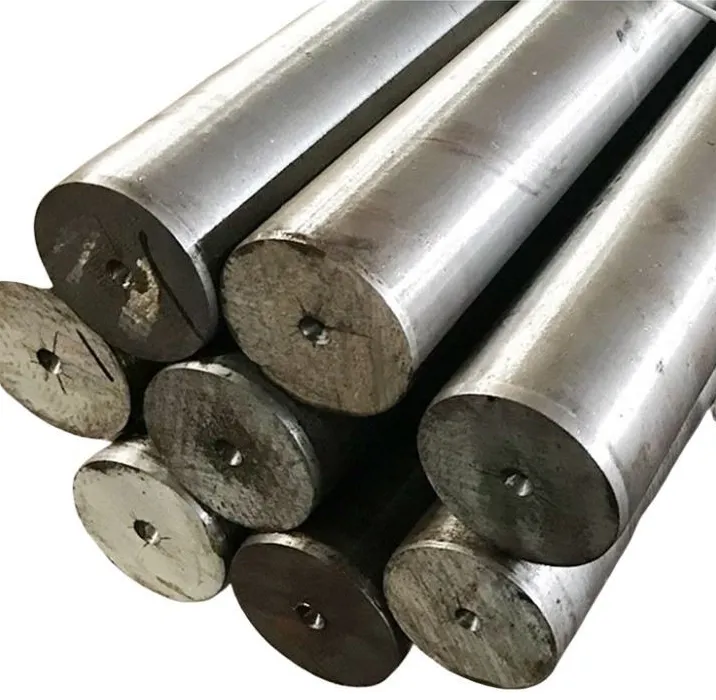
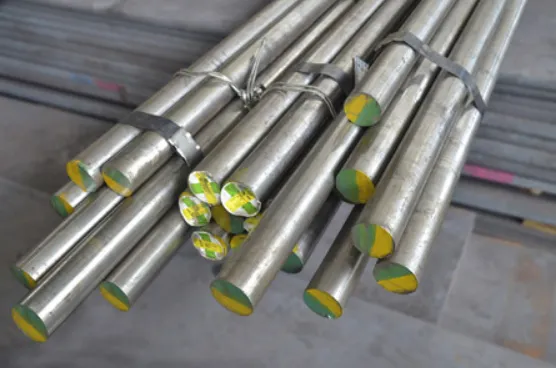
Bar rounds, forged rings, billets, precision tubing, and finished forgings are typical supply shapes for AMS 6490. Many vendors list AMS 6490 for tubing and bar stock forms.
Machinability:
-
Machinability is moderate; the alloy is harder to machine than low-carbon steels and requires cutting fluids and tooling chosen for high hardness materials. Suppliers sometimes recommend speeds/feeds and tooling types. Annealed or pre-hardened stock is commonly used for initial machining, followed by final heat treat and finish grinding.
Tolerances:
-
For aerospace parts, tight dimensional tolerances and roundness require precision forging and finish grinding. Ask vendors for achievable tolerances by process stage and include inspection gages in procurement documents.
8. Principal applications by industry
AMS 6490 is frequently specified where a combination of high hardness, temper resistance, and clean microstructure are non-negotiable:
-
Aerospace: radial and axial bearings, engine accessory bearings, high-speed spindles.
-
Defense and missiles: guidance system bearings and critical rotating spindles.
-
Industrial high-speed machines: turbine shaft bearings, high RPM spindles where heat generation and wear are high.
-
Precision tool components and dies: where high compressive strength and polishability are required.
If your component experiences high multi-axial stress, AMS 6490 is often top of the shortlist.
9. Comparing AMS 6490 with alternative alloys (selection table)
When choosing a material, engineers weigh cost, performance, and manufacturability. The table below summarizes how AMS 6490 stacks up against common alternatives.
| Alloy / Spec | Typical advantages | Typical drawbacks | Best used when |
|---|---|---|---|
| AMS 6490 (M-50, VAR/VIM) | Excellent high-temp hardness, premium cleanliness, excellent fatigue life | Higher cost, tighter processing controls required | Aerospace bearings, high-temp spindles |
| AMS 6491 (M-50 variant) | Similar to AMS 6490; sometimes different melt/processing class | Small differences in process requirements | When AMS 6491 is specified by OEM |
| M50NiL (case carburizable) | High core toughness and carburized case for contact fatigue life | Requires carburizing process and controls | Carburized rolling element bearings |
| 4340 (aircraft 4340) | Lower cost, good toughness | Less wear resistance at high temp vs M-50 | Structural components where wear not primary |
| 52100 | High hardness and wear resistance but lower temper resistance | Not as stable at elevated temperature; inclusion control varies | Plain bearings and rolling elements at lower temps |
| 300M | High strength, good toughness | Heat treat sensitive, different alloying mix | High-strength structural parts |
For bearing and high-temp rotating services, AMS 6490 is usually chosen when service demands premium temper resistance and predictable fatigue life.
10. Sourcing, quality assurance, and testing checklist
Sourcing AMS 6490 requires attention to supplier process certification and batch traceability. Below is a concise QA checklist for procurement teams.
| QA item | Why it matters | How to verify |
|---|---|---|
| AMS specification compliance | Ensures the chemistry and process are controlled | Request mill test report (MTR) referencing AMS 6490 |
| Melting route evidence | VIM/VAR or consumable vacuum electrode influences cleanliness | Supplier certificate of melt route or third-party test |
| Inclusion and cleanliness report | Inclusion content affects fatigue life | Request inclusion report or metallography photos |
| Hardness and tensile tests | Verify heat treat and mechanical targets | MTR with hardness, tensile, elongation |
| Non-destructive testing | Detects subsurface flaws in critical parts | UT, PMI, or phased-array as specified |
| Dimensional and surface finish | Critical for bearing fits | Inspection report, GD&T measurement sheets |
| Traceability | Required for aerospace and defense | Full heat, lot, and processing traceability on documentation |
When you purchase from MWalloys, we provide MTRs, processing route evidence, and inspection reports as standard for AMS 6490 parts.
11. Factory pricing model and a practical comparison
Engineers and buyers often ask about price. Steel prices vary with global alloy markets, melt route, section size, and finishing. Rather than presenting exact spot prices that change daily, this table shows realistic factory pricing indicators so purchasing teams can compare quotes from foundries and mills.
| Product form | Typical cost tier | What drives cost |
|---|---|---|
| Raw bar stock (AMS 6490, standard diameter) | High | Vacuum melt route, alloy content, bar size |
| Precision forged blanks (heat-treated) | Very high | Forging labour, heat treat, finishing |
| Precision tubing (seamless) | Very high | Tube processing, finishing |
| Finished, ground and lapped bearings | Premium | Multiple process steps and inspection |
| Standard commodity bearing steels (e.g., 52100) | Medium to low | Lower alloying and simpler melting routes |
Guidance on factory direct pricing
-
MWalloys positions AMS 6490 parts at factory direct pricing. This means you obtain parts without distributor markups and with full process traceability. Price depends on order size, geometry, finish, and inspection requirements. For serious quoting, provide part drawings, desired heat treat, and required certificates.
-
For quick budget planning, buyers often find AMS 6490 priced higher than common bearing steels by a premium percentage that reflects vacuum melt and finishing. Exact numbers are quote dependent.
For a transparent quotation, MWalloys issues a detailed RFQ response that breaks down material, processing, testing, and finishing costs.
12. Practical engineering recommendations for AMS 6490 components
-
Match material to failure mode: If subsurface fatigue is the limiting factor, insist on VIM/VAR melts and a clean inclusion report.
-
Design for manufacturing: Specify forgings rather than machining from large billets when fatigue life is critical; forged grain flow and fewer internal defects enhance life.
-
Specify process in the purchase order: Include AMS 6490 revision, melt route, required MTR fields, heat treat cycle or supplier recommendations, and NDT requirements.
-
Allow for post-heat treat finishing: Plan tolerances with final grind and lapping in mind; expect some distortion from hardening operations.
-
Surface condition: Micro-polishing or shot peening can extend life in rolling contact applications. Discuss with supplier.
13. FAQs
-
What is AMS 6490 used for
AMS 6490 is used for premium bearing and high-stress rotating components in aerospace and high-speed industrial applications. -
How does AMS 6490 differ from 52100
AMS 6490 has higher alloy content (Mo, Cr, V), better temper resistance at elevated temperature, and is vacuum melted for higher cleanliness. -
Can AMS 6490 be carburized
Standard AMS 6490 M-50 is through-hardened; M50NiL variants are designed to be carburized when a tough core plus hard case is required. -
What melting route is required
The AMS documentation and most OEMs require vacuum melting methods like VIM/VAR or consumable electrode vacuum melting for premium quality. -
Is AMS 6490 available as seamless tubing
Yes, reputable vendors supply AMS 6490 in tubing, bar, and forged shapes suitable for bearing applications. -
What certificates should I request
Ask for full MTRs referencing AMS 6490, inclusion/cleanliness evidence, hardness and tensile reports, and any NDT reports required by your application. -
How do I machine AMS 6490
Machine in softer condition where possible, use cutting fluids, carbide tooling, and conservative speeds. Final machining after heat treat requires diamond or CBN grinding for best surface integrity. -
Is AMS 6490 suitable for elevated temperature service
It has better temper resistance than many bearing steels and is commonly used where elevated operating temperature is expected. Confirm application temperature and consult supplier temper curves. -
What are common failure checks
Inspect for inclusion clusters, subsurface cracks by UT, hardness variation, and excessive retained austenite. Regular lubrication and proper fitment reduce risk in service. -
How do I get a factory quote from MWalloys
Provide part drawings, required material spec AMS 6490 revision, desired shape and finish, quantity, and inspection requirements. MWalloys will return an itemized factory direct quote with MTR and lead time.
14. Example purchase checklist for procurement teams
-
Part drawing with GD&T and finish specification
-
Required AMS revision and melt route (VIM/VAR or consumable vacuum electrode)
-
Quantity and lot size expectations
-
Heat treat target hardness and temper cycle (or request supplier recommendation)
-
Required MTR fields and NDT tests
-
Packaging, packing traceability, and shelf life requirements
-
Logistic needs and delivery schedule
15. Why choose MWalloys for AMS 6490 supply
-
Factory direct pricing: reduced distributor margins, transparent cost breakdown.
-
Process transparency: full MTRs and processing route evidence included.
-
Finishing and inspection: in-house grinding, lapping, and NDT options for flight critical parts.
-
Application support: engineering help with material selection, heat treat windows, and tolerancing.
If you would like, MWalloys can prepare a sample package: one MTRed bar or small forged blank, heat treated and ground to agreed tolerances for validation testing.
16. References
Key authoritative sources and supplier datasheets:
-
SAE / AMS 6490 specification page and AMS6490K listing.
-
AMS 6490 downloadable specification (PDF) and official clauses.
-
Carpenter Technology M-50 (material datasheet) and Company alloy pages.
-
Supplier technical notes and datasheets on M-50 and AMS 6490 from distributors.