
AMS 5734 defines the A-286 family (UNS S66286), a precipitation hardening, iron-base alloy prized for high strength, good corrosion resistance, and stability at elevated temperatures up to roughly 1300°F in continuous service. This alloy is supplied in bars, wire, forgings, tubing, and stock for heading or forging, and it excels in aerospace hardware, turbine components, fasteners, and high temperature structural parts. If you need AMS 5734 material at factory pricing with tailored dimensions or special processing, MWAlloys offers 100% factory price supply plus customization services.
1. What is AMS 5734
AMS 5734 is an SAE/AMS material specification that covers A-286 alloy supplied in bars, wire, forgings, mechanical tubing, and stock for forging or heading. The specification requires consumable-electrode melted material that is solution heat treated and delivered in the solution-treated condition unless otherwise specified. A-286 is an iron-nickel-chromium based superalloy engineered for elevated temperature strength and good corrosion resistance in aggressive environments. Engineers choose this grade when a balance of temperature capability, high strength after aging, and reasonable corrosion resistance are required, especially for aerospace or gas turbine hardware.
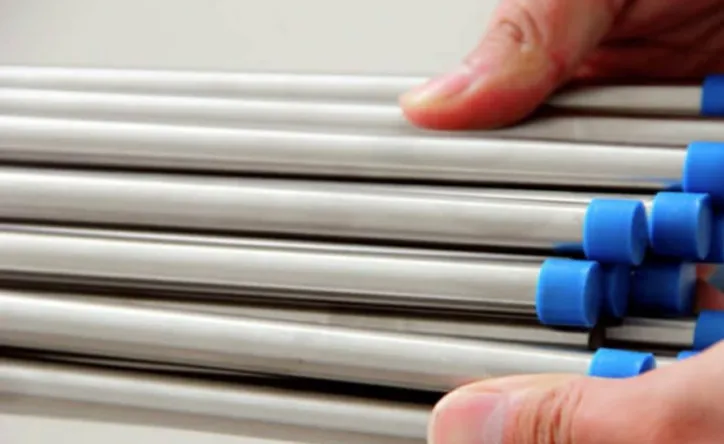
Key identifiers:
-
Common name: A-286
-
UNS: S66286
-
Typical alloy family: iron-base, precipitation hardenable (titanium strengthened) stainless.
If your project requires AMS 5734(A-286) steel, contact MWalloys for a free quote.
2. Chemical composition (nominal ranges) and explanation
The table below summarizes the commonly specified composition ranges for A-286 per AMS and producer datasheets. Use the specification text for procurement-level limits; this table presents typical values engineers use during material selection.
Table 1. Typical chemical composition (weight percent)
| Element | Typical / Specified range (wt%) |
|---|---|
| Carbon (C) | ≤ 0.08 |
| Manganese (Mn) | ≤ 2.00 |
| Silicon (Si) | ≤ 1.00 |
| Chromium (Cr) | 13.5 – 16.0 |
| Nickel (Ni) | 24.0 – 27.0 |
| Molybdenum (Mo) | 1.0 – 1.5 |
| Titanium (Ti) | 1.9 – 2.3 |
| Aluminum (Al) | ≤ 0.35 |
| Vanadium (V) | 0.10 – 0.50 |
| Boron (B) | 0.003 – 0.010 |
| Iron (Fe) | Balance |
Source data aggregated from AMS-related material sheets and producer technical data. Note that individual mill certificates give exact values per heat.
Why those elements matter
-
Nickel present at roughly 24–27% stabilizes the austenitic matrix and supports high temperature ductility.
-
Chromium in the 14–16% band supplies corrosion and oxidation resistance.
-
Titanium (near 2%) enables precipitation hardening through fine intermetallics that raise yield and tensile strength after aging.
-
Molybdenum and vanadium contribute to strength and creep resistance under load at elevated temperature.
3. Physical and mechanical properties
Engineers working with AMS 5734 need two sets of mechanical parameters: values for solution treated material and values after aging (age hardened). Aging dramatically increases yield and tensile strength.
Table 2. Representative mechanical properties
| Property | Solution treated (typical) | Aged / Precipitation hardened (typical) |
|---|---|---|
| Tensile strength | ~1000–1100 MPa (≈145–160 ksi) depending on processing | up to ~1035 MPa (150 ksi) typical in many datasheets |
| Yield strength (0.2% offset) | ~620–760 MPa (≈90–110 ksi) | commonly 759 MPa (110 ksi) reported |
| Elongation (in 2 in or 4D) | 20–40% depending on prior work | typically ≥ 12–25% depending on condition |
| Hardness (Brinell) | ~140–180 BHN | aged: ~248–321 BHN reported depending on treatment |
| Density | ~7.86 g/cm3 (0.286 lb/in3) | |
| Service temperature | useful strength up to about 1300°F (704°C) long term; oxidation resistance to higher short term temperatures |
Data reflect typical manufacturer sheets and technical summaries; design should use certified test bars or mill data for final numbers.
Creep and rupture behavior
A-286 shows good creep and stress-rupture resistance in mid-range high temperature service. Designers must consult long-term rupture data for sizing components subjected to sustained loads above roughly 600°F. For optimum creep rupture, specific solution treatments and aging cycles are selected to maximize resistance.
4. Heat treatment: solution annealing and aging cycles
Heat treatment determines final strength and toughness. AMS 5734 material typically arrives solution treated, but two standard solution options exist because each produces different balances of properties.
Common solution treatments
-
1800°F (982°C) hold for 1 hour then rapid cool (quench) — this yields the highest creep and rupture strength after aging.
-
1650°F (899°C) hold for 2 hours then rapid cool — this yields greater ductility and slightly different room temperature strength while retaining strong high temperature properties.
Typical aging (precipitation hardening) cycles
-
Single aging: about 1300–1400°F (704–760°C) for 12–16 hours then air cool. Many datasheets specify 1325°F (718°C) for 16 hours as a common condition to develop strength.
-
Two-step aging: 1300–1400°F hold for 16 hours then air cool, followed by 1200°F (649°C) hold for 8–12 hours then air cool. This sequence improves notch rupture strength and balances hardness with ductility for certain applications.
Design note
Choose the 1800°F solution for parts where long-term creep strength is the primary requirement. Choose 1650°F solution when ductility and less dimensional change during aging are priorities. Always use documented AMS or producer heat treatment procedures when procurement requires certified properties.
5. Corrosion, oxidation, and temperature behavior
Service temperature guidance
-
Continuous elevated temperature capability commonly quoted near 1300°F (704°C) for mechanical strength and corrosion resistance. Short term oxidation resistance can extend to 1500°F (816°C) in certain environments. Use conservative derating for long-term structural components.
Aqueous corrosion
-
In room temperature aqueous service the corrosion resistance approximates many 300-series stainless steels, offering reasonable resistance in neutral chloride environments but less resistance than high-molybdenum stainless alloys in heavy chloride service. Corrosion testing is recommended for critical applications.
Oxidation
-
Oxidation resistance is good for continuous exposures up to 1500°F. For intermittent higher temperature exposures consult producer data and run coupon tests for specific atmospheres.
6. Fabrication, welding, machining, forming, and inspection
Hot working and forging
-
Typical hot working range: roughly 1900–2050°F (1038–1121°C). Use short soak times to avoid grain growth. Forgings intended for final critical parts usually undergo consumable-electrode remelting and strict thermal control per AMS.
Cold work and forming
-
A-286 is workable in the solution treated condition, then cold worked if required, followed by aging to develop strength. Heavy forming should account for subsequent aging-induced dimensional change (typical contraction upon aging near 0.001 in/in reported for some cycles).
Welding
-
Welding of A-286 is possible using matching filler metals and controlled procedures. Postweld heat treatment and aging cycles may be required to restore desired properties. Consult AMS welding notes and qualified welding procedures when procurement includes welded assemblies.
Machining
-
Machineability is moderate. Use standard stainless tooling practices, control heat at the tool edge, and avoid excessive work hardening. For high-volume production plan for appropriate cutting tools, feeds, and speeds.
Non-destructive testing and inspection
-
Common buyer requirements include chemical analysis, tensile testing, hardness, microstructure checks, and NDT where parts are safety-critical. AMS 5734 communications typically require traceability back to melt and remelt documentation.
7. Typical applications and engineering rationale
A-286 per AMS 5734 is used where strength at elevated temperature, oxidation resistance, and reasonable aqueous corrosion performance are required. Representative applications include:
-
Aerospace fasteners, fittings, and springs used in engine and airframe service.
-
Engine turbine and auxiliary hardware such as casings, frames, and support components.
-
Supercharger and turbocharger parts, compressor components.
-
High temperature studs, bolts, and shafts where creep resistance is needed.
-
Cryogenic applications where the alloy retains ductility and non-magnetic character at low temperatures in the aged condition.
Why engineers pick A-286
-
High tensile and yield strength after aging together with good notch rupture capability make it attractive for critical fasteners and support members exposed to cyclic loading and elevated temperatures. The ability to be supplied in forgings and bars with controlled remelting meets aerospace traceability demands.
8. Comparison with nearby alloys (quick reference table)
Table 3. Practical performance comparison
| Property / attribute | AMS 5734 (A-286) | 17-4 PH | Inconel 718 |
|---|---|---|---|
| Typical max continuous service temp (strength) | ~1300°F (704°C) | ~600°F (316°C) for long-term | ~1300°F (704°C) for many rupture-limited uses |
| Corrosion resistance in aqueous chloride | similar to 300-series stainless | similar to 304 in many cases | superior in many harsh environments |
| Precipitation hardening route | Ti stabilized age hardening | Cu precipitation hardening | Ni-based γ" precipitation (Nb) |
| Typical use case | high temp fasteners, turbine hardware | moderate temp structural parts, valves | highest strength at high temp, advanced turbine components |
Caveat: Each alloy has multiple temp/aging combinations that change properties. Use certified data sheets for final selection.
9. Procurement, certification, and quality control
When specifying AMS 5734 material for purchase or drawing callouts, include:
-
Exact AMS revision number and clause references required (for example AMS 5734 or AMS5734K where relevant).
-
Form (bar, forging, tubing), size ranges, heat treatment condition (solution treated or aged, and the cycle to apply if vendor must age).
-
Required tests: chemical analysis per heat, tensile tests on samples, hardness, microstructure report, melt and remelt certificates (if remelting is mandatory), and NDT where required.
-
Traceability: forward and backward lot traceability to the melt number, batch records, and certificates should be standard for aerospace procurement.
Buyer inspection checklist (practical)
-
Confirm UNS S66286 is shown on mill certificate.
-
Verify chemical composition against AMS limits.
-
Verify solution heat treatment and whether aging must be done by supplier or buyer.
-
Review mechanical test results from representative samples.
-
Confirm any special processing like ESR or AOD melting and consumable-electrode remelting per AMS text.
10. Recommended specification language for drawings and purchase orders
Sample clause for a purchase order line item:
-
“Material: A-286 UNS S66286 per AMS 5734, consumable-electrode melted. Form: round bar. Condition: solution heat treated at 1650°F for 2 hours then water or oil quenched; final condition to be [solution treated / solution treated and aged per 1325°F for 16 hours]. Mill certificates required showing full chemical analysis and heat number traceability. Mechanical test report required for tensile, yield, elongation. NDT: [penetrant/UT] per drawing.”
Include any required testing frequencies, acceptance criteria, and special packaging instructions.
11. Quick-reference tables for engineers
Table 4: Heat treatment quick reference
| Process step | Typical parameters | Purpose |
|---|---|---|
| Solution treat 1800°F (982°C) 1 h quench | highest creep/rupture strength after aging | maximize high temperature rupture resistance |
| Solution treat 1650°F (899°C) 2 h quench | balanced ductility and strength | reduce aging dimensional change, improve room temp ductility |
| Age 1325°F (718°C) 16 h air cool | common age to develop tensile strength | raise yield and tensile to design levels |
| Two-step age 1300–1400°F then 1200°F | improve notch rupture strength | better notch toughness and balanced hardness |
Sources: major producer technical sheets and AMS references.
Table 5: Forms commonly offered under AMS 5734
| Form | Typical availability | Notes |
|---|---|---|
| Bars | round, hex, flats | Common aerospace sizes, precision ground available |
| Forgings | rings, discs, complex profiles | Requires documented forging cycle and remelt practice |
| Wire | drawn | used for springs, small fasteners |
| Tubing | mechanical tubing | often used for high temp tubing applications |
| Stock for heading/forging | blanks | used for fastener and headed part manufacture |
12. Practical design tips for engineers and purchasers
-
Specify the solution and aging heat treatment that matches expected service loads rather than leaving it open ended. This avoids mismatched mechanical data.
-
For high notch or fatigue-prone designs request two-step aging or produce prototype samples and run representative tests.
-
Where corrosion fatigue is a risk include finish requirements and consider coatings or cathodic protection.
-
Validate forgings with representative creep tests when components will see sustained load at elevated temperature.
13. MWAlloys supply capability and purchasing benefits
MWAlloys can supply AMS 5734 (A-286, UNS S66286) material with full mill traceability, consumable-electrode remelt options on request, and the common supply forms engineers require. We provide:
-
100% factory price advantage for direct buyers.
-
Custom sizing, special heat treatment steps, and finishing per buyer drawings.
-
Standard documentation: mill test report, chemical and mechanical tests, heat numbers, and packing list.
Contact MWAlloys with your drawing and preferred AMS revision; we will confirm availability, lead time, and tailored processing notes.
14. Frequently asked questions (FAQs)
1. What is AMS 5734 used for?
2. What is the UNS designation for AMS 5734 material?
3. Which heat treatment produces the highest creep strength?
4. Which aging cycle is most frequently used?
5. How does A-286 compare to 17-4 PH?
6. Is A-286 corrosion resistant?
7. What forms can vendors supply under AMS 5734?
8. Does aging change dimensions?
9. What certification should a buyer request?
10. Can A-286 be welded?
15. Closing recommendations for engineers and procurement teams
-
Use AMS 5734 wording on purchase orders and include the required condition and testing details. Request mill certificates and remelt records for aerospace-level acceptance.
-
For new designs prototype components with identical heat treatment and finishing before production release; run tensile, fatigue, and creep tests representative of service loading.
-
When corrosion environments are uncertain run small-scale corrosion exposure tests that replicate expected temperatures, chemistry, and aeration rates.