

At 2026, buyers of aluminum alloy 6061 usually see a metal price per pound in the broad band of about 1.90 to 3.20 US dollars for mill direct material, with China toward the lower end, India slightly above that, and the United States closer to the upper part of the range. Smaller lots from stockists or retail outlets often sit far higher, frequently 3.50 to 6.00 US dollars per pound depending on form, temper, and brand.
What is aluminum alloy 6061 and why does its price per pound matter so much?
Aluminum 6061 is a precipitation hardened alloy with magnesium and silicon as the principal alloying elements. It sits in the 6xxx family, often called "Al-Mg-Si" alloys. For many engineers it is the default choice when a design needs a balance of:
- Medium to high strength.
- Excellent machinability.
- Good weldability.
- High corrosion resistance
- Reasonable price per pound
Typical composition window for 6061 aluminum in weight percent:
- Magnesium: 0.8 to 1.2
- Silicon: 0.4 to 0.8
- Iron: up to 0.7
- Copper: 0.15 to 0.4
- Chromium: 0.04 to 0.35
- Manganese, zinc, titanium: trace levels
- Aluminum: remainder
Thanks to this chemistry and heat treatment response, 6061-T6 or 6061-T651 reaches yield strength in the region of 35 to 40 ksi with tensile strength of 42 to 45 ksi, while still machining cleanly and welding with standard processes.
Industries that rely heavily on 6061 include:
- Automotive components and after market parts
- General structural frameworks
- Marine fittings and hull structures
- Aerospace ground support equipment
- Machine bases, tooling plates, jigs and fixtures
- Consumer products, sport equipment, bicycle frames
- Electronics housings and heat sinks
In those segments, material cost per pound feeds directly into component cost, especially where aluminum content per product is high. A seemingly small shift of 0.20 US dollars per pound can flip a project margin from acceptable to unviable once volumes reach hundreds of tons.
At MWalloys, clear understanding of the 6061 aluminum price landscape allows:
- More accurate quotations
- Better sourcing strategies in different regions
- Support for customers in long term cost planning
The rest of this article focuses on concrete numbers, real market structure, and practical tactics rather than abstract theory, to match what serious buyers actually need.
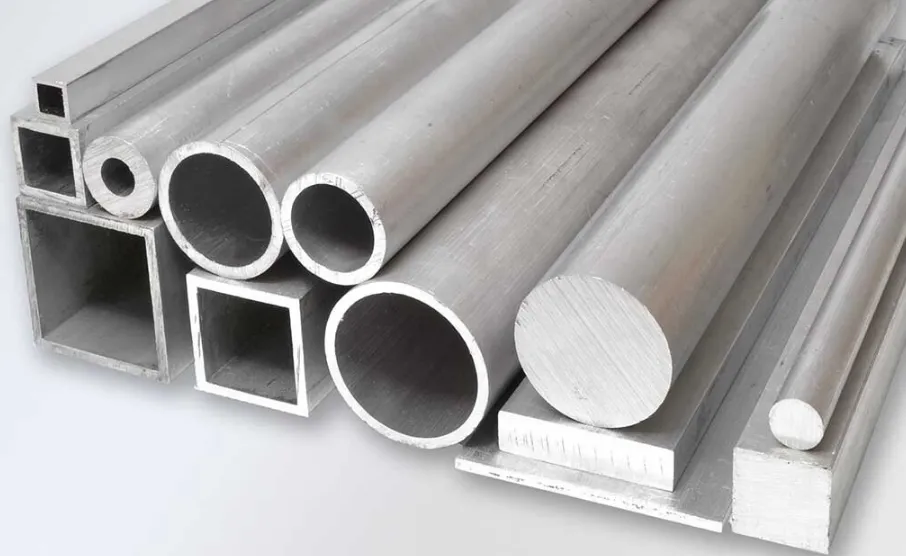
What is the typical aluminum 6061 price per pound in 2026 by region?
Live prices move daily with LME, regional premiums, energy cost, and freight. That said, industrial buyers need working bands for budget planning. Based on market behavior up to late 2024 and structural cost differences between regions, the following table gives realistic 2026 working assumptions for bulk purchases of standard commercial quality 6061 sheet, plate, extrusion, bar and billet.
These figures refer to large volume orders (several tons or more), regular credit terms, and mainstream tempers such as 6061-T6 or T651.
2026 aluminum alloy 6061 price per pound by region
Table 1 – Typical 2026 bulk industrial price levels for 6061, by region
| Region | Typical range for mill direct 6061 (USD per lb) | Most common band for large contracts (USD per lb) | Notes |
|---|---|---|---|
| China | 1.90 – 2.50 | 2.00 – 2.30 | Lower labor and conversion cost, export freight and any tariffs still need addition |
| United States | 2.20 – 3.20 | 2.40 – 2.90 | Higher energy and labor cost, Midwest premium, possible import duties for non US origin |
| India | 2.00 – 2.70 | 2.10 – 2.40 | Competitive labor, fast growing domestic consumption, logistics to EU/US add cost |
| European Union | 2.30 – 3.10 | 2.50 – 2.90 | Energy sensitive region, environmental levies, complex logistics from Asia |
| Southeast Asia (ex China) | 2.00 – 2.70 | 2.10 – 2.40 | Attractive for extrusion sourcing, freight cost to buyers outside region is key factor |
Key clarifications:
- These are indicative working ranges for 6061 alloy material only, not fabricated parts.
- Freight to your plant, customs charges, and any distributor markup sit on top.
- Very tight tolerances, aerospace grades with extra testing, or special forms (thick plate, intricate extrusions) can push the actual price outside these bands.
For up to date figures, buyers normally reference the current London Metal Exchange aluminum cash price plus regional physical premiums and then negotiate a fabrication premium with suppliers such as MWalloys or partner mills.
How do product form and temper change the 6061 aluminum price per pound?
A single price per pound never tells the entire story. 6061 cost varies a lot with product geometry, thickness, temper, and quality requirements.
Price variation by form for 6061 aluminum
Table 2. Typical relative price levels for different 6061 product forms (industrial quantities)
| Product form | Relative cost per pound vs 6061 sheet (approx) | Comment |
|---|---|---|
| Hot rolled or cold rolled sheet | Baseline 1.0 | Nearly commodity, high volumes, efficient mills |
| Plate up to 50 mm | 1.10 – 1.30 | Extra rolling passes, more heat treatment, machining allowance |
| Thick plate above 50 mm | 1.30 – 1.60 | Lower yield from ingot, long heat treatment cycles, extra inspection |
| Standard extrusion (simple profiles) | 1.10 – 1.40 | Extrusion die cost, press time, trimming, age hardening |
| Complex extrusion profiles | 1.30 – 1.80 | Slower press speed, higher scrap from die trials, stricter QC |
| Drawn bar and rod | 1.20 – 1.50 | Drawing passes and straightness requirements |
| Precision plate / tooling plate | 1.40 – 1.90 | Stress relief, surface finish, tight flatness, often higher tolerance machining |
| Forged components, rings, blocks | 1.60 – 2.50 | Heavy forging operations, complex machining, individualized runs |
In practice, if standard 6061 sheet for a particular month lands around 2.20 US dollars per pound in China for a specific buyer, then:
- Common 6061 extrusions might land near 2.50 to 2.90
- Tooling plate of the same alloy might land near 3.00 to 3.80
That gap reflects processing complexity rather than raw metal value.
Impact of temper on price
The common grades of aluminum 6061 are as follows:
- O (annealed)
- T4 (solution heat treated, naturally aged)
- T6 (solution heat treated and artificially aged)
- T651 (stress relieved, usually by stretching, then aged)
Temper influences both mechanical properties and processing route. Pricing impact:
- O temper is cheaper to produce but seldom used for high strength structural work.
- T4 sometimes carries a slight premium over O due to heat treatment energy cost.
- T6 is the workhorse for strength; its price usually reflects the baseline market rate.
- T651 has an extra stretching step, so cost per pound often sits a little higher than T6, but buyers gain better dimensional stability and lower residual stresses.
For most industrial buyers, the uplift for T651 over T6 might sit somewhere in the band of 0.05 to 0.15 US dollars per pound, depending on mill and thickness. In return, machining distortion risk drops, often saving more than that extra metal cost.
How has the 6061 aluminum price per pound moved during the past five years?
While 2026 buyers care about current numbers, the past five years reveal how sensitive 6061 is to global shocks, energy price swings, and trade policy. This history helps purchasing teams judge risk for long term contracts.
Below is a simplified view of average transaction levels for bulk industrial 6061 material (plate and extrusion mix) connected to primary aluminum prices from 2019 through 2023, calculated in US dollars per pound for large lots.
Past five year market overview for 6061 price per pound
Table 3. Indicative global average industrial price levels for 6061 aluminum, 2019–2023
| Year | Approx global average 6061 mill direct price (USD per lb) | Main drivers |
|---|---|---|
| 2019 | 1.40 – 1.60 | Stable demand, moderate energy pricing, relatively calm trade environment |
| 2020 | 1.30 – 1.70 | Early pandemic shock cut demand, then supply disruptions offset the drop; volatility increased |
| 2021 | 1.80 – 2.40 | Strong rebound in manufacturing, shipping bottlenecks, high container freight, energy price rise |
| 2022 | 2.10 – 2.80 | Energy crisis in Europe, war in Ukraine, smelter curtailments, tight physical markets |
| 2023 | 1.90 – 2.60 | Slight easing from 2022 peaks, but still above pre pandemic levels; some capacity restarts and demand normalization |
Actual prices for specific regions sometimes deviated meaningfully from that global band due to:
- Transport cost shocks after the pandemic started
- Region specific energy tariffs
- US and EU trade measures on certain origins
- Exchange rate swings between USD, RMB, INR, and EUR
From late 2023 into 2024, markets showed tentative stabilization in many regions, with 6061 cost per pound slowly trending down from 2022 highs but still nowhere near 2019 levels. That context helps explain why a 2026 buyer should not expect a sustainable return to pre pandemic lows unless there is a major structural change in smelting and energy cost.
What key factors influence aluminum alloy 6061 price per pound?
Any procurement specialist thinking only in terms of a single number per pound will struggle in negotiations. Taking price drivers apart and linking each to a reference index allows much finer control.
Main cost components in the 6061 price per pound
The price of aluminum 6061 consists of five components:
- Primary aluminum metal value
- Alloying additions (magnesium, silicon, etc.)
- Conversion cost at the mill (casting, rolling, extrusion, heat treatment)
- Logistics, handling and regional premiums
- Supplier margin and risk coverage
Table 4. Typical breakdown of 6061 aluminum price per pound
| Cost component | Rough share of final price per pound | Notes |
|---|---|---|
| Primary aluminum content | 40 – 60 percent | Linked to LME or similar exchange price plus regional premium |
| Alloying elements and scrap management | 5 – 10 percent | Magnesium and silicon price cycles influence this share |
| Mill conversion (casting, rolling, extruding, heat treatment) | 20 – 35 percent | Highly sensitive to energy and labor cost, also plant efficiency |
| Transport, warehousing, regional premiums | 5 – 15 percent | Includes freight, import/export costs, Midwest or regional premiums |
| Supplier margin and risk coverage | 5 – 15 percent | Varies with competition level, credit terms, and volatility |
The primary metal price is non negotiable in the short term. The levers lie in:
- Conversion cost, through choice of region and mill efficiency
- Logistics, through order consolidation and smarter shipping
- Margin, though only to a certain point before quality and service decline
Specific factors that shift 6061 cost
- Primary aluminum reference price
- Directly tied to bauxite and alumina supply, energy markets, and capacity utilization.
- When LME aluminum moves from 1.00 to 1.25 US dollars per pound, even with unchanged conversion cost, 6061 price per pound climbs at least 0.25 for every pound of finished product.
- Energy prices
- Aluminum production consumes a lot of electricity.
- Regions with hydro or nuclear heavy grids (parts of China, Canada, some EU states) sometimes gain an advantage compared with coal or gas heavy ones when energy prices spike.
- Rolling mills and extrusion plants also use gas and electricity extensively for furnaces and aging ovens.
- Labor and regulatory environment
- Labor cost, environmental limits, and safety regulations differ widely between China, India, US, EU and others.
- Tighter environmental rules often require investment in filtration, emission controls, and waste handling, feeding into conversion cost.
- Capacity and utilization
- When extrusion presses or rolling mills run at very high utilization, lead times lengthen and mills gain pricing power.
- In downturns, some mills fight for tonnage, easing conversion premiums.
- Scrap flows and recycling rates
- 6061 scrap has good value; mills with efficient recycling lines can offset part of the metal cost.
- When scrap supply is tight, mills rely more on primary ingot and cost goes up.
- Alloy specification and quality level
- Aerospace grade 6061 with AMS or equivalent certification, ultrasonic inspection, test coupons, and traceability costs more per pound than general engineering grade.
- Tight tolerances on flatness, thickness, or straightness also drive extra processing.
- Trade policy and tariffs
- Anti dumping duties or safeguard measures for certain origins can raise effective cost per pound inside target markets even if the underlying primary metal cost in that origin is low.
- US Section 232 measures and EU trade defense actions are examples that affected flows of aluminum semifinished goods.
- Exchange rates
- For internationally traded metal, a weaker domestic currency supports exporters by lowering dollar denominated cost, while importers in strong currency regions may see lower landed prices.
- Volatility sometimes forces mills to build in buffers or require pricing clauses.
Summary table of price influence factors
Table 5. Factors affecting 6061 aluminum price per pound
| Factor category | Specific element | Typical effect direction |
|---|---|---|
| Metal market | LME aluminum, alumina, bauxite prices | Higher primary metal price pushes 6061 cost up |
| Energy | Electricity and gas tariffs | Energy intensive regions see spikes in conversion cost |
| Labor & regulation | Wages, environmental rules | Stricter rules tend to increase cost, but may raise quality too |
| Production | Mill utilization, plant efficiency | High utilization and bottlenecks support higher conversion premiums |
| Trade | Tariffs, sanctions, quotas | Can raise landed cost in target market even if origin cost is low |
| Currency | USD vs RMB, INR, EUR exchange rates | Moves export competitiveness and final USD cost |
| Technical spec | Temper, tolerance, certifications | High spec material costs more but yields better performance |
For MWalloys or any serious supplier, clear communication about which component ties to which external index can build trust with procurement teams. Contracting models that separate metal price from conversion premium help both sides manage volatility in a structured way.
What could happen to the 6061 aluminum price per pound in the next five years?
Any precise prediction would be dishonest. However, buyers still need planning scenarios. Using long term structural trends visible by late 2024, the following medium range view for 6061 proves useful for budgeting and risk assessment.
Key assumptions for 2026–2030:
- No massive new wave of ultra low cost smelter capacity beyond announced projects.
- Gradual tightening of environmental standards, especially in Europe and parts of China.
- Continued global push for lightweight and recyclable materials in transport and construction.
- Moderate global GDP growth with periodic downturns but no extreme collapse.
Five year scenario for 6061 aluminum price per pound
Table 6. Illustrative scenario for global average industrial 6061 price per pound, 2026–2030
| Year | Scenario band for global average 6061 price per pound (USD per lb) | Comments |
|---|---|---|
| 2026 | 1.90 – 2.60 | Stabilized after earlier volatility, energy still elevated vs 2019 |
| 2027 | 1.85 – 2.70 | Potential mild softening if capacity additions outpace demand |
| 2028 | 1.95 – 2.80 | Environmental pressure and electrification trends keep aluminum demand firm |
| 2029 | 2.00 – 2.90 | Structural demand from EVs, renewable energy, and infrastructure |
| 2030 | 2.00 – 3.10 | Long term floor higher than pre 2020 levels unless there is a significant technological shift |
Important points for procurement teams:
- The floor for aluminum prices likely stays higher than before 2020, given energy and environmental cost trends.
- Sharp recessions or unexpected geopolitical shocks still can push prices far below or above this band for limited periods.
- Contracts tied partly to an index with a negotiated conversion premium allow buyers to ride through these swings more calmly.
MWalloys can structure long term supply agreements where:
- The primary metal component references an agreed index (LME cash plus specific regional premium).
- Conversion charge per pound is fixed or subject to explicit annual adjustment formulas linked to labor or energy indices, rather than ad hoc renegotiation.
Such arrangements improve predictability on both sides.
How do China, the United States and India compare on 6061 price per pound in 2026?
Sourcing teams often compare those three countries because together they cover a large share of world aluminum production and consumption. While final delivered cost into your factory depends on freight and duties, the mill gate price still matters.
Below table condenses realistic 2026 industrial ranges for 6061 sheet, plate and standard extrusions from responsible mid to large scale producers.
2026 comparison: China vs United States vs India
Table 7. 2026 indicative mill gate 6061 aluminum price per pound
| Country | Typical industrial range for 6061 (USD per lb) | Average reference level (USD per lb) | Key reasons for relative level |
|---|---|---|---|
| China | 1.90 – 2.50 | Around 2.15 | Scale of production, large local market, competitive labor and energy contracts in some provinces |
| United States | 2.20 – 3.20 | Around 2.70 | Higher labor, stricter environmental and safety regulation, strong domestic demand, regional premiums |
| India | 2.00 – 2.70 | Around 2.30 | Growing capacity, competitive wages, expanding domestic consumption, export logistics cost to far markets |
Interpretation for international buyers:
- China offers attractive base metal cost, particularly for high volume extrusions and plate, but you must account for ocean freight, potential anti dumping duties, and any compliance requirements in your own jurisdiction.
- United States remains relatively high in price per pound but often offers shorter lead times for North American customers, plus robust legal protection and closer technical support.
- India sits between China and US on cost, with increasing capability in both extrusion and rolling, while shipping lines between India, Europe, and Africa continue to expand.
MWalloys frequently helps customers evaluate not only nominal price per pound from those origins, but total landed cost including:
- Port handling
- Inland freight
- Insurance
- Customs brokerage
- Any additional certification or testing required for your industry
What practical steps help buyers control the 6061 aluminum price per pound they actually pay?
A strong understanding of drivers is only valuable when procurement teams convert that knowledge into daily decisions. Below are practical measures that MWalloys often recommends to industrial customers.
Rather than a single all inclusive price per pound that never changes until renewal, structure agreements with two components:
- Metal component
- Pegged to an agreed reference such as LME 3 month aluminum, plus a defined regional premium.
- Adjusted monthly or quarterly.
- Conversion component
- Fixed in US dollars per pound (or per kg), negotiated based on product form, tolerances, volume, and service level.
- Adjusted only through agreed formulas linked to labor or energy indices, or renegotiated annually.
This approach brings transparency and avoids constant emergency renegotiation if LME shifts by 20 percent in a quarter.
2. Optimize lot size and order frequency
Smaller, frequent orders often carry higher per pound pricing because mills and distributors bear more handling, packaging and administration cost.
Optimization ideas:
- Combine orders across plants where internal logistics allow.
- Use quarterly or half yearly volume commitments with flexible release schedules.
- Work with suppliers to design packaging that suits both plant handling and shipping efficiency.
Often, moving from frequent 500 kg orders to consolidated 5 ton drops cuts price per pound by several percentage points.
3. Match product form and tolerance to real need
Over specification is a common hidden driver of high material cost.
Examples:
- Using thick 6061 plate where a welded structural extrusion assembly would function equally well but at lower scrap and less machining.
- Asking for T651 when T6 provides sufficient dimensional stability for the machining process.
- Calling for aerospace grade with full traceability for non critical industrial fixtures.
MWalloys engineers can collaborate with your design and manufacturing teams to review bills of material for such mismatches. Optimizing specification often yields far greater savings than razor thin price negotiations.
4. Consider multi region sourcing with qualification
Single sourcing from one mill or country may appear convenient, yet it creates strong dependency. Multi region sourcing, when managed carefully, can:
- Provide a reference price to check if any supplier quote drifts away from reality.
- Improve resilience during regional disruptions, such as a local energy crisis or port closure.
- Offer currency diversification where your company has revenues in several currencies.
However, qualifying additional suppliers takes time. Material must satisfy dimensional, mechanical, and surface requirements. MWalloys can coordinate sampling, testing, and trial runs while maintaining central standards.
5. Use honest communication with suppliers during volatility
When metal markets move sharply, adversarial tactics can damage long term relationships. Many mills and service centers prefer transparent dialogues where:
- Buyers share forecasts and production plans as far ahead as possible.
- Suppliers explain capacity constraints and the real drivers for any surcharges.
- Both parties discuss alternative forms or alloy substitutions when appropriate.
This atmosphere reduces the risk of sudden allocation cuts or aggressive repricing, which often costs more in production disruption than any per pound savings gained from short term pressure.
How to convert 6061 aluminum price per pound into other units and evaluate cost effectiveness?
Some engineers and financial analysts work mainly with metric units or cost per unit strength rather than per pound levels. Simple conversions support those views.
Converting between pounds, kilograms, and metric tons
Key relationships:
- 1 pound (lb) = 0.4536 kilograms (kg)
- 1 kg = 2.2046 lb
- 1 metric ton (t) = 1000 kg = 2204.6 lb
So, if your 6061 T6 plate contract price stands at 2.40 US dollars per pound, equivalent values are:
- Per kilogram: 2.40 × 2.2046 ≈ 5.29 US dollars per kg
- Per metric ton: 2.40 × 2204.6 ≈ 5291 US dollars per ton
Conversely, if your supplier quotes 4700 US dollars per metric ton delivered:
- Per kilogram: 4700 / 1000 = 4.70 US dollars per kg
- Per pound: 4700 / 2204.6 ≈ 2.13 US dollars per pound
For global comparisons or internal reporting, always specify unit and incoterm alongside the figure, such as:
- "2.30 USD per lb, FOB Shanghai"
- "4.90 USD per kg, CIF Hamburg"
This removes room for misunderstanding.
Cost per unit strength comparison example
Engineers sometimes ask whether a different alloy or even steel might save cost. One simple yardstick is cost per unit of yield strength.
Example:
- 6061-T6 typical yield strength: 35 ksi (240 MPa)
- Price: 2.40 US dollars per pound
- Structure mass: 100 lb
Material cost: 240 US dollars, yield strength 35 ksi.
Now compare with standard structural steel:
- Mild structural steel yield strength: 36 ksi
- Price: 0.60 US dollars per pound (illustrative)
- To reach same stiffness at equivalent load with steel instead of aluminum, often mass must roughly triple due to density difference.
Densities:
- Aluminum: about 2.7 g/cm³
- Steel: about 7.8 g/cm³
So equivalent structure might need about 300 lb of steel.
Material cost:
- 300 lb × 0.60 = 180 US dollars
On material alone, steel appears cheaper for the same strength. Then we must fold in:
- Higher transport cost for heavier steel structure
- More difficult handling or need for heavier lifting equipment
- Different fabrication processes and cycle times
- Potential corrosion protection coatings
This sort of trade off analysis shows that while 6061 has a higher price per pound than many steels, system cost at product level can still favor aluminum, especially for weight sensitive sectors such as transport, marine, and aerospace ground equipment.
What additional unique considerations matter when sourcing 6061 in 2026?
Beyond classic cost and specification topics, buyers in 2026 face new pressures from sustainability metrics and supply chain transparency.
Regulators and customers increasingly ask for information on:
- Carbon footprint per ton of aluminum
- Recycled content percentage
- Compliance with environmental rules in producing country
- Labor conditions within the supply chain
Producers with hydro powered smelters or strong recycling infrastructure can demonstrate considerably lower CO₂ emissions per kg of metal. Some buyers now accept slightly higher price per pound for low carbon aluminum to meet corporate climate targets.
MWalloys collaborates with mills that can provide:
- Environmental product declarations (EPD)
- Data on Scope 1 and Scope 2 emissions for their operations
- Proof of recycled input share
That documentation supports your own ESG reports and may become mandatory for certain tenders, particularly in Europe and North America.
Digital traceability and data integration
For sectors that rely on 6061 in safety critical parts, traceability from ingot to finished component keeps gaining importance.
Expected features include:
- Heat number and batch tracking
- Electronic certificates of analysis and mechanical testing
- Barcode or QR code labels for every bundle or plate
- Data integration with ERP and MES systems
Those capabilities influence supplier choice and sometimes add a small cost per pound due to system overhead, yet they also reduce internal administrative labor and quality risk.
Supply security and geopolitical risk
Events from 2020 onward highlighted how quickly:
- Ports can become congested
- Sanctions can hit specific exporting countries
- Energy crises can push smelters offline
Sourcing strategies for 6061 now usually incorporate:
- More regional balancing rather than dependence on a single low cost origin
- Optional buffers of inventory for critical dimensions and tempers
- Backup specifications that allow more than one alloy or form in non critical areas
MWalloys can support contingency planning by mapping alternative mills and forms that satisfy your core functional requirements, then helping certify them ahead of any crisis.
FAQs: Common questions about aluminum alloy 6061 price per pound
6061 Aluminum: Price per Pound & Market Analysis 2026
1. Why are online 6061 prices so different from mill or MWalloys quotes?
2. Is 6061 more expensive per pound than 6063?
3. Does 6061-T651 always cost more than 6061-T6?
4. How much is 6061 scrap worth compared to prime material?
5. Which region offers the lowest 6061 price per pound?
6. How large must an order be to get mill-level pricing?
7. Why did my 6061 price rise even when LME aluminum fell?
8. How do tariffs impact the price I pay for 6061?
9. Can I hedge 6061 aluminum prices to protect margins?
10. Why consider MWalloys for 6061 aluminum procurement?
Beyond a competitive price per pound, MWalloys provides transparency and resilience. We offer:
- Access to multiple global origins for supply chain stability.
- Clear price structures (Metal vs. Conversion vs. Logistics).
- Technical support to optimize alloy selection and minimize waste.
- Full ESG and traceability documentation for modern compliance.
By combining realistic pricing bands, a clear breakdown of cost drivers, regional comparisons, and practical purchasing methods, procurement teams can approach aluminum alloy 6061 sourcing in 2026 with far more control and confidence. For more specific figures tailored to your volume, specification, and location, you would need up to date quotations from suppliers such as MWalloys.