
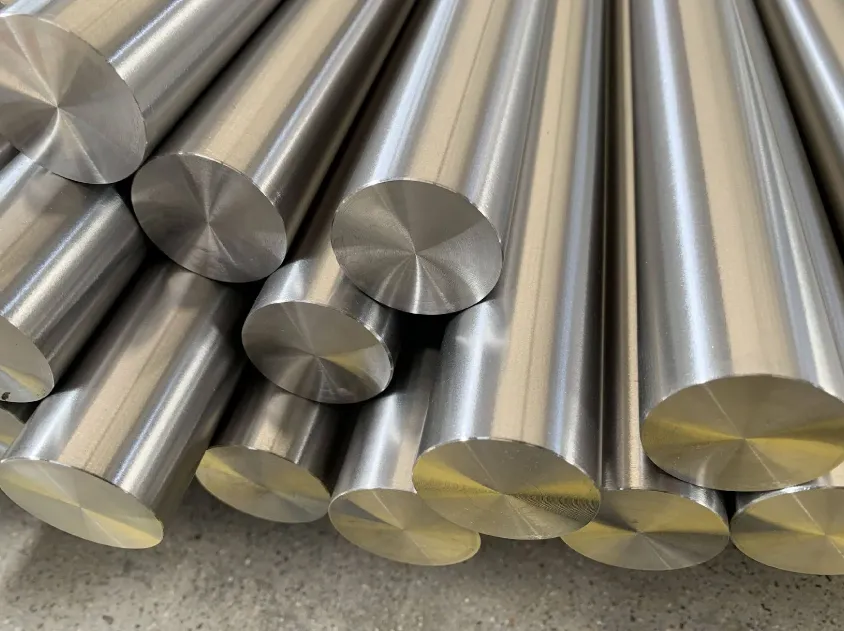
AISI 4140 is a versatile chromium-molybdenum low alloy steel characterized by high fatigue strength, abrasion resistance, and excellent impact toughness. It is the industry standard for components requiring varying hardness levels, as it responds exceptionally well to heat treatment. For procurement officers and engineers, the critical takeaway is that MWalloys provides this material at 100% factory-direct pricing, eliminating distributor markups while offering precise dimensional customization not found in standard stock lists. Whether you require pre-hardened (PH) conditions or annealed states for machining, 4140 remains the superior choice for automotive axles, oil and gas drill collars, and heavy machinery gearing.
What is AISI 4140 alloy steel?
AISI 4140 (UNS G41400) is a medium-carbon, low-alloy steel containing chromium and molybdenum. It sits in the family of “chromoly” steels often specified where a combination of tensile strength and toughness is required along with the capacity for deep hardening with appropriate quench and temper cycles. Common supply conditions include hot-rolled, normalized, annealed, quenched & tempered and through-hardened bars, plates and forgings. Typical industrial applications are axles, crankshafts, hydraulic piston rods, tooling components, gears and heavy machinery parts.
Defining AISI 4140: Chemical Composition and Metallurgy
The designation "4140" is not arbitrary. Under the AISI/SAE naming system, the "41" indicates a low alloy steel containing chromium and molybdenum, while "40" represents a nominal carbon content of 0.40%. This specific chemistry creates a material that balances ductility with strength, solving the brittleness issues often found in plain high-carbon steels.
If your project requires 4140 alloy steel, contact MWalloys for a free quote.
Engineers favor this grade because the molybdenum content prevents temper brittleness, a common failure mode in other hardened steels. Below is the precise chemical formulation that MWalloys adheres to during the smelting and refining process.
Table 1: AISI 4140 Chemical Composition (ASTM A29 Standards)
| Element | Symbol | Minimum % | Maximum % | Function in Matrix |
| Carbon | C | 0.38 | 0.43 | Primary hardening agent; determines yield strength. |
| Chromium | Cr | 0.80 | 1.10 | Enhances corrosion resistance and hardenability. |
| Molybdenum | Mo | 0.15 | 0.25 | Increases creep strength and prevents brittleness. |
| Manganese | Mn | 0.75 | 1.00 | Improves workability and tensile strength. |
| Silicon | Si | 0.15 | 0.35 | Deoxidizer; increases strength/hardness. |
| Phosphorus | P | - | 0.035 | Kept low to prevent micro-cracking. |
| Sulfur | S | - | 0.040 | Kept low to ensure impact toughness. |
Note: MWalloys can strictly control Sulfur content to <0.005% for "Clean Steel" requirements used in aerospace or high-stress fatigue applications.
Mechanical and Physical Properties: The Data Sheet
Understanding the capabilities of 4140 requires analyzing its behavior under stress. This material exhibits a unique combination of properties that change significantly depending on the heat treatment condition (Annealed vs. Quenched & Tempered).
Physical Properties
These constants remain relatively stable regardless of heat treatment and are essential for calculating weight and thermal dynamics in engineering designs.
Table 2: Physical Constants
| Property | Metric Value | Imperial Value |
| Density | 7.85 g/cm³ | 0.284 lb/in³ |
| Melting Point | 1416°C | 2580°F |
| Thermal Conductivity | 42.6 W/m·K | 295 BTU·in/ft²·h·°F |
| Specific Heat | 473 J/kg·K | 0.113 BTU/lb·°F |
| Elastic Modulus | 205 GPa | 29,700 ksi |
Mechanical Properties (Condition T - Quenched & Tempered)
The values below represent typical results for a 1-inch round bar oil quenched from 845°C (1550°F) and tempered at 650°C (1200°F).
Table 3: Mechanical Performance Data
| Property | Metric | Imperial | Performance Analysis |
| Tensile Strength | 1020 MPa | 148,000 psi | High resistance to being pulled apart. |
| Yield Strength | 850 MPa | 123,000 psi | Excellent load-bearing capacity before deformation. |
| Elongation at Break | 17.0% | 17.0% | Sufficient ductility to avoid sudden catastrophic failure. |
| Reduction of Area | 45.0% | 45.0% | Indicates good plasticity. |
| Hardness (Brinell) | 290 - 310 HB | - | Ideal balance for machining and wear resistance. |
| Hardness (Rockwell C) | 30 - 32 HRC | - | Standard pre-hardened supply condition. |
Engineering Insight: For applications requiring higher surface wear resistance, MWalloys recommends nitriding, which can raise surface hardness to 60 HRC while maintaining a tough core.
Global Equivalents and Cross-Reference Standards
In the globalized supply chain, you may encounter different designations for the same material. While the chemistry is nearly identical, slight variations in allowable impurities exist between standards. MWalloys certifies material to meet multiple standards simultaneously to ease international procurement.
Table 4: International Equivalent Grades
| Region/Standard | Grade Designation | Key Differences |
| USA (AISI/SAE) | 4140 | The baseline standard. |
| Germany (DIN/EN) | 42CrMo4 (1.7225) | Slightly tighter sulfur controls in some variants. |
| Japan (JIS) | SCM440 | Often allows slightly higher Manganese. |
| China (GB) | 42CrMo | Virtual twin to 4140; widely available from MWalloys. |
| UK (BS) | 708M40 / 709M40 | Legacy designation, still used in older prints. |
| ISO | 42CrMo4 | The unifying international standard. |
Procurement Tip: When ordering "42CrMo4" for a project specified as "AISI 4140," usually no engineering deviation is required. However, always request Mill Test Certificates (MTC) to verify the specific chemical ranges match your print requirements.
Comprehensive Heat Treatment Guide
The true value of AISI 4140 lies in its responsiveness to thermal processing. It is considered an oil-hardening steel. Water quenching is generally avoided due to the risk of quench cracking.
Forging
-
Temperature: Heat slowly to 1150°C (2100°F).
-
Process: Do not forge below 850°C (1560°F).
-
Cooling: Cool slowly in sand or lime to prevent thermal shock.
Annealing (Softening for Machining)
If the steel is too hard to drill or turn, annealing resets the structure.
-
Heat: 840°C - 855°C (1550°F - 1575°F).
-
Cool: Furnace cool at a controlled rate of 11°C per hour until 650°C, then air cool.
-
Result: Hardness drops to approx 197 HB.
Normalizing
Used to refine grain structure after forging.
-
Heat: 870°C - 900°C (1600°F - 1650°F).
-
Cool: Still air.
Hardening (Quenching)
-
Heat: 845°C - 870°C (1550°F - 1600°F).
-
Quench Medium: Oil (Polymer quenchants are also used by modern facilities like MWalloys to control cooling rates).
-
Note: Quenching creates a Martensitic structure that is extremely hard but brittle.
Tempering (The Critical Step)
Reheating the quenched steel to trade some hardness for toughness.
-
205°C (400°F): High hardness (~52 HRC), used for cutting tools.
-
315°C (600°F): ~47 HRC, high strength springs.
-
540°C (1000°F): ~32 HRC, heavy-duty axles (Standard condition).
-
650°C (1200°F): ~28 HRC, maximum toughness.
Machinability and Fabrication Characteristics
Machining
In the annealed condition, AISI 4140 has a machinability rating of 66% compared to B1112 steel (the 100% baseline). It machines smoothly with a good surface finish. However, in the pre-hardened condition (28-32 HRC), machining requires rigid setups and carbide tooling.
-
Coolant: Essential for hardened states.
-
Feeds/Speeds: Reduce speed by 20% if machining pre-hardened stock.
Welding
Welding 4140 is challenging due to its high hardenability. It is susceptible to cold cracking (hydrogen cracking) in the Heat Affected Zone (HAZ).
-
Preheat: Essential. Heat the part to 200°C - 300°C before striking an arc.
-
Filler Material: Low hydrogen electrodes (E7018 or E8018).
-
Post-Weld Heat Treatment (PWHT): Stress relief at 550°C - 600°C is mandatory to prevent service failure.
-
Note: Never weld 4140 in the hardened condition if you intend to maintain that hardness, as welding will ruin the heat treatment in the HAZ.
MWalloys Market Analysis: Global Price Comparison
One of the most opaque areas in steel procurement is pricing. Costs fluctuate based on nickel/molybdenum surcharges, scrap steel availability, and energy costs.
As a 100% Factory Direct supplier, MWalloys bypasses the traditional supply chain tiers (Mill -> Stockholder -> Distributor -> End User). The table below illustrates the cost advantage of sourcing directly from our facilities compared to average market rates in major regions.
Table 5: Estimated Comparative Pricing (USD/Ton) - 2026 Analysis
| Specification | China (MWalloys Factory) | USA (Domestic Distributor) | India (Mill Export) | Germany (Stockholder) |
| Hot Rolled Bar (Black) | $850 - $950 | $1,800 - $2,200 | $1,050 - $1,150 | $1,600 - $1,900 |
| Cold Drawn (Bright) | $1,050 - $1,150 | $2,400 - $2,800 | $1,300 - $1,450 | $2,100 - $2,500 |
| Pre-Hardened (QT) | $1,150 - $1,280 | $2,900 - $3,300 | $1,450 - $1,600 | $2,600 - $3,100 |
Why the Discrepancy?
-
USA/Europe: Prices include high warehousing costs, labor, and multiple distributor markups (often 30-40% per tier).
-
India: Competitive manufacturing, but logistics and consistency can vary.
-
MWalloys (China): Vertical integration from raw billet to finished bar allows us to offer the "Factory Price" listed. We control the smelting, rolling, and heat treating, passing the savings directly to international buyers.
MWalloys Customization: Beyond Standard Stock
Most local service centers only stock standard imperial diameters (1", 2", 3"). MWalloys supports bespoke manufacturing which reduces your machining time and scrap waste.
Customization Options:
-
Non-Standard Sizes: Need a 43.5mm diameter shaft? We roll or peel it to exact size, saving you from turning down a 50mm bar.
-
Surface Finish:
-
Black: Hot rolled, tight scale.
-
Peeled/Turned: Defect-free surface.
-
Ground & Polished: Precision tolerance (h7, h6) for pump shafts.
-
-
Heat Treatment Profiles: We can customize the tempering temperature to hit a specific narrow hardness range (e.g., 34-36 HRC) rather than the standard wide range.
Comparison between AISI 4140 alloy steel and other grades of steel
AISI 4145 steel VS 4140 alloy steel.
s7 tool steel VS 4140 alloy steel.
AISI 4130 vs 4140 alloy steel.
AISI 4140 steel VS 1018 steel.
What is AISI 4140 steel used for?
The ubiquity of this alloy is due to its reliability.
-
Oil & Gas: Drill collars, kelly bars, pony rods. The material must withstand high torque and downhole pressure.
-
Automotive: Axle shafts, steering knuckles, crankshafts.
-
Aerospace: Structural tubing, landing gear components (often utilizing VAR - Vacuum Arc Remelted 4140).
-
Manufacturing Machinery: Ejector pins, mold bases, hydraulic shafts.
-
Fasteners: High-strength bolts (Grade B7 bolts are chemically similar to 4140).
Frequently Asked Questions (FAQs)
What is the difference between 4140 and 4130 steel?
Can AISI 4140 be case hardened?
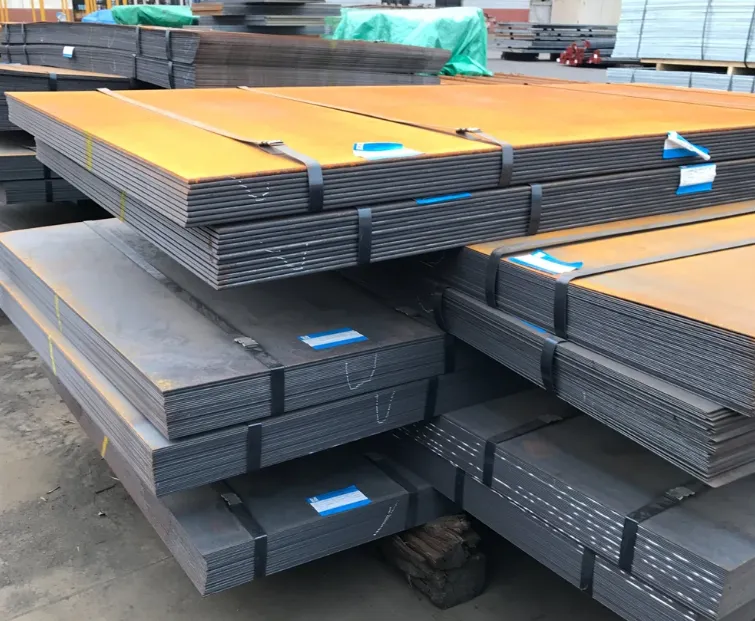
Does MWalloys supply 4140 in sheets or just bars?
Is 4140 steel stainless?
What is the "HT" or "PH" suffix mean?
Why is Molybdenum important in 4140?
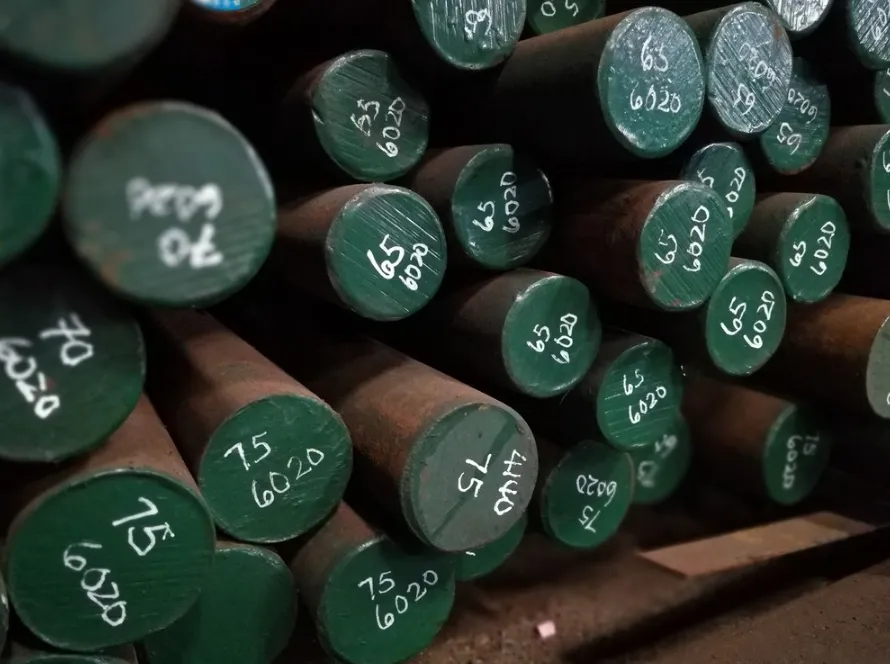
How do I identify if a piece of steel is 4140?
What is the machinability of 4140 compared to 1018?
Can you cut 4140 with a plasma cutter?
What is the lead time for custom orders from MWalloys?
Purchasing Checklist for Engineers
Before sending an RFQ (Request for Quote) to MWalloys, ensure you specify:
-
Grade: AISI 4140 (or 42CrMo4).
-
Condition: Hot Rolled, Cold Drawn, or Quenched & Tempered (specify hardness).
-
Finish: Black, Peeled, or Polished.
-
Dimensions: Diameter and Length (Standard is 6m, but we can cut to length).
-
Straightness: Standard or Precision Straightened (for high-speed shafts).
-
Ultrasonic Test: Required for critical internal integrity (e.g., SEP 1921 Class C/c).
Why Choose MWalloys?
In an industry crowded with middlemen, MWalloys stands as a beacon of transparency and manufacturing excellence. By controlling the metallurgy from the melt shop to the shipping dock, we guarantee the integrity of your supply chain. We don't just sell steel; we provide the foundational strength for your engineering marvels.
Contact our technical sales team today for a factory-direct quote on AISI 4140.