

When choosing between 9Cr18MoV and 14C28N stainless steels for knife-making or other applications, both alloys offer unique advantages, but they cater to different performance needs. 9Cr18MoV is known for its excellent edge retention, toughness, and ease of sharpening, making it a popular choice for high-performance knives and tools. 14C28N, on the other hand, is engineered to deliver superior corrosion resistance, sharpness, and wear resistance, excelling in environments where durability and sharpness retention are critical. The decision ultimately depends on the intended application, with 9Cr18MoV being suitable for general utility knives, and 14C28N preferred for knives used in more demanding environments.
1. Introduction to 9Cr18MoV and 14C28N Stainless Steel
Both 9Cr18MoV and 14C28N are high-performance stainless steels commonly used in knife-making, cutlery, and other tooling applications. They offer distinct benefits, making each alloy suitable for specific needs and environments. Understanding their composition, mechanical properties, and performance in different conditions is crucial for selecting the right material for your application.
-
9Cr18MoV is a Chinese steel alloy known for its good toughness, edge retention, and ease of sharpening. It's often used in knives that require a balance between performance and cost-effectiveness.
-
14C28N is a newer stainless steel alloy developed by Swedish steel manufacturer Sandvik. It’s designed to offer superior corrosion resistance, high wear resistance, and excellent sharpness retention, making it a top choice for high-end knives and outdoor tools.
2. Composition of 9Cr18MoV and 14C28N
9Cr18MoV Composition:
-
Carbon (C): 0.90–1.00%
-
Chromium (Cr): 17.00–19.00%
-
Molybdenum (Mo): 0.80–1.10%
-
Vanadium (V): 0.10–0.30%
-
Manganese (Mn): 0.50%
-
Silicon (Si): 0.40%
-
Phosphorus (P): ≤0.03%
-
Sulfur (S): ≤0.03%
14C28N Composition:
-
Carbon (C): 0.62%
-
Chromium (Cr): 14.00%
-
Nitrogen (N): 0.10%
-
Manganese (Mn): 0.50%
-
Silicon (Si): 0.50%
-
Phosphorus (P): ≤0.025%
-
Sulfur (S): ≤0.010%
The main difference in composition lies in the addition of vanadium in 9Cr18MoV, which enhances its edge retention, and the inclusion of nitrogen in 14C28N, which improves corrosion resistance and increases wear resistance.
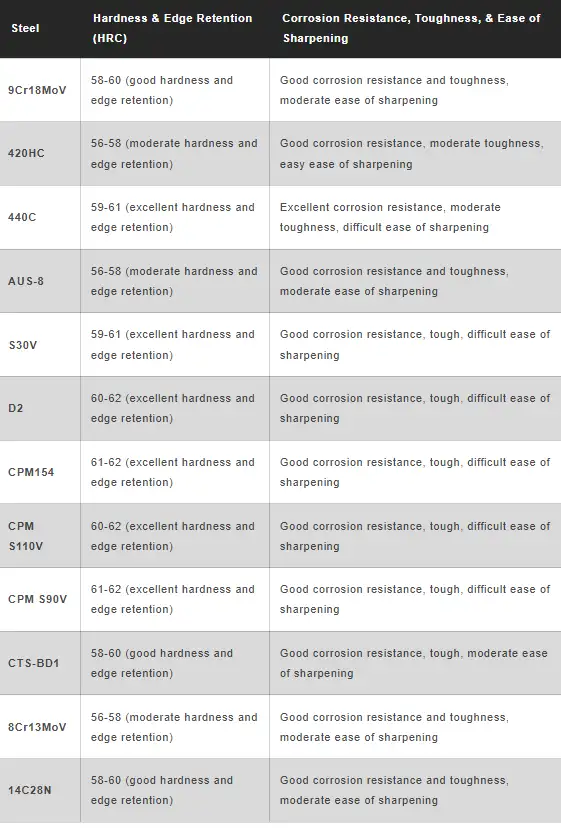
3. Key Differences Between 9Cr18MoV and 14C28N
| Feature | 9Cr18MoV | 14C28N |
|---|---|---|
| Carbon Content | 0.90–1.00% | 0.62% |
| Chromium Content | 17–19% | 14% |
| Molybdenum Content | 0.80–1.10% | None |
| Vanadium Content | 0.10–0.30% | None |
| Nitrogen Content | None | 0.10% |
| Corrosion Resistance | Good | Excellent |
| Edge Retention | Excellent | Very Good |
| Toughness | High | Moderate |
| Ease of Sharpening | Very Good | Good |
4. Edge Retention and Sharpness
9Cr18MoV is well-known for its excellent edge retention due to the presence of vanadium in its composition, which contributes to fine carbide formation. This makes it a great choice for knives that need to hold an edge for an extended period, such as general utility knives, kitchen knives, and tools used in moderate to heavy-duty applications.
14C28N steel, with its lower carbon content, provides a slightly lower edge retention than 9Cr18MoV, but it still offers impressive sharpness. The nitrogen content in 14C28N aids in sharpness retention, and while it may require more frequent sharpening than 9Cr18MoV, it excels in ease of initial sharpening and offers a finer edge for cutting.
5. Corrosion Resistance of 9Cr18MoV vs 14C28N
When it comes to corrosion resistance, 14C28N stands out as the superior alloy due to the presence of nitrogen, which enhances its ability to resist rust and corrosion in humid, salty, or high-moisture environments. This makes it ideal for knives exposed to harsh conditions, such as in marine or outdoor applications.
9Cr18MoV, while offering decent corrosion resistance due to its chromium content (17-19%), does not perform as well as 14C28N in extreme conditions. However, it remains a good choice for applications where moderate corrosion resistance is sufficient, such as in kitchen knives or general-purpose tools.
6. Toughness and Durability
9Cr18MoV is highly regarded for its toughness, which allows it to withstand impacts and rough handling without chipping or breaking. This makes it an ideal choice for tools and knives that need to endure mechanical stress and impact, such as hunting knives or outdoor gear.
14C28N, while still durable, has a lower toughness compared to 9Cr18MoV due to its different composition. It is less likely to handle extreme impact stress but performs well in normal cutting applications where the edge is more likely to dull than break.
7. Ease of Sharpening
9Cr18MoV has a relatively easy-to-sharpen nature, owing to its combination of carbon and vanadium. While its edge retention is excellent, the presence of vanadium makes it easier to maintain and resharpen than many higher-end steels.
14C28N is also relatively easy to sharpen, although its slightly lower carbon content can mean it requires more frequent sharpening to maintain peak performance. Its edge is more prone to becoming dull over time, but it sharpens relatively easily, which is an advantage for those who prefer quick touch-ups.
8. Applications of 9Cr18MoV and 14C28N
9Cr18MoV is commonly used in:
-
Utility knives.
-
Kitchen knives.
-
Hunting knives.
-
Industrial tools.
-
Cutlery.
14C28N is ideal for:
-
High-end kitchen knives.
-
Outdoor knives.
-
Tactical knives.
-
Fishing knives.
-
Marine tools.
9. Performance in Different Environments
| Environment | 9Cr18MoV | 14C28N |
|---|---|---|
| Marine Environments | Moderate corrosion resistance | Excellent corrosion resistance |
| Kitchen Use | Excellent edge retention | Very good edge retention and corrosion resistance |
| Outdoor/Survival | Tough, durable, and reliable | Good corrosion resistance, but less tough than 9Cr18MoV |
| Tactical | High toughness and edge retention | High corrosion resistance and sharpness retention |
10. Which Alloy Should You Choose for Your Knife?
Choosing between 9Cr18MoV and 14C28N depends on the primary requirements of your application:
-
9Cr18MoV is ideal for knives requiring toughness, edge retention, and ease of sharpening. It is well-suited for general-purpose knives, hunting tools, and outdoor knives that experience heavy use.
-
14C28N is best for knives requiring superior corrosion resistance and sharpness retention, especially in marine or humid environments. It is excellent for high-end kitchen knives, tactical knives, and tools exposed to moisture and salt.
11. Global Market Overview
The market for 9Cr18MoV and 14C28N is growing, with both alloys being used extensively in the cutlery and tool industries. 9Cr18MoV continues to be favored for general-purpose knives, while 14C28N is seeing increasing use in premium, high-performance knives and tools. The choice between these two alloys largely depends on market demands for durability, corrosion resistance, and edge performance.
12. Frequently Asked Questions (FAQs)
-
What is the main difference between 9Cr18MoV and 14C28N?
-
9Cr18MoV offers excellent toughness and edge retention, while 14C28N excels in corrosion resistance and sharpness retention, making it ideal for outdoor and marine environments.
-
-
Which steel is better for kitchen knives, 9Cr18MoV or 14C28N?
-
14C28N is preferred for kitchen knives due to its superior corrosion resistance and sharpness retention.
-
-
How does the corrosion resistance of 9Cr18MoV compare to 14C28N?
-
14C28N has superior corrosion resistance due to its nitrogen content, while 9Cr18MoV has moderate corrosion resistance suitable for less harsh environments.
-
-
Is 14C28N steel harder to sharpen than 9Cr18MoV?
-
No, 14C28N is generally easier to sharpen, but it requires more frequent sharpening to maintain its edge compared to 9Cr18MoV.
-
-
Which steel offers better toughness, 9Cr18MoV or 14C28N?
-
9Cr18MoV offers better toughness, making it more suitable for knives that require durability and resistance to impact.
-
-
Can 14C28N be used in marine environments?
-
Yes, 14C28N excels in marine environments due to its excellent corrosion resistance.
-
-
Which steel holds an edge longer, 9Cr18MoV or 14C28N?
-
9Cr18MoV generally holds an edge longer, especially under heavy use, due to its vanadium content.
-
-
Is 9Cr18MoV steel prone to rusting?
-
9Cr18MoV is resistant to rust, but it is not as corrosion-resistant as 14C28N, especially in harsh conditions.
-
-
Which steel is better for outdoor knives?
-
9Cr18MoV is better for general outdoor knives due to its toughness and durability.
-
-
How does 14C28N perform in terms of wear resistance?
-
14C28N offers excellent wear resistance, particularly due to its nitrogen content, making it ideal for knives that experience frequent use.