

For high-performance cutlery and general-purpose blades that require a rare balance of toughness, long-lasting edges, and strong corrosion resistance, MagnaCut typically offers the better overall package. For heavy-duty bearing components, industrial rollers, and situations where traditional high-carbon chromium bearing steels remain standard, 52100 retains advantages in wear tolerance under rolling contact, legacy manufacturing familiarity, and proven performance in bearing applications. The choice depends on the intended use: select MagnaCut for premium corrosion-resistant blade work and advanced tool applications; select 52100 when bearing-grade fatigue life, classic heat-treatment pathways, or cost-driven supply chains take priority.
Historical context and origin stories
52100 has been a mainstay in bearing steels for over a century. Its role in rolling-element bearings, precision shafts, and industrial tooling has produced a mass of legacy practices for heat treatment, finishing, and quality control. The grade traces to classical AISI designation systems and has extensive industry data.
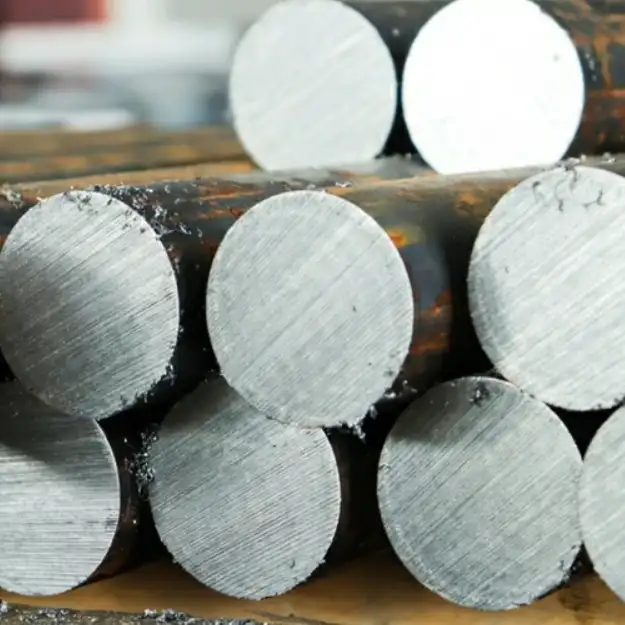
MagnaCut is a modern powder metallurgy stainless tool steel conceived to overcome common tradeoffs between toughness, wear resistance, and corrosion resistance in knife steels. The alloy was developed by an individual metallurgist with the knife community in mind, then commercialized through collaboration with a specialty steel producer; its datasheet and community testing document the deliberate elimination of chromium carbide from the heat-treated microstructure, which produces a unique combination of properties.
Chemical compositions and alloy design
Below is a practical composition comparison showing typical nominal ranges used in commercial production. These ranges are presented for comparison only; exact chemistry may vary by mill certification or special run.
Table 1 — Typical nominal composition (wt%)
| Element | 52100 (typical) | MagnaCut (CPM MagnaCut typical, published) |
|---|---|---|
| Carbon (C) | 0.98–1.10 | ~1.10 |
| Chromium (Cr) | ~1.35–1.65 | ~10.5–11.5 |
| Manganese (Mn) | 0.25–0.45 | ~0.20–0.60 (minor) |
| Silicon (Si) | 0.10–0.40 | ~0.20–0.50 |
| Molybdenum (Mo) | 0.05–0.35 | ~1.5–2.5 |
| Vanadium (V) | trace–0.10 | ~3.5–4.5 |
| Niobium (Nb, Ta) | — | ~0.1–0.4 |
| Nitrogen (N) | — | small controlled additions in PM variant |
| Remarks | Classic high-carbon bearing steel formula | Powder-metallurgy stainless tool alloy engineered to avoid chromium carbide precipitation |
Notes: the MagnaCut datasheet lists vanadium and niobium carbides as the primary hard-phase contributors while the chromium level is high enough to confer stainless performance yet formulated to avoid deleterious chromium carbide networks. This design choice produces fine, hard V/Nb carbides in a martensitic matrix.
Microstructure differences and the role of powder metallurgy
52100 typical microstructure: a tempered martensitic matrix with evenly distributed cementite-type carbides (iron carbide and chromium-rich carbides from carbon and chromium). This microstructure, when properly heat treated, yields high hardness and excellent rolling-contact fatigue resistance typical for bearing materials. Grain control typically relies on vacuum melting or remelting processes for better cleanliness and fatigue life.
MagnaCut microstructure: powder metallurgy route produces a uniform, fine carbide distribution and refined grain size. Importantly, the alloying and thermal processing strategy aims to prevent large chromium carbides from forming in the tempered microstructure. Instead, the hard phases are compact niobium and vanadium carbides that give wear resistance while preserving matrix toughness. Powder metallurgy supports tighter inclusion control and more uniform performance across the bar or billet.
Practical effect: the PM route reduces large carbide networks that often weaken toughness or create preferential corrosion sites. The combination of refined carbides and high chromium in MagnaCut produces elevated toughness relative to many stainless PM steels having similar hardness.
Mechanical properties and heat-treatment windows
Both steels can be heat treated to similar hardness ranges, but the path, tempering, and tradeoffs differ strongly.
Table 2 — Typical mechanical metrics and heat-treatment envelopes
| Property / Metric | 52100 (typical treated) | MagnaCut (typical treated) |
|---|---|---|
| Typical hardened hardness (RC) | 58–66 HRC (bearing practice varies) | 60–65 HRC (typical ranges from datasheets and tests) |
| Toughness (relative) | High toughness for bearing steels after tempering; optimized for fatigue | Very high toughness for a stainless PM steel; designed to resist chipping and failure at blade edges. Datasheet Charpy-type comparisons show MagnaCut at par or better versus many stainless knife steels. |
| Wear resistance | Good wear for contact surfaces; carbide type different from PM steels | Excellent wear resistance due to hard V/Nb carbides; offers superior edge life in many blade tests. |
| Corrosion resistance | Low; not stainless, needs coating or lubrication in corrosive environments | High corrosion resistance thanks to ~10–11% chromium in solution and favorable carbide chemistry. |
| Typical hardening practice | Austenitize ~800–840°C then oil quench, temper to required HRC | PM austenitizing and quench per datasheet, may include cryogenic step to maximize martensite, temper to stabilize hardness and toughness. |
| Fatigue resistance | Excellent for rolling elements when produced with proper inclusions control | Good fatigue for blade and tool uses; different failure modes (chipping vs rolling fatigue). |
Heat-treatment notes:
-
52100 is well-understood in bearing processing; precise quench speed and tempering are critical to avoid cracking. Standard practices often recommend vacuum remelting and controlled temper cycles.
-
MagnaCut datasheet gives recommended anneal, austenitize, quench, cryo, and temper windows tuned for maximum combined toughness and hardness; many commercial knife builds reference those parameters.
Corrosion resistance, environment suitability, and maintenance
52100 is a high-carbon, low-stainless alloy. Exposure to moisture or salts causes oxidation and pitting if left unprotected. In bearing service, designers supply lubrication and seals to mitigate corrosion. For blades, 52100 remains popular for people who accept some maintenance and want non-stainless steels’ edge characteristics.
MagnaCut was engineered with corrosion resistance in mind. The chromium level, controlled carbide chemistry, and PM cleanliness reduce tendency to pit. This makes MagnaCut attractive for marine, kitchen, and outdoors gear where rust resistance is valued together with edge performance. Real-world product launches by reputable tool manufacturers have chosen MagnaCut where stainless performance matters.
Maintenance implication: MagnaCut requires less protective care; 52100 benefits from oiling, coating, or controlled environment use.
Edge-holding, toughness, and sharpening behavior
Blade makers and users focus on three frequently competing attributes: edge retention, toughness, and ease of sharpening.
Table 3 — Blade-relevant performance summary
| Metric | 52100 | MagnaCut |
|---|---|---|
| Edge retention (practical) | Strong when hardened and polished; carbon matrix supports fine edges | Excellent due to hard V/Nb carbides and fine PM microstructure; often outperforms older stainless steels in edge life in tests. |
| Toughness (chip resistance) | Very good; bearing steels tend to be forgiving at low angles | Designed for high toughness while retaining hardness; datasheet comparisons show MagnaCut tough versus other PM stainless steels. |
| Sharpenability | Relatively easy to reprofile with stones due to carbide character; can take very keen edges | Slightly harder to abrade because of hard carbides, but still serviceable with common sharpening media; many users find a small tradeoff between ultimate edge life and speed of regrind. |
| Practical user note | Favored by traditionalists for carving and workshop knives due to edge feel | Favored by modern users who want low-maintenance, durable cutting tools with strong edge life. |
Practical guidance: grinding and sharpening equipment choice should reflect the steel. For MagnaCut, diamond stones or high-quality benchstones will ease reprofiling.
Manufacturing, machining, and forging considerations
52100 manufacturing path:
-
Commonly produced in conventional melt routes, though vacuum arc remelt (VAR) or ESR variants offer cleaner steel for high-cycle bearings.
-
Machinability decreases at higher hardness; stock removal before final heat treat is common.
-
Forging is possible; grain size, and decarburization control matter for fatigue life.
MagnaCut manufacturing path:
-
Produced using powder metallurgy (CPM) to allow a tight, homogenous particle distribution and finer carbides.
-
Bar stock and flat stock availability may be more limited and priced at a premium versus commodity bearing steel.
-
Machining tends to be more demanding because of hard carbides, but PM cleanliness and uniformity help in predictable tool wear rates.
Supply-chain note: modern PM steels often command higher per-kilogram pricing due to the specialized production process. Lead times may fluctuate with mill capacity and licensing.
Typical applications and use-case comparisons
Where 52100 excels
-
Rolling-element bearings and cups, races, and balls.
-
High-load shafts, journal components where rolling-contact fatigue matters.
-
Workshop blades where users prefer non-stainless carbon steels and accept routine maintenance.
Where MagnaCut excels
-
High-performance folding and fixed blades requiring a superior mixture of toughness, corrosion resistance, and edge retention.
-
Kitchen knives, marine tools, and multi-tools where corrosion is a concern.
-
Specialty tooling where PM cleanliness and repeatable microstructure pay off.
Comparative matrix (quick view)
| Decision factor | Pick 52100 when... | Pick MagnaCut when... |
|---|---|---|
| Corrosion resistance needed | Not critical | Important |
| Bearing-style fatigue life | Mandatory | Not primary |
| Cutting-edge longevity with low maintenance | Secondary | Primary |
| Production budget tight | Prefer 52100 | Budget allows premium steel |
| Availability of PM bar stock | Not necessary | Required |
Testing protocols, standards, and specification notes
Relevant standards and tests:
-
52100 is covered indirectly by bearing steel standards in ASTM, ISO, and EN systems under equivalent grades (100Cr6 / SUJ2). Metallurgical labs commonly perform hardness, tensile, fatigue, inclusion rating, and microstructure inspection per bearing industry norms.
-
MagnaCut follows PM steel datasheet testing supplied by its maker. Typical tests include Rockwell hardness, Charpy-type toughness conversion charts for comparative data, corrosion resistance testing (salt spray), and micrograph analysis for carbide distribution. Producers publish datasheets with heat-treatment recommendations.
For procurement and engineering specifications, require mill test reports (MTRs), certified chemical analysis, and heat-treatment traceability. For fatigue-critical parts, require non-destructive evaluation and, when applicable, vacuum remelted material certification.
Cost, availability, and supply chain considerations
52100 is a commodity alloy widely produced worldwide with multiple stock forms and competitive pricing. MagnaCut is a niche, proprietary PM alloy with higher per-unit costs and more limited suppliers. For OEMs planning large runs, early supplier engagement and volume forecasting may secure better pricing and stock priority. For custom knifemakers or boutique toolmakers, using MagnaCut can justify higher retail prices due to perceived performance advantages.
Supply stability note: check mill status and licensing. Industry moves sometimes change which mills produce a given proprietary alloy; confirm current supplier status for large buys.
Practical selection recommendations and decision matrix
Use this quick decision checklist when selecting between the two steels.
-
If design requires rolling-contact fatigue life, go with 52100 and follow proven bearing heat-treatment procedures.
-
If the product must face salt water, food prep, or minimal maintenance, prefer MagnaCut.
-
For blades where edge retention with high corrosion resistance is top priority, choose MagnaCut; for blades where traditional re-sharpen-ability and a certain “feel” are desired, 52100 remains a valid choice.
-
For production costs sensitive to material price, 52100 will be less expensive; for premium pricing models, MagnaCut may add perceived and real value.
Limitations, failure modes, and troubleshooting
52100 failure modes:
-
Corrosion-assisted fatigue when used without protection.
-
Cracking from overly aggressive quench without preheating or control of residual stresses.
-
Surface pitting in aggressive chemicals.
MagnaCut failure modes:
-
Localized chipping if edge geometry is too thin for a given task; however toughness is high relative to many stainless steels.
-
Cost-driven substitutions or counterfeit bar stock from secondary suppliers might underperform; insist on mill certification.
General troubleshooting tips:
-
Always match heat-treatment to intended hardness and tempering schedule; thin cross sections will temper differently than thick sections.
-
For blades, test edge geometry under real loads; metallurgy improves limits, but geometry and finish dominate real-world performance.
Frequently Asked Questions (FAQs)
1) Is MagnaCut stainless?
Yes. MagnaCut contains high chromium content and a microstructure engineered to provide meaningful corrosion resistance typical of stainless tool steels. It resists pitting better than non-stainless, high-carbon steels.
2) Can I use 52100 for knife blades?
Yes. Many makers favor 52100 for blades because it takes an extremely keen edge and can be easier to sharpen with traditional stones. Users must maintain protection against rust and staining.
3) Which steel holds an edge longer, MagnaCut or 52100?
On average, MagnaCut tends to hold an edge longer in corrosive or routine-use environments due to hard V/Nb carbides and stainless performance. Real-world wear depends on heat treatment and edge geometry.
4) Which steel is tougher and resists chipping better?
MagnaCut is engineered to combine high toughness with wear resistance. 52100 exhibits excellent toughness in bearing contexts, but in thin-edge blade applications, MagnaCut’s PM microstructure often gives an advantage against chipping.
5) Is MagnaCut difficult to sharpen?
It is somewhat more abrasive on sharpening media than soft carbon steels because of its carbides. With proper stones or diamond media, reprofiling and sharpening are straightforward; many users accept slightly longer sharpening times for superior edge life.
6) Can 52100 be cryogenically treated?
Cryogenic treatment is used in some heat-treat cycles to transform retained austenite and stabilize properties. Many bearing and blade users include deep cryo steps when optimizing hardness and dimensional stability. Follow qualified heat-treatment recipes for repeatable results.
7) Which steel is more expensive?
MagnaCut, being a PM proprietary alloy, generally carries a premium price compared with commodity 52100 bars. Expect higher material cost and possible longer lead times.
8) Are there direct stainless substitutes that match 52100’s toughness?
Historically, matching 52100’s combination of toughness and edge performance while retaining stainless behavior was difficult. MagnaCut is among the more recent alloys that approach non-stainless toughness with stainless performance. Test and match for your specific application.
9) How should procurement specify these materials?
Request full chemical analysis, heat-treatment instructions, MTRs, and if applicable, evidence of PM production (for MagnaCut). For bearing applications, insist on inclusion and fatigue test certificates where relevant.
10) If I design a multi-purpose blade, which should I pick?
For a single blade that must cut reliably with the least corrosion care, pick MagnaCut. For a blade optimized for carving and reprofiling with a certain tactile edge feel and historical precedent, 52100 is viable. Always validate geometry against intended forces.
Summary and final recommendations
Both alloys occupy legitimate niches. 52100 remains a reliable industrial standard for rolling contact components and some traditional knife applications. MagnaCut represents a new design philosophy using powder metallurgy and modern alloying to break longstanding performance tradeoffs. Choose 52100 when bearing-grade fatigue life, cost efficiency, or legacy production practices dominate. Choose MagnaCut where premium corrosion resistance, long edge life, and extremely high toughness in a stainless material will substantially raise product performance and user satisfaction.