

Custom 455 stainless steel (UNS S45500) is a martensitic, age-hardenable stainless alloy that combines corrosion resistance close to austenitic 304 with yield strength far higher than common stainless grades, making it a top choice when high strength, tight tolerances, and reliable atmospheric corrosion resistance are needed.
1. What is 455 Stainless Steel?
Custom 455 Stainless Steel is an age-hardenable martensitic stainless steel developed to give high yield and tensile strength after a simple single-step aging cycle while remaining relatively soft and workable in the annealed condition. The alloy reaches strengths that can be many times those of standard 300-series stainless in its aged condition, while delivering corrosion resistance that compares well with 304 in many atmospheric environments. Typical product forms include bars, plate, strip, wire, and precision finished components.
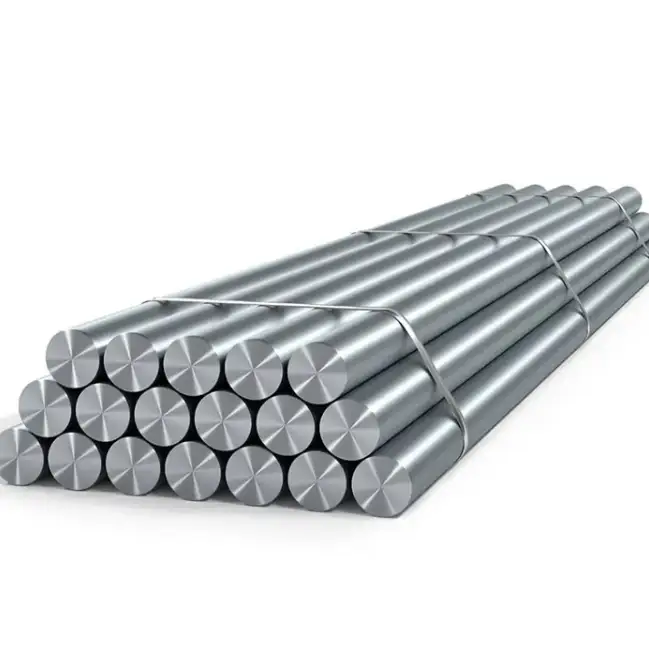
If your project requires 455 stainless steel, contact MWalloys for a free quote.
2. Chemical composition
The nominal chemistry determines hardenability, precipitation behavior, corrosion resistance, and toughness. The composition ranges below reflect common industrial specifications for Custom 455 (UNS S45500 / EN 1.4543). Sources list small additions of copper, nickel, titanium, and niobium to enable age hardening and to balance corrosion performance.
| Element | Typical range (wt%) |
|---|---|
| Carbon, C | ≤ 0.05 |
| Chromium, Cr | 11.0 – 12.5 |
| Nickel, Ni | 7.5 – 9.5 |
| Copper, Cu | 1.5 – 2.5 |
| Titanium, Ti | 0.8 – 1.4 |
| Niobium + Tantalum, Nb+Ta | 0.10 – 0.50 |
| Manganese, Mn | ≤ 0.50 |
| Molybdenum, Mo | ≤ 0.50 |
| Silicon, Si | ≤ 0.50 |
| Phosphorus, P | ≤ 0.040 |
| Sulfur, S | ≤ 0.030 |
| Iron, Fe | Balance |
(Representative compilations from technical datasheets and material suppliers were used to build this summary.)
3. Metallurgy and microstructure
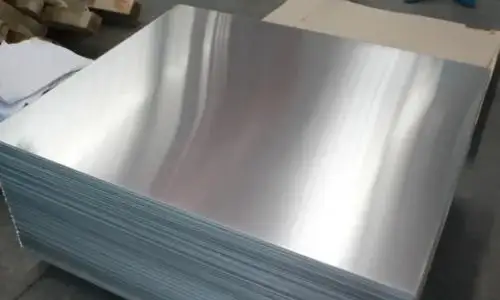
Custom 455 is martensitic in the annealed condition. The alloy is formulated to allow precipitation hardening during an aging treatment that causes fine intermetallic or carbide/nitride precipitates to form, raising yield and tensile strength while retaining acceptable ductility and toughness. The aging response permits close tolerance machining in the soft (annealed) state prior to hardening, with minimal dimensional change during aging, which is an important feature for precision components. The low work-hardening rate supports cold forming operations when required.
4. Mechanical properties and performance
Mechanical values depend heavily on temper and aging parameters. The table below presents typical property ranges for annealed and aged tempers. Use certified test data from the supplier for final design values.
| Condition | Brinell / Hardness (approx) | Yield strength (0.2% offset) | Tensile strength | Elongation (in 2 in or 50 mm) |
|---|---|---|---|---|
| Annealed (soft) | ~200 HB or lower | ~200–350 MPa | ~450–600 MPa | 20–35% |
| Aged - moderate | ~300–420 HB | 900–1300 MPa | 1000–1500 MPa | 5–20% |
| Aged - high strength | ~420+ HB | up to >1400 MPa | up to >1600 MPa | lower ductility (single digits possible) |
Manufacturers report yield strength after aging that can be roughly three times that of 304 in many tempers, which explains why Custom 455 is used where high static loads and fine tolerances are required. Always specify exact temper, aging cycle, and test certificates in procurement.
5. 455 stainless steel equivalent
455 Stainless Steel (UNS S45500) is a specific precipitation-hardening (PH) martensitic grade, so it doesn't have direct "equivalent" grades but is compared by properties; it's a strong, formable alloy offering 3x the strength of 304 stainless, with alternatives like Custom 465 (UNS S46500) for even higher strength, 13-8 Stainless, and Custom 450 for different strength/toughness balances, all within the PH stainless family for high-performance applications.
Key Characteristics of 455 Stainless:
- Type: Precipitation Hardening (PH) Martensitic Stainless Steel.
- Properties: Excellent formability in the annealed (soft) state, allowing complex shapes, followed by high strength (up to 230 ksi UTS) and good ductility after aging.
- Corrosion: Good resistance, better than Type 410, approaching Type 430.
Common Comparisons & Alternatives:
- Custom 450 (UNS S45000): Another PH grade, often compared for general strength/toughness, with 455 offering higher hardness.
- Custom 465 (UNS S46500): A premium option for even greater strength (250 ksi UTS) and toughness, especially in the H1000 condition.
- 13-8 Stainless (13-8 Mo): Also a high-strength PH alloy, often considered for applications needing excellent toughness and SCC resistance.
- Standard Grades (304/316): 455 provides significantly higher strength (3x) than austenitic grades like 304/316, making it suitable for strength-critical environments.
6. Heat treatment and aging schedules
Heat treatment is a key step to achieve the desired combination of strength and toughness. Typical processing steps:
| Step | Typical parameters |
|---|---|
| Solution anneal (if required for certain forms) | Heat to ~900–1050 °C, quench to room temperature |
| Aging (single-step) | Temperature range: 400–500 °C typical; time: 2–8 hours depending on desired strength |
| Rapid air cool after aging | To room temperature |
A single-step aging treatment commonly develops exceptionally high yield strength with retained ductility and toughness. Dimensional change on aging is small, roughly -0.001 in/in in many reported cases, permitting finish machining before aging for close tolerances. Precise cycles depend on product form, section thickness, and final mechanical targets. Consult supplier datasheet for validated cycles.
7. Corrosion resistance and comparative behavior
Custom 455 provides atmospheric corrosion resistance similar to 304 stainless in many conditions due to its chromium and nickel content and the protective passive film formed on the surface. Age hardening and precipitation chemistry do not significantly degrade general atmospheric corrosion resistance when proper processing and finishing are used. However, the alloy should not be treated as immune in aggressive chloride environments without qualification testing. For surgical instruments and fresh-water service the corrosion resistance is usually satisfactory; this grade is not commonly specified for permanent implant applications.
Comparison snapshot:
-
Corrosion resistance near 304 for general atmosphere and fresh water.
-
Superior mechanical strength after aging compared with 304 and many ferritic martensitic grades.
-
Not a direct substitute for high-alloy austenitics (316) where strong chloride resistance is required.
8. Fabrication guidance: machining, forming, welding, finishing
Machining: In the annealed condition the alloy machines similarly to other precipitation hardenable stainless steels. Use stable tooling, positive cuts, thorough coolant, and controlled feeds to prevent built-up edge and tool wear. Annealed stock enables standard finishing practices then final aging.
Forming: Low work-hardening rate and good formability in the annealed condition permit moderate cold forming operations. Deep drawing of heavy sections should be validated with forming trials.
Welding: Shielded metal arc and gas metal arc welding processes are acceptable for many applications when proper pre- and post-weld treatments are planned. Oxyacetylene welding should be avoided. Welding can alter local hardness and may require local or whole-part aging to restore properties. Follow supplier welding procedures and qualification testing for critical assemblies.
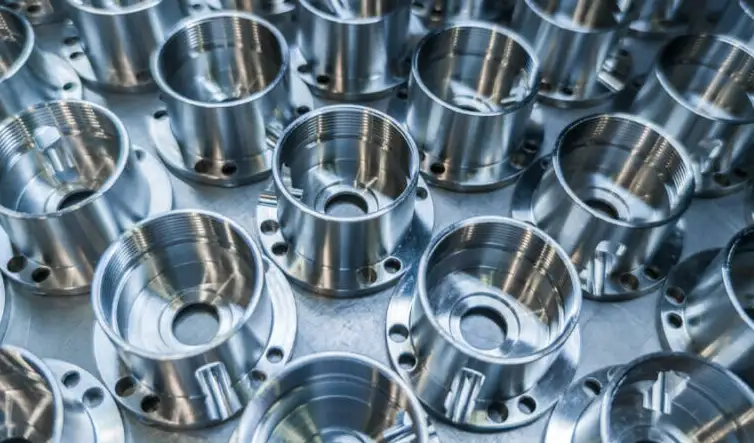
Surface finishing: Typical finishes used for instruments and precision parts include electropolishing, passivation, ground or polished finishes. Electropolishing improves corrosion performance and removes surface contaminants resulting from fabrication.
9. Standards and typical specifications
Common specifications and standard references for Custom 455 include:
-
UNS S45500 registration.
-
AMS 5617 and AMS 5860 for certain product forms.
-
ASTM references such as ASTM A564 and ASTM F899 noted by suppliers for certain shapes and medical applications.
When writing purchase documents, include UNS number, exact chemistry limits, required temper and mechanical properties, required heat treatment cycle, acceptable product forms, and test certificate requirements including melt route (VIM/VAR if needed) and NDT or mechanical test reports.
10. Typical applications and case notes
Custom 455 is chosen where high strength, reasonable corrosion resistance, and dimensional stability are required. Typical applications:
-
Surgical instruments like scissors, forceps, and precision guides where high strength and edge retention are important but the alloy is not used for permanent implants.
-
Aerospace structural components requiring high yield and fatigue strength along with corrosion resistance.
-
Springs, actuators, and fasteners where aged strength is beneficial.
-
High-strength shafts, rollers, and wear-resistant precision parts.
Case note: medical instrument makers favor Custom 455 for many hand tools because it accepts edge sharpening, holds shape after aging, and resists typical sterilization environments when correctly processed. Always confirm biocompatibility requirements for any medical application prior to specification.
11. Procurement, stock forms, and customization (MWalloys offering)
Common stock forms: round bar, flat bar, plate, strip, wire, strip coil, and precision ground stock. Section sizes and availability vary by mill and distributor.
Procurement checklist for buyers:
-
Specify UNS S45500 and applicable international or aerospace standard (AMS, ASTM) required.
-
Provide required temper and mechanical property targets plus acceptable aging schedule or require supplier to deliver in a specific tempered state.
-
Require mill test certificates (chemical analysis and mechanical tests) and traceability (heat number).
-
If high-purity vacuum melts are required, specify VIM + VAR processing.
MWalloys note: Our brand MWalloys supplies Custom 455 stock and finished components with 100 percent factory pricing and flexible customization services. We can supply material in specified tempers, perform aging per buyer schedule, provide machining and finishing, and deliver full material certificates. For volume procurement, specify order quantity, desired form, tolerances, and finish to receive a tailored quotation.
12. Inspection, testing, and quality control recommendations
Recommended QA steps for critical parts:
-
Full chemical analysis on each heat or lot.
-
Mechanical testing: tensile, yield, elongation, hardness on representative samples.
-
Surface condition inspection including roughness and finish verification.
-
NDT where relevant: dye penetrant, magnetic particle, or ultrasonic testing for critical components.
-
Corrosion screening tests for components intended for aggressive environments (e.g., pitting potential in chloride solutions) when service conditions are severe.
-
For medical devices, include relevant biocompatibility and sterilization validation documentation if the component interfaces with patients.
13. Design and selection considerations for engineers
-
Section thickness matters for aging uniformity and mechanical outcome. Validate aging cycles for the maximum section thickness in the assembly.
-
Specify final hardness or yield to avoid overaging or brittle conditions.
-
Consider post-fabrication aging if welding operations change local microstructure.
-
For threaded components, mind the combination of hardness and thread tolerance to prevent galling.
-
If chloride exposure is anticipated, consider using 316 or duplex grades or perform directed corrosion testing rather than relying on general statements.
14. Sustainability and recycling
Custom 455 contains common alloying elements that make it fully recyclable through standard stainless recycling streams. When purchasing, request documentation of scrap content and ask suppliers to follow responsible sourcing policies when relevant to procurement goals.
15. Typical product forms, sizes, and weight references
Suppliers typically list round bars from small diameters up to large forgings, strip coils in narrow widths, and plate up to standard mill sizes. Work with your supplier to confirm minimum order quantities and lead times. Many distributors stock ground bar and precision rod for instrument makers.
16. FAQs
1. What is 455 stainless steel used for?
2. Is 455 stainless steel age-hardenable?
3. How does 455 compare with 304 and 17-4 PH?
4. Can 455 be used for surgical implants?
5. What heat treatment is needed for high strength?
6. Is machining difficult?
7. What standards cover Custom 455?
UNS S45500
EN 1.4543
AMS 5617
AMS 5860
ASTM A564
ASTM F899
8. Does welding affect properties?
9. What finishes are recommended for instrument makers?
10. How do I order precise tempers and certs?
Closing recommendations for procurement teams
-
Require complete specification language in purchase orders including UNS number, standard references, aging cycle or hardness, and test certificate requirements.
-
Request sample coupons for aging verification on thick sections when switching suppliers.
-
For medical tools, request material traceability, process documentation, and cleaning/sterilization validation.