

If your priority is lightweight weldability and good toughness with moderate strength, choose 4130; if you need a balance of machinability and higher quenched strength for shafts, gears and axles, choose 4140; and when the application demands maximum through-hardening strength, fatigue resistance and higher toughness under heavy loads, choose 4340. In procurement terms, 4130 is usually the most cost-effective, 4140 is the best “all-round” engineering alloy, and 4340 is the premium high-strength grade.
What are these grades mean?
4130, 4140 and 4340 are low-to-medium carbon, chromium-molybdenum (Cr-Mo) alloy steels in the SAE/AISI 41xx family. They are widely used because small additions of Cr and Mo give significant improvements in hardenability, strength and toughness compared with plain carbon steels while keeping cost and machinability reasonable. The prime difference between them is alloy content (notably nickel in 4340) and carbon level, which drives strength and hardenability.
Chemical composition
Below is a concise comparative composition (typical spec ranges). Use this table for engineering selection; final purchase material certificates (MTC) should be checked for exact batch analysis.
| Element / Grade | SAE 4130 (typ.) | SAE 4140 (typ.) | SAE 4340 (typ.) |
|---|---|---|---|
| Carbon (C) | 0.28 – 0.33 % | 0.38 – 0.43 % | 0.37 – 0.43 % |
| Silicon (Si) | 0.15 – 0.35 % | 0.15 – 0.30 % | 0.15 – 0.30 % |
| Manganese (Mn) | 0.40 – 0.60 % | 0.75 – 1.00 % | 0.60 – 0.80 % |
| Chromium (Cr) | 0.80 – 1.10 % | 0.80 – 1.10 % | 0.70 – 0.90 % |
| Molybdenum (Mo) | 0.15 – 0.25 % | 0.15 – 0.25 % | 0.20 – 0.30 % |
| Nickel (Ni) | ≤ 0.25 % | ≤ trace | 1.65 – 2.00 % (key differentiator for toughness) |
| Sulfur (S) | ≤ 0.04 % | ≤ 0.04 % | ≤ 0.04 % |
| Phosphorus (P) | ≤ 0.035 % | ≤ 0.035 % | ≤ 0.035 % |
| Iron (Fe) | Balance | Balance | Balance |
Interpretation: 4130 has lower carbon and slightly less Mn than 4140 — this makes it easier to weld and form, but with lower ultimate strength after quench. 4340 contains significant nickel and slightly higher Mo — that combination gives superior toughness and hardenability in heavier sections.
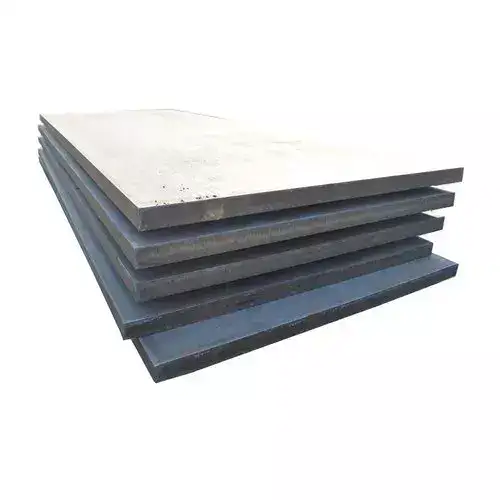
Material properties
Because properties depend heavily on heat treatment, I list typical normalized/annealed values and a representative quenched & tempered band engineers commonly design to.
Normalized / annealed (typical ranges)
| Property | 4130 (normalized) | 4140 (normalized) | 4340 (normalized) |
|---|---|---|---|
| Tensile strength, ultimate (MPa) | ~560 – 700 | ~650 – 850 | ~700 – 900 |
| Yield strength (0.2% offset) (MPa) | ~460 | ~415 – 600 (varies) | ~500 – 700 |
| Elongation (%) | 20 – 30 % | 15 – 25 % | 12 – 20 % |
| Hardness (HRC) annealed | ≤ 25 HRC | ≤ 25–30 HRC | ≤ 26–32 HRC |
| Density | ~7.85 g/cm³ (all three) |
Quenched & tempered (selected target levels — typical in industry)
-
4140 Q&T: common target tensile 900–1200 MPa (depends on tempering), hardness 28–45 HRC.
-
4340 Q&T: typical tensile 1000–1400 MPa and high toughness; hardness 35–50+ HRC in higher tempers.
-
4130 Q&T: strength increases substantially but because of lower carbon it generally reaches lower max hardness than 4140/4340 for comparable processes.
Practical note: Use published tempers and heat-treat data from your supplier or a materials database when designing parts because the same grade will produce very different properties by tempering schedule and section size (hardenability). MatWeb / ASM data sheets are a dependable starting point for normalized and heat-treated values.
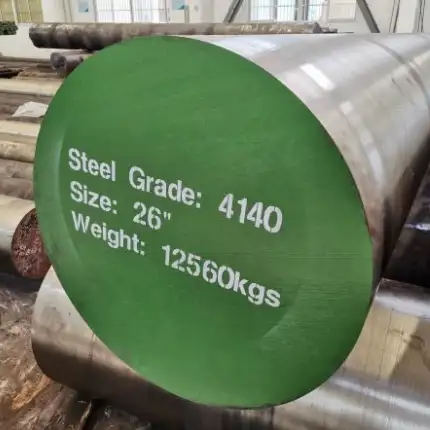
Specification table and common forms
| Item | 4130 | 4140 | 4340 |
|---|---|---|---|
| SAE / AISI | SAE 4130 (G41300) | SAE 4140 (G41400) | SAE 4340 (G43400) |
| Common EN / ISO equivalents | 25CrMo4 / 1.7218 (close for 4130) | 42CrMo4 / 1.7225 (commonly mapped to 4140) | 36CrNiMo4 / 1.6511 (4340 equivalents) |
| Typical product forms | Round bar, plate, tube, forging stock, cold-drawn rod | Round bar, forging stock, gear blanks, plate | Heavy forgings, high-strength shafts, crankshafts, gear blanks |
| Relevant standards (examples) | ASTM A29 (carbon & alloy steel bars), AMS, SAE specifications and numerous ASTM product standards — check MTC for exact spec. |
4130 vs 4140 vs 4340 Equivalent grades
| SAE/AISI | Common EN / ISO | Other trade names |
|---|---|---|
| 4130 | 25CrMo4 / 1.7218 | SCM430, 708A25 (depending on vendor) |
| 4140 | 42CrMo4 / 1.7225 | SCM440, 708M40 |
| 4340 | 36CrNiMo4 / 1.6511 | SNCM439, 817M40, other vendor codes |
Engineering note: “Equivalent” is a helpful shorthand for cross-referencing European and Asian supplier grades, but slight chemistry tolerances differ. Always check the chemical certificate and mechanical tests for the exact lot you buy.
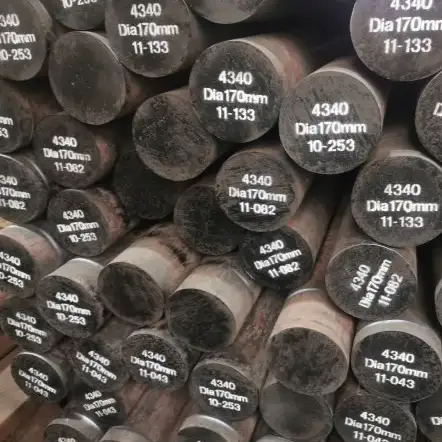
Heat treatment, hardenability and machinability
-
Hardenability: 4340 > 4140 > 4130. Nickel in 4340 increases hardenability significantly, so it achieves higher through-hardening in thick sections; 4130 is less hardenable and can be more difficult to bring to high core hardness in heavy sections.
-
Heat treatment practice: 4130 is often normalized or carburized for applications where a ductile core and wear surface are needed (aerospace tubing, tubing for frames). 4140 is highly versatile and widely used in Q&T conditions for shafts, gears and fasteners. 4340 is the go-to when maximum toughness and fatigue strength are required in larger components.
-
Machinability: For as-annealed bars, 4130 is easier to machine than 4140 and 4340 because of lower carbon and alloy levels. After hardening, machinability follows the reverse order with 4340 becoming the hardest to machine at the same hardness level.
Weldability, forming and fabrication
-
4130: Good weldability in low-carbon condition; preheat and controlled interpass temps are recommended for larger sections to avoid cracking. Widely used in welded structures and aircraft tubing when proper procedures are used.
-
4140: Weldable with caution — because of higher carbon and Mn content, weld cracking risk increases without preheat and post-weld heat treatment (PWHT) for critical parts. For many welded applications, 4140 is used in annealed state and heat treated after welding.
-
4340: Tougher and more resistant to crack propagation but more sensitive to heat input and requires strict welding procedure qualification and often PWHT in critical applications (oil & gas, heavy machinery).
Typical industry applications
-
4130: Aircraft tubing and structural frames, bicycle frames (chromoly steels), welded structural parts where formability and weldability matter. Lower weight-to-strength in thin sections.
-
4140: Shafts, spindles, gears, axles, couplings, tool housings, hydraulic pistons — where a balance between machinability and high strength after Q&T is needed.
-
4340: Aircraft landing gear, heavy crankshafts, heavy-duty couplings, high-performance shafts and components subjected to high impact or cyclic loads — where high toughness and fatigue strength are mandatory.
4130 vs 4140 vs 4340 price comparison (United States / Europe / China)
Important procurement caveat: Alloy-steel prices vary with form (bar vs plate vs forgings), size, mill brand, certification (e.g., EN, AMS), heat treatment, order quantity and shipping. The numbers below are industry procurement ranges for bulk/factory FOB / distributor buying in 2025 and are presented as ranges with sources. Always request a formal quote and MTC.
Price ranges (bulk / per tonne equivalents, 2025 — illustrative)
-
United States (distributor / domestic small-lot indicators):
-
Typical small-order prices for finished cut bars or small lots are shown by distributors (retail/short-run) but bulk mill prices for alloy bar stock often fall in the range $900 – $1,700 per tonne depending on grade and processing; typical hot-rolled/coiled steel benchmark numbers (HRC) during mid-2025 were in the $845 – $900/ton band (HRC reference). Use distributor quotes for final numbers.
-
-
Europe (delivered / market indicators):
-
Long-steel and alloy bar index signals in mid-2025 put many long-steel products around €600 – €1,100 / tonne depending on product and certification. Alloy bars with certification and heat treatment commands a premium above commodity HRC.
-
-
China (factory FOB / trading platforms):
-
China factory offers and trading platform listings in 2025 commonly show US$400 – $1,100 per tonne for common alloy bar stock in bulk — lower end for basic hot-rolled lots and higher for certified, heat-treated, or small-lot orders. Some China factory quotes for 4140/4130 range from ~RMB 8,000 – 12,000/tonne (~US$1,100–1,650/tonne) depending on supplier and processing; other listings show lower use-case pricing in the $400–800/tonne band for plain hot-rolled bar. The spread reflects product form, certification, MOQ and inspection.
-
Practical guidance for buyers
-
For short-run, small diameter cold-drawn rounds buy from a distributor (higher per-ton cost but shorter lead time). Example: OnlineMetals / MetalsDepot show per-piece pricing (retail).
-
For production or long-run, source factory FOB quotes from tier-1 Chinese mills or local mills and compare landed cost (freight, insurance, duties, inspection). Alibaba / Made-in-China and direct factory listings give a starting point for FOB bulk ranges.
-
Always specify: exact chemical limits, heat-treat state, traceability (MTC), non-destructive testing (if required) and packing standards when asking for firm quotations.
MWAlloys supply proposition
MWAlloys operates direct factory lines for 4130 / 4140 / 4340 bars and forgings out of China and maintains a curated export stock for common diameters and lengths. Key value points we apply for buyers:
-
Factory prices: We offer 100% factory FOB pricing for large orders — cut out middlemen and get mill pricing for certified batches. (Contact MWAlloys sales for formal P.O. quotes.)
-
Fast delivery from stock: Typical stock SKUs (popular diameters) can ship within 7–21 days depending on quantity and certification. For custom heat treatment and special inspections, lead times are quoted per order.
-
Quality & test documentation: Full MTC test reports, PMI/chemical certificates, hardness & tensile test reports on request; third-party inspection available at the mill.
-
MOQ flexibility and export packing: MOQ is negotiable — we handle export packing, fumigation-free timber crates, and consolidated shipments for repeat buyers.
How to pick between 4130 / 4140 / 4340 — selection checklist
-
If weldability and forming trump ultimate strength, and weight or thin-wall performance matter → 4130.
-
If multi-purpose shafts or heavily machined parts where a strong Q&T response and reasonable cost are needed → 4140.
-
If very heavy sections, high fatigue duty, or impact-loading with strict toughness requirements → 4340.
-
If you need carburizing + good core ductility (case carburized parts) choose the grade and C level that match the process; 4130 is commonly seen in carburized tubing.
-
For critical safety parts, require full material traceability, Charpy impact tests, and vendor heat treating records.
FAQs
-
Q: Which of the three has the highest fatigue strength?
A: 4340 under comparable heat treatment typically delivers the highest fatigue strength due to Ni + higher hardenability. -
Q: Can I weld 4140 without preheat?
A: For small, non-critical sections with low restraint you may weld 4140 with local preheat practices; for most structural or thick sections preheat and PWHT are recommended to avoid heat-affected zone cracking. -
Q: Is 4130 “chromoly” the same as 4130 steel?
A: Yes. “chromoly” informally refers to Cr-Mo steels like 4130 and 4140; check exact chemistry and spec. -
Q: Which is easiest to machine in the annealed condition?
A: 4130 (annealed) is easiest, followed by 4140; 4340 tends to be tougher/harder and a bit harder to machine at similar conditions. -
Q: Are there direct EN equivalents?
A: Rough equivalents: 4130 ≈ 25CrMo4 (1.7218), 4140 ≈ 42CrMo4 (1.7225), 4340 ≈ 36CrNiMo4 (1.6511). Always verify with MTC. -
Q: Can 4130 be used in aircraft structures?
A: Yes, 4130 has a long history in aircraft tubing and structural frames; aerospace usage requires strict QC and certification. -
Q: Which grade is best for a high-stress crankshaft?
A: 4340 is a common choice for heavy crankshafts because of toughness and fatigue resistance. -
Q: Do prices vary much between these grades?
A: Not dramatically for base bar stock — 4340 tends to be slightly more expensive due to nickel content and processing; however, heat treat, certification and finished processing can dominate cost. -
Q: Are there common pitfalls when specifying 4140?
A: Yes. not specifying the required heat-treat condition, section size/hardenability needs, or post-weld heat treatment can lead to parts that fail in service; be explicit on drawing and PO. -
Q: What inspection / testing should I request?
A: Minimum: full MTC (chemical + mechanical), hardness, and traceability. For safety-critical parts add Charpy impact tests, ultrasonic or magnetic particle inspection and third-party mill inspection.