
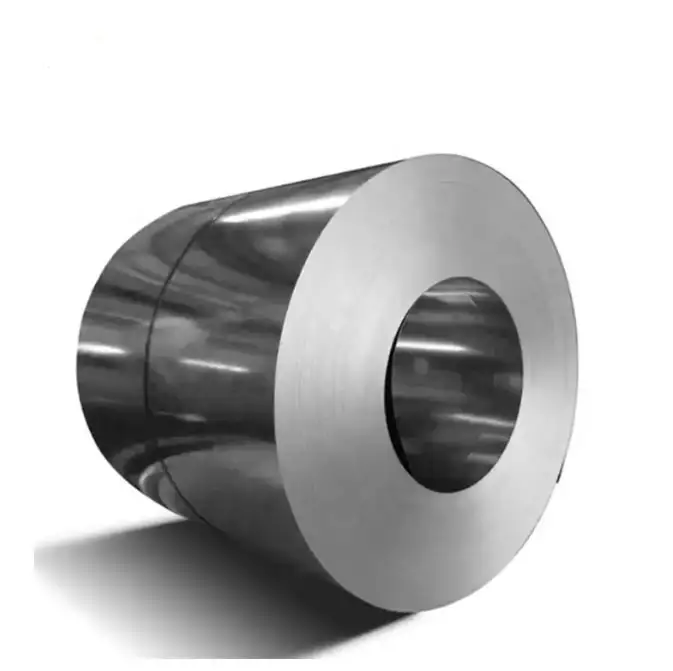
347 stainless steel coil is a niobium-stabilized austenitic alloy engineered for long service life in moderately high temperature environments and for welded fabrications where post-weld annealing cannot be performed. For buyers who require reliable resistance to intergranular corrosion after exposure to sensitization temperatures and stable mechanical performance up to roughly 850°C, 347 coil is frequently the optimal choice.
1. Material overview and primary benefits
Type 347 stainless steel is an austenitic chromium-nickel alloy stabilized by columbium (niobium) and tantalum additions. The stabilization prevents chromium carbide precipitation during exposure to intermediate temperature ranges, which controls intergranular corrosion in welded or heated components. This means 347 coil preserves corrosion resistance and mechanical integrity after welding or intermittent heating in the sensitization band.
Primary benefits for coil users
-
Strong resistance to intergranular attack after welding.
-
Better performance than unstabilized 300-series grades in repeated thermal cycles.
-
Good ductility and formability in annealed condition.
-
Suitable for service in petrochemical, power generation, and exhaust systems.
If your project requires 347 stainless steel coil, contact MWalloys for a free quote.
2. Chemical composition and why stabilization matters
347 grade is defined by limits and ranges for carbon, chromium, nickel and stabilizing elements. The essential concept: niobium preferentially forms carbides, leaving chromium in solid solution to maintain corrosion resistance after exposure to sensitization temperatures.
Typical composition (representative ranges)
| Element | Typical range (wt%) |
|---|---|
| Carbon (C) | 0.04 – 0.08 (max 0.08) |
| Chromium (Cr) | 17.0 – 19.0 |
| Nickel (Ni) | 9.0 – 13.0 |
| Niobium + Tantalum (Nb + Ta) | Min ~10 × C (stabilizing amount) |
| Manganese (Mn) | ≤ 2.0 |
| Silicon (Si) | ≤ 0.75 |
| Phosphorus (P) | ≤ 0.045 |
| Sulfur (S) | ≤ 0.030 |
Why this matters for coils
Niobium ties up carbon to form niobium carbides at temperatures below the chromium carbide precipitation window. That prevents chromium depletion at grain boundaries that would otherwise permit intergranular corrosion following welding or heat exposure. This stabilization makes 347 a practical coil choice for welded pressure components and for parts that will see intermittent heating.
3. Mechanical properties and relevant standards
Manufacturers commonly supply 347 coil to ASTM A240 / ASME SA240 specifications. Typical mechanical properties for annealed material are consistent across major suppliers; these are required for design and procurement documentation.
Representative mechanical properties (annealed, per ASTM A240)
| Property | Typical value |
|---|---|
| Tensile strength (UTS) | ~515 MPa (min; varies by spec) |
| Yield strength (0.2% offset) | ~205 MPa (min) |
| Elongation (in 50 mm) | ≥ 40% |
| Hardness | Rockwell B ≤ 92 (typical) |
Practical note for structural designers
347 is tough and ductile in annealed condition. Cold working raises strength while lowering elongation, so for heavy forming plan intermediate anneals to avoid cracking.
4. Temperature limits, oxidation and high temperature behavior
347 shows stable performance in intermittent service at temperatures from about 427°C (800°F) up to roughly 899°C (1650°F), a band where many carbon steels and unstabilized stainless grades would suffer chromium carbide precipitation or rapid scaling. For applications that operate continuously above upper limits, consider higher alloyed options.
Oxidation behavior
At elevated temperatures 347 forms a protective chromium oxide. The presence of niobium improves the alloy’s resistance to intergranular attack during thermal cycles, but long exposure to very high temperatures will eventually reduce performance compared with more temperature-resistant nickel alloys.
Design implication
Where parts are cyclically heated and cooled through the sensitization range, 347 coil provides lower risk of weld zone corrosion without requiring stress relief annealing after fabrication.
5. Fabrication: forming, welding and heat treatment notes
Forming and cold work
347 coils are commonly cold rolled to produce coils and strips. The alloy work hardens and can require intermediate annealing during extensive deformation. Deep drawing and bending are achievable with proper process control.
Welding
Weldability is excellent with fusion and resistance techniques. When welding 321 or unstabilized grades, 347 filler is often used to improve weld zone stability. In many welded fabrications where post weld anneal cannot occur, 347 parent and filler materials minimize intergranular corrosion risk. Use of suitable filler metals and proper welding procedure qualification is recommended.
Heat treatment
Full anneal: heat to ~1040–1150°C, followed by rapid cooling to retain the stabilized structure. Solution annealing after heavy cold work restores ductility and toughness.
Practical workshop tips
-
Preheat is not normally required for thin coil strip, but thicker sections may need controlled procedures.
-
Avoid holding in the sensitization range for long periods if the material was not stabilized properly.
-
For applications requiring maximum creep resistance, select a different alloy.
6. Surface finishes, coil sizes and dimensional options
Available coil forms
-
Cold-rolled coils (thin gauge strip, fine surface finishes)
-
Hot-rolled coils (thicker gauges, mill finish)
-
Slit coils (customer width) and cut-to-length sheets
Common finishes offered by suppliers
-
2B mill finish (cold-rolled, annealed, pickled)
-
BA / No.1 finishes for specific requirements
-
No.4 brushed finishes for aesthetic or slip-resistant surfaces
Representative coil dimension ranges (typical market availability)
| Form | Thickness range (mm) | Width range (mm) |
|---|---|---|
| Cold roll coil | 0.3 – 3.0 | 10 – 1500 |
| Hot roll coil | 3.0 – 12.0+ | 300 – 2000 |
| Slit coils | per customer width | per customer width |
Note on tolerances
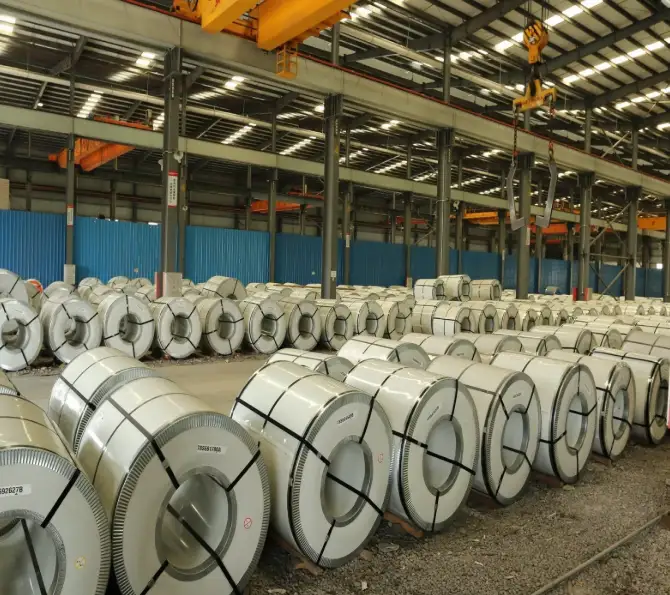
Tolerance tables vary by supplier and spec. For critical parts, include thickness, width, edge condition and coil inner/outer diameters in the purchase order.
7. Typical applications and industry sectors
347 coil is used widely across sectors that require thermal stability, weld integrity and corrosion resistance:
Key sectors and components
-
Aerospace: exhaust systems, collector rings, parts subjected to elevated exhaust temperatures.
-
Power generation: recuperator foil, heat exchanger tubing that sees cyclic heating.
-
Petrochemical and chemical process equipment: welded fittings, piping, reactors where sensitization risk exists.
-
Food and paper industries: equipment that requires oxidation resistance during periodic heating.
-
Automotive and heavy machinery: exhaust manifolds and piping where thermal cycles and welding are frequent.
Selection rationale
Buyers typically choose 347 coil when weld zones must retain corrosion resistance without a post weld anneal and when cyclic thermal exposure is anticipated.
8. Comparative selection: 347 versus 321, 316 and 304
Choosing the correct grade depends on operating environment, temperature profile, and corrosion drivers.
Comparison table — simplified
| Property | 304 | 316 | 321 | 347 |
|---|---|---|---|---|
| Stabilized against sensitization | No | No | Yes (Ti) | Yes (Nb/Ta) |
| Best for chloride/pitting resistance | Moderate | Higher | Moderate | Moderate |
| High temperature weld stability | Low | Moderate | Good | Better |
| Typical application fit | General | Corrosive liquids | High temp, Ti stabilized | High temp welds, Nb stabilized |
Why choose 347 over 321
Niobium stabilization in 347 gives an advantage when welding thin sections with variable C content or when welding 321 with 347 filler to improve weld metal stability. For many high temperature welded assemblies, 347 provides slightly higher resistance to certain forms of high temperature corrosion.
When to prefer 316 or 304
If chloride pitting and crevice corrosion are dominant concerns, grade 316 with molybdenum may be the better fit. For standard ambient service without thermal cycling through the sensitization band, 304 remains a cost effective choice.
9. Quality control, certification and traceability expectations
For industrial procurement of 347 coil insist on:
-
Mill test certificate to ASTM A240 / ASME SA240, including heat number and chemical analysis
-
Ultrasonic or eddy current testing for critical coil applications where internal defects matter
-
Surface finish measurement and dimensional tolerance report
-
Welding procedure specification (WPS) and welder qualification records for delivered finished fabrications
Sample inspection checklist
-
Verify chemical analysis against specified ranges.
-
Confirm mechanical test values match certificate.
-
Inspect coil surface for pitting, rolling defects, edge condition.
-
Confirm traceability marking and packaging suitable for export.
10. Purchasing checklist for coils and supplier requirements
When requesting quotes include:
-
Exact alloy designation: 347 or 347H if higher carbon is needed for elevated temperature strength
-
Coil finish and required thickness tolerance
-
Coil width, inner diameter, and weight per coil maximum
-
Test certificates required (MTC to EN or ASTM standards)
-
Required packaging for shipping and storage conditions
Commercial tip
Request competitive quotes from multiple stockists while checking stock availability and lead times. Domestic stock often reduces delivery risk; factory direct pricing typically gives cost advantage for larger volumes.
11. Environmental, recycling and lifecycle considerations
347 stainless steel is fully recycling compatible within stainless steel streams. End-of-life recycling recovers chromium and nickel content. For lifecycle assessments consider the alloy’s longer service life in high temperature cycles which can reduce total lifecycle carbon footprint compared with lower-alloy steels that require frequent replacement.
12. Quick-reference technical tables
A. Standard references and equivalents
| Standard | Equivalent designation |
|---|---|
| ASTM A240 / ASME SA240 | Type 347 |
| UNS number | S34700 |
| EN designation | X6CrNiNb18-10 (close) |
B. Typical physical properties
| Property | Value |
|---|---|
| Density | ~8.0 g/cm3 |
| Melting range | 1375 – 1400°C (approximate) |
| Thermal conductivity (20°C) | ~16 W/m·K (approximate) |
C. Common coil finishes and typical uses
| Finish | Use case |
|---|---|
| Cold-rolled 2B | Precision parts, good formability |
| Hot-rolled mill | Structural, thick sections |
| Brushed No.4 | Aesthetic panels, consumer trim |
13. FAQs
1. What is the main difference between 347 coil and generic 304 coil?
2. When should I request 347H instead of 347?
3. Can 347 coil be welded using typical stainless welding consumables?
4. Is 347 coil magnetic?
5. What temperature range is safe for continuous service?
6. How does 347 compare with 321 for welded assemblies?
7. What are typical coil thickness tolerances I should specify?
8. Can 347 be deep drawn for complex parts?
9. Is 347 seawater resistant?
10. What certificates should a quality buyer require?
Closing purchasing notes
When preparing a purchase order include:
-
Alloy: 347 (UNS S34700) or 347H if specified
-
Specification: ASTM A240 / ASME SA240, include revision year if required
-
Finish: state 2B, No.4, pickled, etc.
-
Dimensions: thickness, width, coil weight, inner/outer diameters
-
Tests: Chemical analysis, tensile and yield test, hardness, surface inspection and packaging requirements
-
Traceability: heat number on MTC and on material marking
For volume purchases MWAlloys can deliver factory direct pricing, custom slitting and specified packaging options to meet overseas shipping needs.