

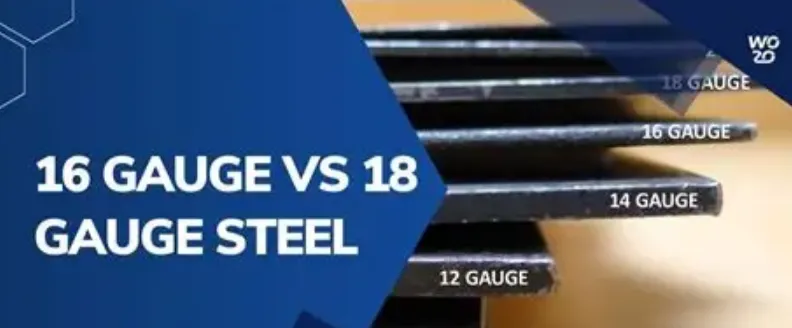
The primary difference between 16 vs 18 gauge stainless steel is the material's thickness and structural integrity. In the U.S. Standard Gauge system, a lower number indicates a thicker sheet. 16 gauge stainless steel is approximately 0.0625 inches (1.5875mm) thick, making it significantly stronger and quieter than 18 gauge stainless steel, which measures approximately 0.0500 inches (1.27mm).
If your project requires the use of 16 gauge or 18 gauge stainless steel, you can contact us for a free quote.
While 18 gauge is the industry standard for budget-friendly residential applications, 16 gauge is preferred for high-end luxury sinks and heavy-duty industrial components due to its superior resistance to denting, bowing, and vibration noise.
Quick Comparison Table:
-
16 Gauge Thickness: 0.0625'' (1.5875mm) — Heavy Duty / Premium Quality.
-
18 Gauge Thickness: 0.0500'' (1.27mm) — Standard / Cost-Effective.
-
Weight Difference: 16 gauge is roughly 25% heavier than 18 gauge per square foot.
-
Durability: 16 gauge offers higher dent resistance and better sound dampening properties.
What does “16 vs 18 gauge stainless steel” actually mean in sheet metal?
“Gauge” is a legacy thickness designation used widely in North America. The critical point that many buyers miss: gauge numbers do not represent a universal thickness across all metals. Stainless sheet gauge tables differ from aluminum gauge tables, and the same gauge number can vary slightly by standard or supplier practice.
In stainless sheet procurement, gauge is best treated like a shorthand, not a metrology grade. Engineering drawings and purchase orders should always include a decimal thickness requirement (inches or millimeters) plus the governing tolerance standard.
Why the gauge number behaves backward
Lower gauge numbers mean thicker sheet. So 16 gauge stainless is thicker than 18 gauge stainless.
Why experienced engineers still talk in gauge
Production teams in fabrication shops, kitchen equipment manufacturers, and enclosure builders often communicate in gauge because brake tooling, quoting systems, and shop conventions developed around it. The safest workflow is “gauge plus decimal thickness plus standard.”
At MWalloys, we see most disputes come from one root cause: a buyer writes “18 ga stainless” without specifying tolerance, finish, grade, and flatness, then expects a cosmetic panel that behaves like a precision plate. That mismatch is avoidable.
What thickness is 16 gauge and 18 gauge stainless steel in inches and mm?
In common U.S. stainless sheet conventions:
- 16 gauge stainless steel is about 0.0598 in, roughly 1.52 mm
- 18 gauge stainless steel is about 0.0478 in, roughly 1.21 mm
Even though these values look precise, the delivered thickness depends on product form (sheet vs coil), rolling practice, and the tolerance standard.
Thickness chart (stainless sheet, common trade values)
| Gauge (Stainless) | Nominal Thickness (in) | Nominal Thickness (mm) | Typical Use Case Signal |
|---|---|---|---|
| 16 ga | 0.0598 | 1.52 | Higher stiffness, better dent resistance |
| 18 ga | 0.0478 | 1.21 | Lighter panels, moderate stiffness |
Thickness tolerance reality that changes performance
Most online comparisons stop at “16 ga equals X mm.” Procurement success requires the next step: tolerance bands. Stainless sheet tolerances are often governed by ASTM A480 (general requirements) in combination with ASTM A240 (chromium and chromium nickel stainless plate, sheet, strip).
A buyer may receive material that measures slightly under nominal and still meets standard. That matters when deflection limits are tight or when a panel has a premium cosmetic finish.
Practical recommendation
When stiffness, flatness, or dent performance matters, specify:
- Thickness in decimal inches or mm.
- Tolerance class or applicable standard (example: ASTM A480).
- Product form (sheet or coil cut).
- Flatness requirement when cosmetics matter.
How much stronger is 16 gauge than 18 gauge in real structures?
People often ask “Is 16 gauge stronger than 18 gauge?” The accurate answer depends on what “stronger” means:
- Tensile strength and yield strength come mainly from the stainless grade and temper, not thickness.
- Structural stiffness and load carrying capability in bending increase sharply with thickness.
In many sheet metal applications, stiffness drives perceived quality: doors that do not drum, countertops that do not flex, panels that do not ripple, brackets that keep alignment.
The stiffness math that explains the difference
In bending, stiffness scales approximately with the cube of thickness (t³) when geometry and material are constant. So a modest thickness increase can yield a major stiffness gain.
Let:
- t16 = 1.52 mm
- t18 = 1.21 mm
Stiffness ratio ≈ (t16 / t18)³ = (1.52 / 1.21)³ ≈ (1.256)³ ≈ 1.98
Meaning: in bending dominated scenarios, 16 gauge can be close to double the bending stiffness of 18 gauge, even though the thickness increase looks small on paper.
Strength vs stiffness vs denting
- Strength (yield, tensile): driven mainly by grade (304, 316, 430) and cold work level.
- Stiffness (deflection): driven heavily by thickness and span.
- Dent resistance: driven by thickness, hardness, support condition, and surface finish.
Table: stiffness, thickness, and weight comparison at a glance
| Metric (same grade, same panel geometry) | 18 ga (1.21 mm) | 16 ga (1.52 mm) | What it means |
|---|---|---|---|
| Thickness ratio | 1.00 | 1.26 | 16 ga is about 26 percent thicker |
| Weight ratio (linear with thickness) | 1.00 | 1.26 | 16 ga adds about 26 percent mass |
| Bending stiffness ratio (approx t³) | 1.00 | 1.98 | 16 ga can feel almost twice as rigid |
This stiffness jump explains why many commercial kitchen OEMs and architectural fabricators step up to 16 gauge when panels span unsupported distances or when the product gets handled roughly in service.
How does thickness change dent resistance, “oil canning,” and perceived quality?
Durability in stainless sheet is not only corrosion resistance. In many markets, durability means the surface keeps its shape and appearance under daily abuse.
Dent resistance in practical terms
A dent forms when local stress exceeds yield strength and the sheet cannot distribute the load. Thickness helps in two ways:
- Higher section modulus reduces local bending.
- Higher mass and stiffness reduce dynamic deformation under impact.
In identical grade and finish, 16 gauge will resist dents better than 18 gauge. Yet support condition matters just as much: an 18 gauge panel bonded to a stiff substrate can outperform a free spanning 16 gauge panel.
Oil canning: why thin stainless panels “pop”
“Ooil canning” describes visible waviness or a snap through effect in wide, thin sheets. Contributing factors include:
- residual stress from rolling or leveling.
- thermal gradients from welding.
- wide unsupported spans.
- inconsistent attachment patterns.
Switching from 18 gauge to 16 gauge reduces susceptibility, since thicker sheet raises buckling threshold. Another route is improved panel design: beads, hems, returns, closer fasteners, bonded backing.
Cosmetic finish amplifies thickness decisions
Brushed No. 4, hairline, and polished surfaces show distortion more readily than textured finishes. If the customer judges quality by reflection straightness, 16 gauge often provides a safer baseline, yet proper leveling and thoughtful fastening still matter.
How do weight, price, and shipping economics compare between 16 and 18 gauge?
Cost comparisons need two layers:
- cost per unit mass, driven by nickel, chromium, alloy surcharges, and market conditions.
- cost per unit area, driven by thickness and yield loss.
Weight per area (approximate)
Using density ≈ 8,000 kg/m³ (varies slightly by grade), mass per square meter:
- 18 ga (1.21 mm): 0.00121 m × 8000 ≈ 9.68 kg/m²
- 16 ga (1.52 mm): 0.00152 m × 8000 ≈ 12.16 kg/m²
| Gauge | Thickness (mm) | Approx Mass (kg/m²) | Relative Mass |
|---|---|---|---|
| 18 ga | 1.21 | 9.68 | 1.00 |
| 16 ga | 1.52 | 12.16 | 1.26 |
Price behavior in purchasing
If price is quoted per kilogram, 16 gauge costs more per square meter mainly due to extra mass. If price is quoted per sheet, the difference can be larger due to handling, leveling, and yield differences.
Shipping and handling also scale with mass. In high volume programs, switching from 16 gauge to 18 gauge can cut freight cost, manual handling risk, and ergonomic burden, yet it may increase scrap due to dents during transit if packaging is not upgraded.
Total cost of ownership perspective
Engineering teams often accept higher material cost when the thicker sheet reduces:
- warranty returns due to denting..
- rework due to waviness complaints.
- reinforcement parts, stiffeners, or backing plates.
- field failures related to vibration or fastener loosening.
Which stainless grades pair best with each gauge in corrosive service?
Gauge selection does not replace alloy selection. In corrosion, grade often dominates outcome. Thickness can extend life in some wear and corrosion mechanisms, yet wrong grade will fail regardless of thickness.
Common grades used with 16 and 18 gauge sheet
| Grade | Family | Corrosion Notes | Typical Fabrication Notes |
|---|---|---|---|
| 304 | Austenitic | General indoor, mild outdoor; good all purpose | Excellent formability, weldability |
| 316 | Austenitic | Better chlorides and salt exposure | Slightly higher cost; strong choice in coastal, marine, chemical splash |
| 430 | Ferritic | Moderate corrosion; indoor decorative, appliances | Magnetic; lower cost; limited severe corrosion resistance |
| 201 | Austenitic (lean alloy) | Varies; less nickel, can stain in aggressive environments | Often used in cost sensitive indoor trim |
Environment based selection examples
- Commercial kitchens: 304 is common. 316 is preferred near salty cleaning regimes or heavy chloride exposure.
- Coastal architecture: 316 reduces tea staining risk.
- Industrial chemical areas: selection depends on chemical; sometimes 316, 317L, duplex grades, or specialty alloys become necessary.
- Indoor appliance skins: 430 or 304 depending on performance target.
MWalloys routinely advises customers to treat grade, finish, and fabrication method as a system. A thinner 316 sheet can outlast a thicker 304 sheet in chloride environments, while a thicker 304 sheet can feel more premium in dent resistance where corrosion is mild.
How do fabrication methods change between 16 gauge and 18 gauge?
Fabrication performance is where many “16 vs 18 gauge” decisions get made in practice.
Bending and forming behavior
Thicker sheet requires:
- higher brake tonnage
- larger minimum bend radius in some cases
- more springback compensation
Yet stainless is already springy compared with mild steel due to high work hardening. Switching from 18 to 16 gauge makes springback slightly more noticeable, and tooling selection becomes more important.
Practical bend radius considerations
Exact minimum inside radius depends on grade, temper, grain direction, and finish requirements. Many shops use rules of thumb, then validate with test bends.
- 18 gauge 304 often bends readily with tight radii in many parts.
- 16 gauge may need a slightly larger inside radius to avoid surface roughening, micro cracking at the outer fiber, or finish damage.
Welding and heat distortion
Stainless distorts due to thermal expansion and low thermal conductivity. Gauge affects the distortion balance:
- 18 gauge heats quickly and can warp easily on long welds.
- 16 gauge has more thermal mass and can be more forgiving, yet it still distorts if sequence and fixturing are poor.
Welding processes and notes:
- TIG: clean, cosmetic, slower, good on both gauges
- MIG: faster, more heat input risk depending on setup
- Laser welding: low distortion when available
- Spot welding: common on sheet assemblies; nugget quality depends on surface condition and thickness stack
Cutting, punching, and laser processing
16 gauge requires more cutting energy and can reduce feed rates in punching. Laser cutting is typically straightforward on both, yet edge quality requirements may drive nitrogen assist gas and post processing.
Threading and fasteners
Thin sheet rarely supports deep threads. Even at 16 gauge, most designs still require:
- PEM style inserts
- clinch nuts
- rivet nuts
- weld nuts
- formed extrusions
16 gauge provides slightly better pull out strength and strip resistance compared with 18 gauge, yet inserts remain the standard solution when service loads exist.
Table: fabrication implications summary
| Process Area | 18 Gauge Stainless | 16 Gauge Stainless | Why it matters |
|---|---|---|---|
| Brake forming | Lower tonnage, easier handling | Higher tonnage, more force | Tooling and press capacity |
| Springback | Moderate | Slightly higher | Bend allowance and angle control |
| Weld distortion risk | Higher on long seams | Lower relative, still present | Fixturing and sequence |
| Denting during handling | More likely | Less likely | Packaging, pallets, protective film |
| Hardware retention | Good with inserts | Better with inserts | Assembly robustness |
Which applications commonly require 16 gauge, and which work well with 18 gauge?
Application selection is where search intent varies: engineers want performance margins, buyers want price and supply stability, fabricators want predictable forming.
Typical fit by application
| Application | Preferred Gauge (typical) | Rationale |
|---|---|---|
| Restaurant countertops and worktables | 16 ga often chosen | Reduced flex, better dent resistance, premium feel |
| Appliance outer panels | 18 ga common | Lower mass, easier forming, adequate stiffness with formed features |
| Wall cladding panels | 18 ga or thinner plus stiffeners | Weight, cost, attachment design drives stiffness |
| Equipment enclosures | 16 ga or 18 ga depending on span | Abuse level and vibration determine choice |
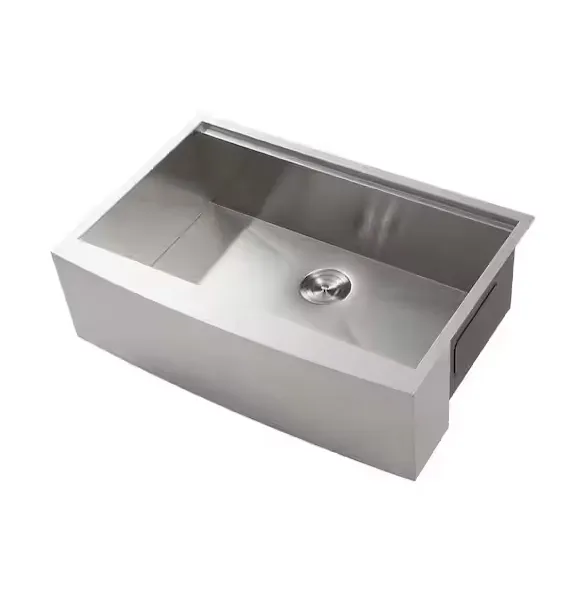
| Sink bowls | Often thicker than both, design dependent | Deep draw needs grade and tooling, dent concern |
| Elevator interiors | 16 ga common | Abuse resistance, flatness perception, reflection control |
| HVAC duct components | Often thinner than 18 ga | Code requirements vary; stiffness via geometry |
| Industrial guards | 16 ga common | Impact resistance and rigidity |
A design rule that reduces wrong decisions
When a flat panel spans a long distance without returns, ribs, hems, or bonded backing, moving to 16 gauge commonly solves complaints about flex and waviness. When the panel includes formed edges, bends, embosses, or stiffening beads, 18 gauge can meet performance while cutting weight and cost.
How should a buyer write a purchase specification to avoid gauge confusion?
Procurement teams often want a simple callout. Stainless sheet rarely behaves simply in the supply chain. A purchase specification should remove ambiguity while staying readable.
A robust stainless sheet line item includes
- Alloy and standard: ASTM A240 stainless sheet and strip, plus ASTM A480 general requirements.
- Thickness in inches or mm with tolerance expectation.
- Width, length, or coil width and coil ID/OD requirements.
- Finish: No. 2B, No. 4 brushed, BA, mirrored, or specialty texture.
- Protective film requirement: yes or no, plus adhesive type.
- Flatness requirement if cosmetic: define allowable deviation or require stretcher leveled sheet.
- Grain direction requirement when brushed finish exists.
- Certification: Mill test report, heat number traceability, PMI when required.
- Packaging: interleaving, edge protection, pallet standard, moisture protection.
Example specification language (adapt to internal standards)
- Material: Stainless steel sheet, ASTM A240, Type 304, annealed.
- Thickness: 0.0598 in nominal (16 ga), comply with ASTM A480 tolerance.
- Finish: No. 4 brushed, grain lengthwise, PVC film one side.
- Size: 48 in x 120 in, leveled sheet, flatness suitable to architectural paneling.
- Documentation: MTR with chemistry and mechanicals, heat traceability.
- Different gauge tables exist
- Tolerance can move thickness enough to affect fit ups.
- Finish and leveling influence flatness more than gauge does.
- Coil set and residual stress can ruin cosmetic outcomes even at 16 gauge.
MWalloys supports customers by translating “shop language” into procurement language, then matching it to mill availability so production gets predictable material.
What durability tests and inspection points actually validate the selection?
Durability depends on the failure mode you want to prevent. A single test rarely answers everything.
Mechanical durability checks
- Deflection under load: simple fixture test on representative span
- Impact dent testing: controlled drop weight or pendulum impact on supported and unsupported conditions
- Vibration endurance: enclosure panels around motors and compressors
- Fastener pull out: when hardware attaches directly or via inserts
Corrosion durability checks
- Salt spray testing: useful in some comparisons, yet not a perfect real world predictor
- Cyclic corrosion testing: more realistic in many outdoor conditions
- Cleaning chemical exposure: critical in food service and hospitals
- Tea staining assessment: important near coastlines
Surface durability checks
- Scratch resistance: depends on finish and cleaning methods, not only gauge
- Gloss and reflection distortion: determines premium perception on polished finishes
- Film residue evaluation: adhesive quality affects rework time
Incoming inspection checklist (buyer friendly)
| Check Item | What to Measure | Why it matters |
|---|---|---|
| Thickness | micrometer across multiple points | verifies tolerance compliance |
| Flatness | straightedge or laser method | reduces oil canning complaints |
| Finish | visual plus Ra where required | ensures consistent appearance |
| Protective film | adhesion and peel behavior | prevents rework and residue |
| MTR review | chemistry, mechanicals, heat | traceability and compliance |
What common myths cause wrong gauge decisions?
Myth 1: “16 gauge lasts twice as long”
Thickness alone does not double service life. In corrosion, wrong grade can fail quickly even at thicker gauge. In denting and deflection, 16 gauge often feels dramatically better, yet service life depends on design details and support.
Myth 2: “18 gauge stainless is too thin to weld”
18 gauge welds well with correct process control. Many high quality stainless assemblies are built from 18 gauge. The real risk is heat distortion and burn through without fixturing and tuned parameters.
Myth 3: “Gauge is a precise measurement”
Gauge is shorthand. Decimal thickness plus standards control the delivered product.
Myth 4: “Thicker always looks better”
Thicker helps, yet leveling, finish, grain direction, and mounting design often dominate visual quality on wide panels.
Myth 5: “Cost per sheet is the only cost”
Rework from dents, waviness, and scratched finish can exceed material price differences. Total cost includes packaging, handling, yield loss, and warranty exposure.
FAQs: 16 vs 18 Gauge Stainless Steel
16ga vs. 18ga Stainless Steel: 10/10 Technical FAQ
1. Which is thicker, 16 gauge or 18 gauge?
In the gauge system for stainless steel, lower numbers represent thicker material. Therefore, 16 gauge is thicker than 18 gauge. In common trade values, 16 gauge is approximately 1.52 mm (0.060"), while 18 gauge is approximately 1.21 mm (0.048").
2. What is the thickness of 18 gauge stainless in mm?
3. Is 16 gauge stronger than 18 gauge?
4. How much stiffer is 16 gauge compared with 18 gauge?
ENGINEERING FACT
Stiffness in a panel scales roughly with the cube of the thickness. Because 16 gauge is about 25% thicker than 18 gauge, it provides nearly 2x the bending stiffness on the same geometry, making it feel much more "solid" to the touch.
5. Is 18 gauge stainless acceptable for countertops?
6. Which gauge is better for stainless steel enclosures?
7. Does grade matter more than gauge in corrosion resistance?
8. Which is easier to form, 16ga or 18ga?
9. Will 18 gauge stainless warp more during welding?
Often, yes. 18 gauge has less thermal mass to dissipate the heat of the arc, leading to higher rates of thermal expansion and warping. Successful welding of 18ga requires tight fixturing, low heat input (TIG), and careful stitch-welding sequences to manage distortion.
10. How should I specify stainless sheet for a supplier?
PROCUREMENT RULE
Never rely on "gauge" alone. Your purchase order should state:
- Decimal Thickness: (e.g., 1.50 mm instead of just "16 ga").
- Reference Standard: ASTM A240 / A480.
- Finish: (e.g., No. 4 Brushed).
- Protective Film: (e.g., 70-micron laser film).
Practical selection summary
Choose 16 gauge stainless steel when:
- panels span long distances and must feel rigid
- dent resistance is a key quality metric
- cosmetic flatness is hard to maintain with thinner sheet
- enclosure vibration or abuse risk is significant
Choose 18 gauge stainless steel when:
- weight reduction matters
- forming complexity is high and thinner sheet lowers risk
- stiffening features exist (returns, hems, beads, bonded backing)
- the product needs cost control without sacrificing grade quality
If you share your application, span dimensions, finish target, environment (indoor, coastal, chemical exposure), and fabrication methods, MWalloys can help translate that into a thickness and specification package that matches mill availability and avoids the common tolerance and flatness pitfalls that cause production delays.