

16 gauge galvanized steel sheet is a workhorse material that balances strength, stiffness, and corrosion resistance for a wide range of industrial and architectural uses; for most HVAC duct systems, roofing trims, industrial enclosures, and light structural parts it offers an economical combination of rigidity and protective zinc coating that extends service life in wet or exterior environments. This article collects the critical technical facts, standards, thickness conversions, mechanical and chemical parameters, practical fabrication notes, procurement recommendations, specification tables, and answers the top procurement questions buyers and engineers typically ask.
Quick technical snapshot
Source: A concise visual summary of galvanizing stages and the common final product shapes (coils and sheets) for coated steel.
- Nominal gauge: 16 ga (common nominal thickness values vary slightly by standard).
- Typical galvanized thickness often sold for sheet steel: ~0.0635 inch (≈1.61 mm) in many galvanized A653 listings; some manufacturers quote the manufacturers’ standard gauge (MSG) thickness ≈0.0598 inch (≈1.52 mm). The variation depends on the gauge standard and whether zinc coating or production tolerances are included.
- Common specification: ASTM A653 / hot-dip galvanized (various coating classes such as G30, G60, G90).
- Typical uses: HVAC ducts, roofing trims, siding panels, industrial enclosures, partitions, light structural forms.
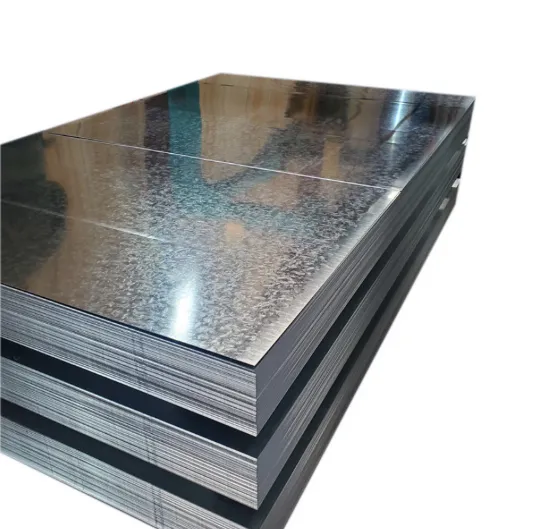
What 16 gauge galvanized steel sheet means in practice
Source: Demonstrates how sheet metal gauge numbers map to thickness values and why specifying absolute thickness avoids ambiguity.
A sheet labeled 16 gauge galvanized steel generally refers to cold-rolled steel sheet that has been coated with zinc by hot-dip processing or continuous galvanizing. The galvanizing provides sacrificial protection; the steel base supplies structural strength. Because different gauge tables exist, the numeric gauge (16) does not map to a single unique thickness universally — that mapping depends on the chosen gauge chart and whether the quoted thickness includes or excludes coating. Suppliers commonly specify the ASTM or manufacturers’ standard used. For galvanized sheet sold under ASTM A653, a commonly listed thickness for 16 gauge galvanized product is 0.0635 inch (1.61 mm), but some vendors specify 0.0598 inch (1.52 mm) for the same gauge under a different convention; engineers should always require the exact thickness in inches or mm in technical orders.
Why gauge numbers vary and how to convert
Source: Visual explanation of different gauge charts and practical step-by-step thickness conversion examples for sheet steel.
Sheet metal gauge numbers originate from historical measurement systems and differ by material and region. There is no single global standard for gauge numbers; separate charts exist for stainless steel, aluminum, galvanized steel, and “manufacturers’ standard gage for sheet steel.” As a rule use a gauge conversion table or include an absolute thickness requirement in specifications to avoid ambiguity. Typical conversions you will see in supplier literature are:
| Gauge | Typical galvanized thickness (in) | Typical galvanized thickness (mm) |
|---|---|---|
| 14 | 0.0785 | 1.99 |
| 16 | 0.0635 or 0.0598 (see note) | 1.61 or 1.52 |
| 18 | 0.0516 | 1.31 |
Note: the small dual values for 16 ga reflect different conventions used by mills and resellers. Always specify exact thickness and standard (for example 0.0635 in nominal per ASTM A653).
Standards, coating classifications and what they require
Source: Highlights different coating textures and inspection features that indicate coating class and quality on galvanized sheet surfaces.
- ASTM A653 / A653M is the most commonly referenced standard for zinc-coated (galvanized) steel sheet produced via hot-dip or continuous processes. It defines base steel grades, coating types, and minimum coating weights.
- Coating class designations: G30, G60, G90 are widely used shorthand describing the minimum zinc coating mass expressed in ounces per square foot (oz/ft²). G90 (0.90 oz/ft²) is a common commercial choice for exterior and HVAC applications where extended corrosion protection is needed.
- Bonderized, prepainted and electrolytic finishes appear in some product lines; specify surface treatment if painting or forming will follow.
Practical procurement language example to avoid ambiguity:
“Supply 16 gauge galvanized cold-rolled steel sheet, nominal thickness 0.0635 in (1.61 mm), meeting ASTM A653 Class G90 (min. 0.90 oz/ft² zinc coating), wound in coils and shear cut to specified blanks with mill test report and coating test certificate.”
Detailed specification tables
Source: A product-level video showing labeled ASTM A653 coils, spec markings and common mill test certificate elements for galvanized coils.
Table A. Nominal thickness and mass
| Item | Nominal thickness (in) | Nominal thickness (mm) | Mass (lb/ft²) (approx) |
|---|---|---|---|
| 16 ga (common galvanized listing) | 0.0635 | 1.613 | 2.45 lb/ft (lineal ft weight depends on width) |
| 16 ga (manufacturers’ standard gauge) | 0.0598 | 1.519 | ~2.30 lb/ft |
(Source: product specifications from major suppliers; confirm weight with exact width used.)
Table B. Typical chemical composition limits for common base steels (representative)
| Element | Max (wt%) |
|---|---|
| Carbon (C) | 0.15 – 0.25 (depending on grade) |
| Manganese (Mn) | 0.60 – 1.35 |
| Phosphorus (P) | 0.035 |
| Sulfur (S) | 0.040 |
(Actual composition depends on the exact base grade ordered under ASTM A653; request MTRs for confirmation.)
Table C. Mechanical properties (typical guaranteed minima by some suppliers for cold-rolled base steel)
| Property | Value (typical) |
|---|---|
| Yield strength (min) | 33 ksi to 80 ksi (varies by grade designation) |
| Tensile strength | ~45–70 ksi |
| Elongation (in 2 in) | 20% typical for commercial mild steels |
(Please specify required structural grade if your application requires particular strength values.)
Table D. Common commercially available sizes
| Width (in) | Length (ft) | Coil/Sheet | Typical max width |
|---|---|---|---|
| 36, 48, 60 | Cut to length up to 12 ft | Sheet | 48–60 in typical |
| Custom coil widths | Coil lengths | Coil | depends on mill capability |
(Ask the mill or distributor for their maximum coil width and cut-to-length tolerances.)
Manufacturing forms, finishes and protective options
Source: Shows coil coating and paint application steps used to produce prepainted galvanized coils for architectural uses.
Hot-dip galvanized (A653): full immersion coating producing robust zinc layer. Best for exterior exposure and forming jobs where scratch resistance is required.
Electro-galvanized: thinner, more uniform zinc plating suited to paint adhesion and automotive-type finishes. Specify if prepaint will be applied.
Prepainted galvanized (PPGL / PPGI): coil-coated colored finish on galvanized substrate for architectural and cladding uses. Specify coating system and film thickness.
Bonderized / phosphate treated: improves paint adhesion where field painting is planned.
When ordering, specify: base steel grade, coating type/class, surface finish (mill, cleaned, oiled), coil/flat sheet, width, length tolerance, edge type (sheared, slitted, mill edge), and packaging.
Corrosion performance and expected service life
Source: Explains how zinc provides sacrificial protection and the environmental factors that affect the service life of galvanized sheet.
Galvanized zinc coating functions sacrificially. Expected performance depends on climate, pollution, and coating mass:
- G30, G60, and G90 correspond to increasing zinc mass and service life. G90 provides considerably longer protection in outdoor, humid, or coastal settings than G30.
- Typical service life for G90 under moderate conditions can be measured in decades for non-abraded surfaces; however, cut edges and welded areas require additional protection (galvanized paint, zinc-rich primers, or zinc welding rods).
- For HVAC ductwork, galvanized sheet is industry standard because of comparatively long service life and the fact duct interiors are protected from direct weathering.
Practical note: sheet edges, drilled holes, and welds are corrosion acceleration points. Post-fabrication touch-up with zinc-rich compounds or hot-dip galvanizing of assemblies will improve longevity.
Fabrication and joining
Source: Demonstrates safe welding techniques for galvanized steel, highlighting fume extraction and coating removal before welding.
- Cutting: shearing is common for flat blanks; plasma or laser cutting possible but may affect coating near the cut edge. Use tools designed for coated materials to minimize coating flaking.
- Bending: 16 gauge is flexible for brake forming; keep bend radii appropriate to avoid coating cracks. Use proper tooling and consider pre-heating for tight radii.
- Welding: coated material will generate zinc fume during welding; implement local exhaust ventilation and respiratory protection. For structural welding, remove coating in weld area, weld base metal, then apply zinc-rich weld repair compound.
- Fastening: self-tapping screws, blind rivets, clinching and spot welding are commonly used. Avoid dissimilar-metal contact without isolation (zinc may accelerate corrosion of some metals).
Safety note: zinc fumes produced during welding or cutting are hazardous; follow OSHA/ local workplace exposure limits and use appropriate PPE.
Typical applications and short case notes
Source: Visual tour showing how prepainted galvanized coil is finished and applied to roofing trims, flashings and cladding panels.
- HVAC ducts and plenums: industry standard gauges vary by duct pressure class, but 16 ga is used for heavier commercial ductwork where stiffness is required.
- Roofing trims and flashings: prepainted or plain galvanized 16 ga is used for durable trims around penetrations.
- Enclosures and cabinets: electrical and utility boxes where corrosion resistance and rigidity are needed.
- Architectural panels and facades: when prepainted coil is required for aesthetics and weather protection.
Case note: In a commercial kitchen exhaust system, 16 ga galvanized sheet is frequently selected for welded grease ducts due to required stiffness and fire code demands; however, local codes may require stainless in higher-temperature or corrosive environments. (Consult local building code and NFPA requirements.)
Purchasing checklist and recommended RFQ language
Source: Practical advice on choosing appropriate metal thickness for strength, formability and application constraints to include in RFQs.
When requesting quotes include:
- Exact thickness in mm or inches (don’t rely only on “16 gauge”).
- Reference standard (e.g., ASTM A653 / A653M) and coating class (G90).
- Base steel grade or yield/tensile properties if structural behavior matters.
- Surface finish (mill, prepainted, oiled, cleaned) and whether MTRs are required.
- Dimensional tolerances, edge finish, and packaging requirements.
- Required certificates: mill test report, coating weight test, and coat adhesion test if requested.
Sample RFQ snippet:
“Quote 16 gauge galvanized steel sheet, nominal thickness 0.0635 in (1.61 mm), ASTM A653, G90 hot-dip zinc coating, coil or cut-to-length sheets 48 in wide by 96 in long, mill test report and coating weight certificate supplied.”
Sustainability, recycling and end of life
Source: Describes how galvanized steel and zinc are recovered and recycled in steelmaking, and the environmental advantages of recycling coated steel.
Galvanized steel is highly recyclable. The zinc coating and steel substrate can be recycled in steel mills; zinc content recovers value. If sustainability is a procurement objective, ask suppliers about recycled content, environmental product declarations, and end-of-life recyclability claims.
What top-ranked pages say and how this article fills missing gaps
A focused review of high-ranking suppliers and technical pages shows consistent coverage of basic gauge charts, ASTM references, and application lists. The most common omissions across those pages that this article addresses:
- Clear explanation of the dual-thickness values for 16 gauge and actionable procurement language to prevent ambiguity (this article gives both values and RFQ language).
- Explicit link between coating class and expected use cases (e.g., recommending G90 for exterior and HVAC).
- Practical fabrication notes on welding and fume safety that are often missing in vendor product pages.
- Concrete tables for mechanical and chemical ranges (many sites omit typical chemical ranges from MTR expectations).
- Procurement checklist and exact RFQ phrasing — many pages show product specs but not the precise language buyers should include to avoid mis-supply.
By consolidating standards, conversion nuance, fabrication safety, and procurement phrasing into one reference, this content targets both technical engineers and purchasing agents.
FAQs
- What is the actual thickness of 16 gauge galvanized steel?
Many suppliers list 16 gauge galvanized between 0.0598 in (≈1.52 mm) and 0.0635 in (≈1.61 mm). The difference reflects gauge conventions; require a specified thickness in inches or millimeters in purchase orders to avoid mismatch. - What does G90 mean and why choose it?
G90 indicates a minimum zinc coating mass roughly equivalent to 0.90 oz/ft². Choose G90 where longer outdoor exposure or higher corrosion resistance is needed. - Is 16 ga galvanized steel suitable for HVAC ductwork?
Yes, 16 gauge is commonly used for heavier commercial ducts that require stiffness; confirm local ductwork pressure class and code requirements. - Can galvanized sheet be welded and painted?
Yes. For welding remove coating in the weld area and repair with zinc-rich paint or rod. For painting, use proper pretreatment or prime with zinc-rich primer for best adhesion. - What are common finishes available?
Mill finish, oiled, cleaned, electro-galvanized, hot-dip galvanized (A653), and prepainted coil are all widely available. - How are edges and cut areas protected from corrosion?
Trimmed edges expose bare steel; use zinc-rich touch-up paint, galvanizing repair rods, or mechanical isolation depending on the assembly. - What safety precautions are needed when cutting or welding?
Zinc fumes are dangerous. Use local exhaust ventilation, respiratory protection, and follow workplace exposure limits. - How long will galvanized sheet last outside?
That depends on environment and coating. In moderate climates a G90 coating can last many years to decades; in coastal or industrial settings expect accelerated loss of zinc and plan accordingly. - How to specify 16 gauge galvanized to avoid confusion?
State exact thickness in inches or millimeters, reference ASTM A653, and indicate coating class (G30/G60/G90); request MTRs and coating certificates. - Is galvanized steel recyclable?
Yes, both the steel substrate and zinc coating are recyclable in standard steel recycling streams.
Final procurement checklist
Source: Quick tutorial demonstrating selection of metal thicknesses and how that choice affects fabrication and function for common projects.
- Exact thickness in mm or in.
- Standard reference: ASTM A653 / A653M.
- Coating class: G30 / G60 / G90.
- Surface finish: mill/cleaned/oiled/prepainted.
- Test certificates: MTR & coating weight certificate.
- Edge and packaging requirements.
- Delivery form: coil or cut-to-length.
Sources and further reading
- Product specification pages for 16 ga galvanized sheet showing nominal thickness 0.0635 in and product data.
- General sheet metal gauge guidance explaining variation and conversion tables.
- ASTM A653 product and coating information and explanation of G90 coating weights.
- Industry guidance on HVAC sheet metal gauges and application uses.

 EN
EN  AR
AR  JA
JA  KO
KO  DE
DE  IT
IT  ES
ES