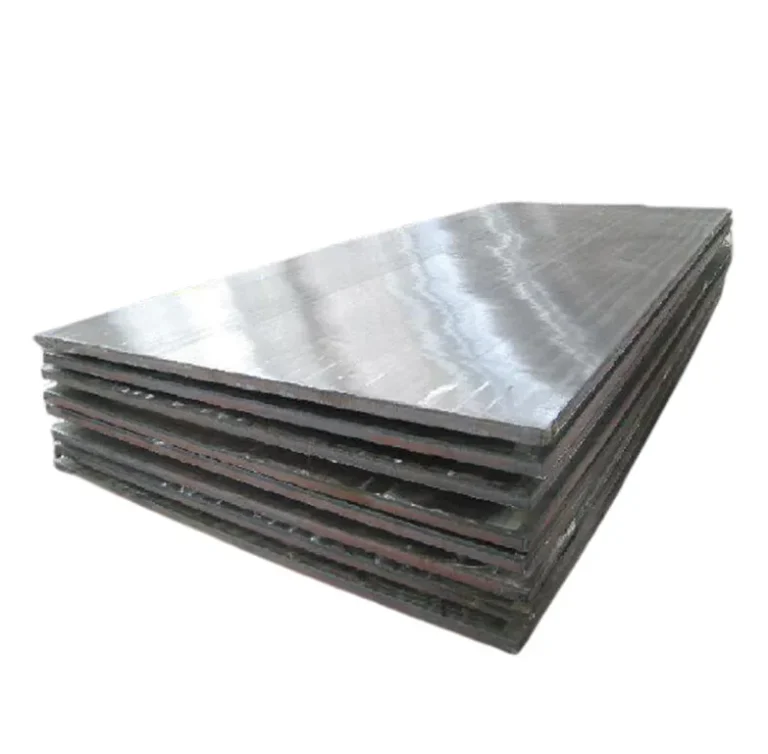

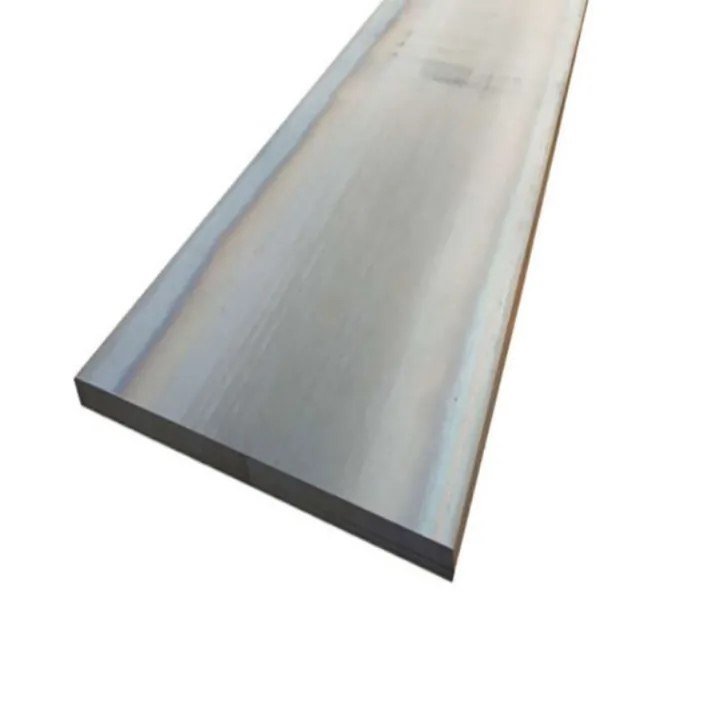
ASTM A36 steel plate is the most widely utilized hot-rolled, low-carbon structural steel in the world. Characterized by its excellent weldability, formability, and a minimum yield strength of 36.000 psi (250 MPa), A36 carbon steel plate is the industry standard for bridges, buildings, and general structural applications.
If your project requires the use of ASTM A36 Steel Plate, you can Kontaktieren Sie uns für ein kostenloses Angebot.
As a leading industrial supplier, we offer A36 steel plates that meet or exceed ASTM A36/A36M-19 standards. Our inventory includes a comprehensive range of thicknesses, from thin gauge sheets to heavy structural plates, all provided with full Mühlentest-Zertifikate (MTC) to ensure material traceability and project compliance.
Core Supply Specifications & Capabilities:
-
Yield Strength: Minimum 36.000 psi (250 MPa).
-
Tensile Strength: 58,000 psi zu 80,000 psi (400 zu 550 MPa).
-
Anwendungen: Construction, oil and gas, heavy machinery, and maritime infrastructure.
-
Value-Added Services: Precision CNC plasma/flame cutting, shot blasting, and priming.
-
Einhaltung von Normen: ASTM A36, ASME SA36, and EN 10025-2 (S235JR equivalent).
What is ASTM A36 steel plate used to build in real projects?
ASTM A36 is a carbon structural steel specification used throughout construction and industrial fabrication. In day to day practice, A36 plate shows up anywhere a designer needs a dependable mild steel plate with proven welding behavior and mainstream code acceptance.
Typical end uses include:
- base plates, gussets, clip angles cut from plate.
- brackets, frames, skid bases, machine guards.
- platforms, stairs, walkways, mezzanines.
- structural supports, equipment foundations, embed plates.
- general purpose fabricated parts where corrosion protection comes from coating, galvanizing, or cladding.
Engineers choose A36 when strength needs remain modest and availability drives the schedule. Fabricators choose A36 when cutting, drilling, and welding need to stay simple and repeatable.
Table 1. Common A36 plate applications and the property that matters most
| Art der Anwendung | Typical plate thickness range | Dominant selection driver |
|---|---|---|
| Base plates and bearing plates | 6 mm to 50 mm | availability, weldability, flatness |
| Brackets and structural frames | 6 mm to 25 mm | ease of cutting and welding |
| Equipment skids and supports | 10 mm to 60 mm | cost control, local fabrication capacity |
| General repair plate | 3 mm to 20 mm | rapid supply, compatibility with existing steelwork |
| Anchor and embed plates | 10 mm to 75 mm | minimum yield requirement plus coating plan |
A36 should not be treated like a “universal” plate. When a structure has fracture critical details, cyclic fatigue, or low temperature exposure, higher toughness or tighter control standards may be necessary.
Which standards control A36 steel plate requirements and tolerances?
A36 is the steel grade specification, yet plate ordering also relies on general requirement standards that define dimensional tolerances, permitted repairs, testing frequency, and marking rules.
Key documents buyers regularly cite:
- ASTM A36/A36M: chemical limits, mechanical requirements, permitted product forms.
- ASTM A6/A6M: general requirements covering structural steel plates, shapes, bars, including dimensional tolerances and permitted finish conditions.
- ASTM A20/A20M: general requirements used in some supply chains to manage ordering information and inspection expectations.
- ASTM A370: mechanical testing methods referenced by many steel product standards.
Procurement teams frequently miss ASTM A6. If plate flatness, camber, thickness tolerance, or edge condition matters, the order should reference A6 explicitly.
Table 2. What each referenced standard contributes to a purchase order
| Standard | Umfang | What it clarifies in buying decisions |
|---|---|---|
| ASTM A36/A36M | grade definition | yield, tensile, elongation, chemistry limits |
| ASTM A6/A6M | plate general requirements | thickness tolerance, permissible surface discontinuities, marking |
| ASTM A370 | test methods | tensile test procedure, elongation measurement |
| EN 10204 (optional) | certification language | 2.2, 3.1, 3.2 inspection document types |
What chemical composition limits apply to ASTM A36 plate?
A36 is specified primarily by mechanical properties, not by a tight chemistry recipe. The standard sets maximum limits and conditionally permitted ranges that vary with product thickness. Mills are free to optimize chemistry inside those limits, which supports large scale production and broad availability.
What procurement teams should remember:
- Chemistry limits can change with thickness ranges listed in the ASTM tables.
- Carbon and manganese limits often move together in structural steels to manage weldability and strength.
- Phosphorus and sulfur maxima are controlled to protect toughness and weld performance.
- Silicon may be controlled depending on deoxidation practice.
Table 3. Typical A36 plate chemistry limits seen in purchasing (illustrative, thickness dependent, confirm current ASTM tables)
| Element | Typical A36 limit style | Why the limit exists |
|---|---|---|
| Kohlenstoff | maximum value, varies with thickness | weldability, ductility, strength balance |
| Mangan | range or maximum, thickness dependent | strength, deoxidation, hot work behavior |
| Phosphor | maximum | toughness protection, crack sensitivity reduction |
| Schwefel | maximum | ductility and weldability protection. |
| Silizium | maximum or controlled | deoxidation, strength stability. |
| Copper (when specified) | optional maximum or minimum | atmospheric corrosion resistance improvement in some cases |
A frequent field issue: customers expect A36 to behave like a controlled chemistry alloy. A36 behaves like a production structural grade. If tight chemistry control is essential, a different standard may fit better, or a supplemental chemistry requirement should be written into the purchase order.
What mechanical properties define ASTM A36 steel plate?
A36 is often called “36 ksi plate” because its minimum yield strength is 36 ksi in typical thickness ranges. Tensile strength and elongation minimums are also specified.
Important nuance:
- Minimum yield strength can vary with thickness at high thickness ranges in some standards and mill practices. The purchase order should state thickness and confirm the applicable requirement table.
- Elongation minimum depends on specimen type and thickness, meaning catalog values often look inconsistent.
Table 4. A36 plate mechanical property expectations (typical published requirement pattern, verify per ASTM revision and thickness table)
| Eigentum | Typical A36 requirement intent |
|---|---|
| Mindeststreckgrenze | 36 ksi (250 MPa) class in common thickness ranges |
| Zugfestigkeit | 58 to 80 ksi (400 to 550 MPa) range |
| Dehnung | thickness and specimen dependent minimum |
Table 5. Typical physical properties used in structural calculations (room temperature reference)
| Eigentum | Typischer Wert | Engineering relevance |
|---|---|---|
| Dichte | 7,85 g/cm³ | mass estimation, lifting plans |
| Elastizitätsmodul | 200 GPa | deflection checks, vibration estimates |
| Poissonzahl | 0.26 to 0.30 | finite element inputs |
| Thermische Ausdehnung | 11 to 13 µm/m°C | thermal movement in long members |
| Wärmeleitfähigkeit | 45 to 60 W/mK | thermal modeling of equipment bases |
Physical property values vary slightly with composition and temperature. Design work should use values consistent with the governing structural code or company standard.
How does A36 compare with A572, A992, A283, A516, and A709?
Many web pages list “equivalents,” yet structural steel substitution should follow engineering approval. Several grades overlap in strength yet differ in toughness requirements, chemistry control, intended service, and inspection scope.
Table 6. Selection comparison, practical procurement view
| Standard | Typische Absicht | Key strength point | Common reason it replaces A36 | Common reason it does not replace A36 |
|---|---|---|---|---|
| ASTM A36 | general structural plate | 36 ksi yield class | fastest availability, low cost | no guaranteed CVN toughness requirement |
| ASTM A572 | HSLA structural steel | higher yield options | weight reduction, higher design stress | may cost more, availability depends on region |
| ASTM A992 | structural shapes, not plate | high yield shape grade | used in W shapes, beams | not a plate standard |
| ASTM A283 | low and intermediate strength plate | lower strength classes | economy in light structures | lower strength, different properties |
| ASTM A516 | pressure vessel quality plate | toughness and notch behavior | used in boilers, pressure vessels | different application scope, code compliance |
| ASTM A709 | Brückenstahlfamilie | bridge focused requirements | bridge projects, toughness control | procurement scope often tighter, cost higher |
A common supply chain practice: service centers carry plate that meets A572 Grade 50 and can certify dual compliance to A36 in certain cases. Dual certification must be confirmed on the MTC. A dual cert plate still might carry a different chemistry, which can matter in galvanizing, forming, or specific welding procedures.
What weldability and welding procedures suit A36 plate?
A36 is considered weldable using standard structural welding processes. Still, welding performance depends on thickness, restraint, joint type, hydrogen control, and ambient temperature.
Key weldability factors
- Carbon equivalent tends to stay moderate in A36 plate, supporting routine welding.
- Thick sections and high restraint joints raise cracking risk in any carbon steel.
- Low hydrogen practice remains a best practice, particularly in cold weather or heavy weldments.
Common welding processes used with A36 plate
- SMAW, electrodes like E6010 root plus E7018 fill, per WPS.
- GMAW with solid wire and shielding gas appropriate to shop practice.
- FCAW in production welding, particularly in structural fabrication shops.
- SAW in heavy plate seams.
Table 7. Fabrication controls that reduce weld defects in A36
| Control item | Was sie verhindert | Praktischer Ansatz |
|---|---|---|
| Clean joint preparation | lack of fusion, porosity | remove scale, oil, moisture |
| Preheat where required | hydrogen cracking risk | set preheat based on thickness and restraint |
| Low hydrogen consumables | delayed cracking | dry storage, proper handling |
| Steuerung der Wärmezufuhr | excessive distortion | balanced weld sequence, correct parameters |
| Post weld inspection | missed defects | VT plus MT or UT per project class |
A36 does not include mandatory Charpy V notch requirements in its base specification. If a structure has cold temperature fracture risk, write CVN requirements directly, or select a grade that already includes toughness requirements.
How does A36 plate behave in cutting, drilling, bending, and machining?
A36 plate is widely used partly because fabrication shops can process it with common equipment. The steel tends to cut and form without special procedures, within normal mild steel practice.
Schnittmethoden
- oxy fuel cutting works well on thicker plate, with edge cleanup depending on welding needs.
- plasma cutting suits most thickness ranges used in fabrication.
- laser cutting suits thinner plate and precision parts.
Edge condition matters when parts will be welded. Thermal cutting leaves a heat affected zone; grinding the edge can improve weld quality on critical joints.
Drilling and punching
Drilling is straightforward with standard HSS or carbide tooling. Punching works on thinner plate; thicker plate often uses drilling or plasma cut holes plus reaming.
Biegen und Formen
Bend radius requirements depend on thickness and rolling direction. A36 is generally formable, yet bend cracking can occur with tight radii, poor edge condition, or nonuniform thickness.
Table 8. Fabrication method suitability by plate thickness
| Operation | Thin plate, under 10 mm | Medium plate, 10 to 25 mm | Heavy plate, above 25 mm |
|---|---|---|---|
| Laserschneiden | ausgezeichnet | begrenzt | not typical |
| Plasmaschneiden | ausgezeichnet | ausgezeichnet | gut |
| Oxy fuel cutting | begrenzt | gut | ausgezeichnet |
| Punching | ausgezeichnet | begrenzt | not typical |
| Press brake forming | ausgezeichnet | good with planning | limited, depends on tonnage |
What corrosion protection is typical with A36 steel plate?
A36 is a carbon steel. It rusts in humid air, coastal exposure, chemical splash, or water immersion unless protected. Corrosion protection normally comes from coatings or galvanizing rather than alloying.
Common protection systems:
- shop primer plus top coat paint system.
- zinc rich primer in industrial atmospheres.
- hot dip galvanizing when geometry and thickness fit galvanizing practice.
- metallizing (thermal spray zinc or aluminum) on large structures.
- lining systems in tanks and hoppers.
Coating selection should match surface preparation level, expected service life, and maintenance access.
Table 9. Coating selection cues used in industrial procurement
| Exposition | Typisches Risiko | Common protection method |
|---|---|---|
| Innen trocken | cosmetic rust, light corrosion | primer plus enamel |
| Outdoor rural | general rusting | primer plus polyurethane system |
| Industrial air | underfilm corrosion | zinc rich primer plus high build top coat |
| Coastal salt | accelerated corrosion | galvanizing or robust paint plus maintenance plan |
| Immersion | rapid corrosion | lining system or different base material |
Which plate sizes are commonly in stock and what affects lead time?
A36 is stocked widely, yet “in stock” differs between markets. Stock availability depends on thickness, width, and whether the plate is discrete plate or coil plate cut to length.
Typical stock patterns:
- common thicknesses: 3 mm to 50 mm, region dependent.
- common widths: 1500 mm, 2000 mm, 2500 mm, 3000 mm.
- common lengths: 6000 mm, 12000 mm, or cut length.
Heavy plate above 75 mm often shifts toward mill order rather than service center stock.
Lead time drivers:
- thickness and width combination.
- need for tight flatness or thickness tolerance.
- extra testing requirements
- cutting and processing services, including beveling, drilling, or CNC profiling.
- project documentation, including third party inspection.
Table 10. Stock versus mill order, scheduling view
| Anforderung | Usually stock sourced | Often mill order |
|---|---|---|
| common thickness and width | ja | sometimes |
| uncommon width, extra wide plate | begrenzt | ja |
| very heavy thickness | begrenzt | ja |
| tight flatness requirement | begrenzt | ja |
| special testing, CVN, UT | begrenzt | ja |
| large project tonnage | mixed | yes, mill rolling slot |
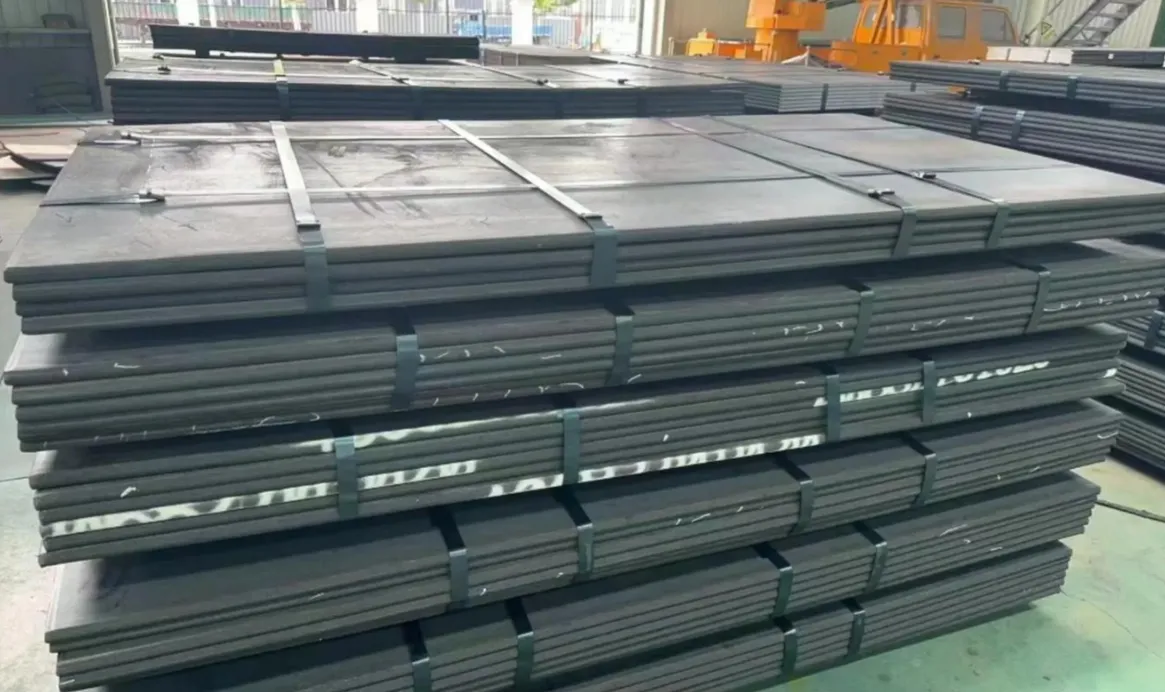
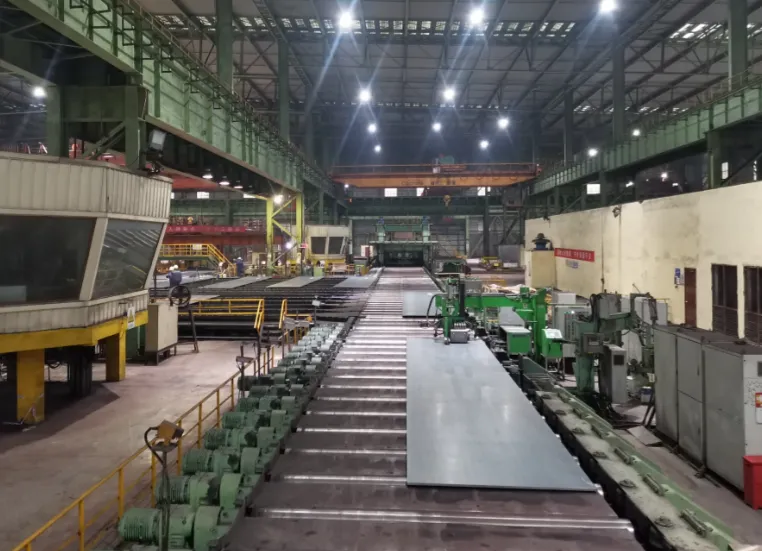
MWalloys supports “in stock supply” needs by keeping high turnover A36 sizes available, plus providing cut to size processing and traceable MTC packages suitable for fabrication audits.
What quality documents and inspection steps should buyers request?
A36 purchasing is often treated like commodity buying, yet incorrect paperwork causes expensive delays, especially on EPC projects and audited supply chains.
Common documents:
- Mill Test Certificate with heat number, chemistry, mechanical test results
- Certificate of compliance to ASTM A36/A6 requirements
- Packing list showing heat traceability per plate or per bundle
- Third party inspection report when contract requires it
- Ultrasonic testing reports when specified by project documents
Table 11. Receiving inspection checklist that catches most issues early
| Siehe | Methode | Was sie verhindert |
|---|---|---|
| Überprüfung der Note | MTC review, optional PMI | mixed grade shipment |
| Rückverfolgbarkeit von Wärme | compare markings to paperwork | loss of traceability after cutting |
| Thickness and dimensions | calibrated measurement | fabrication fit issues |
| Zustand der Oberfläche | visual inspection | lamination exposure, deep pits, edge damage |
| Ebenheit | straightedge, level checks | assembly distortion, rework |
Ultrasonic testing is not automatic on A36. If lamination risk must be minimized, specify UT per ASTM A578 level in the purchase order.
How should an A36 steel plate purchase order be written?
A short line item like “A36 plate” leaves too much open. A complete purchase description reduces delays, change orders, and inspection disputes.
Table 12. Purchase order template content used in disciplined procurement
| Line item element | Beispiel Eintrag | Warum das wichtig ist |
|---|---|---|
| Standard | ASTM A36/A36M plus ASTM A6/A6M | defines grade and plate requirements |
| Produkt | steel plate | avoids confusion with shapes or bar |
| Abmessungen | 20 mm x 2000 mm x 6000 mm | clear scope |
| Quantity | pieces or metric tons | planning and pricing |
| Toleranzen | per ASTM A6, plus special requirements | reduces fit up issues |
| Zustand der Oberfläche | hot rolled, shot blasted, primed, or bare | aligns with coating plan |
| Schneiden | cut to size, CNC profile, bevel | fabrication readiness |
| Zertifizierung | MTC, EN 10204 3.1 when needed | audit compliance |
| Kennzeichnung | heat number per plate | traceability after cutting |
| Optional tests | UT per ASTM A578, CVN per project | risk reduction |
When fabrication takes place in multiple shops, heat number marking per cut piece often prevents later confusion.
What questions do engineers and buyers ask most often about ASTM A36 plate?
ASTM A36 Steel Plate: 10/10 Technical FAQ
The Global Standard for Structural Carbon Steel
1. Is ASTM A36 the same material worldwide?
Not exactly. While many countries have "equivalent" mild steels (like S235JR or Q235B), equivalence does not guarantee identical chemical limits or toughness testing. If your project contract specifies ASTM A36, you should insist on an ASTM-certified mill test report rather than a "similar grade" to ensure full compliance with North American design codes.
2. What does "36" mean in A36?
The "36" represents the minimum yield strength class of the material, which is 36,000 psi (or 36 ksi) for typical thickness ranges. This is the point where the steel will begin to permanently deform under load, a critical value for structural engineers.
3. Can A36 plate be welded without preheat?
Generally, yes, for thin to moderate thicknesses. However, thick sections (typically over 1.5 inches), high-restraint joints, or welding in cold ambient temperatures may require preheating according to a qualified Welding Procedure Specification (WPS) to prevent hydrogen cracking.
4. Does A36 include Charpy impact testing?
5. Is A36 suitable for pressure vessel service?
Typically, no. Pressure vessel codes like ASME Section VIII specify standards like ASTM A516, which have stricter controls on chemistry and internal quality. While A36 may be used for non-pressure-retaining parts (like supports or ladders), always consult the specific vessel design code.
6. Why do suppliers ship A572 Grade 50 when A36 is ordered?
7. What thickness range is commonly available?
STOCK AVAILABILITY
A36 is widely available in stock from 3 mm (1/8") up to 50 mm (2"). Plates thicker than 100 mm (4") are less common in general service centers and usually require mill scheduling or specialized heavy-plate stockholders.
8. Can A36 be hot dip galvanized?
9. A36 Plate vs. A36 Sheet: What is the difference?
10. What documents should come with an A36 shipment?
COMPLIANCE CHECKLIST
For every shipment, insist on:
- Mühlentest-Zertifikat (MTC): With heat number traceability.
- Packing List: Matching the plate markings.
- UT Reports: If ultrasonic testing was specified.
- Processing Records: Documentation for any flame cutting or coating performed.
Zusammenfassung:
ASTM A36 steel plate stays dominant in structural carbon steel purchasing because it delivers dependable minimum yield strength, broad fabrication compatibility, and the strongest in stock availability, which shortens project schedules when toughness and elevated yield grades are not mandatory. The safest buying approach specifies ASTM A36/A6, dimensions, processing needs, certification type, marking rules, plus any supplemental requirements like UT or CVN testing. MWalloys supports these expectations through stock programs, cut to size processing, export packaging, and traceable documentation aligned with modern fabrication and EPC audit requirements.