

SS 304 sheet price per kg fluctuates across global markets because it depends on raw material surcharges (nickel and chromium), sheet thickness and width, surface finish, order quantity, mill origin, and regional supply dynamics, which means a buyer who tracks these variables, negotiates with documented benchmarks, and selects the right spec without over ordering can typically save 8 to 20 percent compared with spot market rates.
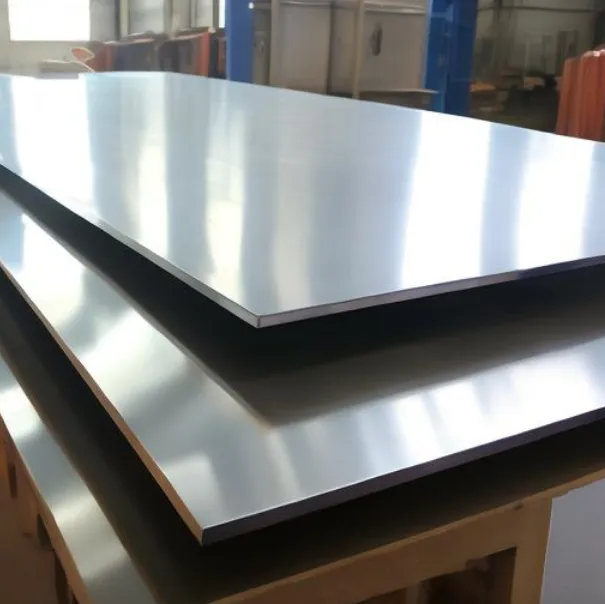
In 2026 trading conditions, cold rolled SS 304 sheet with 2B finish commonly transacts in the approximate range of USD 2.6 to 5.8 per kg depending on country, order size, conversion level, and trade policy, with China typically at the low end ex works, India often mid range, and the United States frequently at the high end at service center level due to tariffs, freight, and distribution costs.
What is SS 304 stainless steel sheet and what specs should a buyer know before pricing?
SS 304 is the most widely produced austenitic stainless steel grade globally. It contains roughly 18 percent chromium and 8 percent nickel (18-8), giving it strong corrosion resistance in many environments, good formability, and weldability.
Before comparing price, a buyer must state:
- grade: 304 or 304L (low carbon)
- standard: ASTM A240, EN 10088-2, JIS G4305, or GB/T 3280 (depending on market).
- السُمك والعرض والطول
- surface finish: 2B, BA (bright annealed), No.4, HL (hairline), mirror (8K).
- edge condition: mill edge or slit edge
- tolerance class: thickness, width, length, flatness.
- testing requirements: MTC, PMI, tensile, hardness, corrosion testing if needed.
- quantity and delivery schedule.
Table 2. Common SS 304 sheet specifications buyers request
| عنصر المواصفات | الاختيار الشائع | Why it affects price |
|---|---|---|
| الصف | 304 vs 304L | 304L can cost slightly more in some markets |
| قياسي | ASTM A240 / EN 10088-2 | defines mechanical minimums and test scope |
| السُمك | 0.3 mm to 12 mm range | thinner gauges cost more per kg |
| الإنهاء | 2B, BA, No.4, mirror | mirror finish commands premium |
| العرض | 1000 / 1219 / 1500 mm | wide non standard rolls carry premium |
| الكمية | coil or sheet, tons per order | volume triggers tier discounts |
| التصديق | MTC, EN 10204 3.1 | adds QA cost in some mills |
| إيدج | mill edge vs slit edge | slit edge adds processing charge |
Which specifications define SS 304 sheet and why they affect price per kg?
A correct grade callout reduces disputes and avoids hidden cost. Common standards include:
- ASTM A240 (plate, sheet, strip in chromium and chromium nickel stainless steel)
- EN 10088 2 (flat products of corrosion resisting steels)
- JIS G4304 (hot rolled stainless plate, sheet, strip)
- GB and IS standards used in domestic procurement within China and India.
304 also appears in variants:
- 304 (typical carbon limit 0.08 percent max in ASTM language)
- 304L (lower carbon, improved weld sensitization resistance)
- 304H (higher carbon band, elevated temperature strength focus)
Price differences between 304 and 304L often look small in commodity trade, yet can widen when mills face tight scrap chemistry availability or when a project requires tighter PMI control.
Table 1. Common SS 304 sheet identifiers seen on quotes
| Buyer language | النمط القياسي | Typical meaning in supply |
|---|---|---|
| SS 304 sheet | generic | requires clarification of standard, finish, tolerance |
| ASTM A240 Type 304 2B | ASTM | cold rolled 2B sheet with ASTM compliance |
| EN 1.4301 2B | EN | European designation of 304 with 2B finish |
| SUS304 2B | JIS | Japanese designation, still needs product standard detail |
| 304L sheet 2B | متغير | low carbon version, often used in welded fabrications |
What is the current SS 304 sheet price per kg in China, the United States, and India?
Real time pricing changes daily. The most useful approach is an indicative transaction band with a clear basis: thickness range, finish, minimum order weight, and delivery term assumptions.
The comparison below reflects typical market patterns seen by global buyers. Numbers represent common commercial bands, not a guaranteed offer, and they exclude taxes unless noted.
Table 2. Indicative SS 304 sheet price per kg by country (2026 typical bands)
| Market | Typical product basis | Typical order condition | Indicative band (USD per kg) | Usual reasons the band shifts |
|---|---|---|---|---|
| الصين | cold rolled 2B sheet cut from coil, 0.5 to 3.0 mm | mill or large service center, container volume | 2.6 to 3.9 | nickel moves, export rebates, freight, mill campaign |
| الهند | cold rolled 2B sheet, 0.5 to 3.0 mm | domestic stockist, moderate lot | 3.0 to 4.6 | import dependence on nickel, FX, local demand, duties |
| الولايات المتحدة الأمريكية | cold rolled 2B sheet, 0.5 to 3.0 mm | service center, smaller lots, domestic delivered | 4.0 to 5.8 | tariffs and trade remedies, distribution margins, logistics |
Important purchasing note: “US price” often reflects delivered service center pricing with shorter lead time and smaller lot sizes, while “China price” often reflects EXW or FOB levels tied to large batch export packaging. Comparing without matching Incoterms leads to incorrect conclusions.
Why does SS 304 sheet price per kg move so frequently?
304 contains significant nickel, and nickel remains a highly traded metal. Stainless pricing also reacts to energy, freight, and demand shifts.
Key drivers that repeatedly show up across the top ranking pages and buyer questions:
- Nickel price volatility and expectations.
- Ferrochrome and chromium ore costs.
- Stainless scrap availability and spreads.
- Electricity and gas pricing (EAF and rolling energy burden).
- Freight rates and container availability.
- FX movements (CNY, INR, EUR) versus USD.
- Tariffs, anti dumping duties, safeguard policies.
- Inventory cycles at service centers and distributors.
- Project demand swings (construction, appliances, food equipment).
Table 3. Stainless price build up logic used in many markets
| Price component | What it covers | How it changes |
|---|---|---|
| Base price | mill conversion cost plus margin | moves with demand and capacity utilization |
| Alloy surcharge | nickel, chromium, moly effect (304 mainly nickel and chromium) | tracks metal index movements with lag |
| Processing premium | finish, tolerance, leveling, polishing, film | depends on line availability and labor |
| Distribution and cutting | warehousing, cut to length, slitting, minimum charges | increases in small lots |
| Freight and packing | inland trucking, export packing, ocean freight | seasonal and route dependent |
| Duties and taxes | tariffs, VAT, GST, local tax | policy driven |
How do thickness, finish, and tolerance change the per kg price?
Per kg price does not scale linearly with thickness. Thin material often carries higher conversion cost per kg due to extra rolling passes, surface finish control, and handling.
Finish also matters. A No.4 brushed finish involves additional grinding steps, raising the conversion premium.
| السمة | مثال على ذلك | Typical price effect per kg | Why it changes cost |
|---|---|---|---|
| Finish upgrade | BA instead of 2B | أعلى | bright anneal line capacity, surface control |
| Decorative finish | رقم 4 مصقول | أعلى | abrasive belt processing and inspection |
| Hairline finish | HL | أعلى | tighter cosmetic standard, directional finish |
| Film | laser PVC film | أعلى | material cost and application labor |
| Tight tolerance | reduced thickness tolerance | أعلى | gauge control, more inspection |
| Leveling | tension leveling | أعلى | flatness improvement equipment time |
| Small sheets | many cut pieces | أعلى | cutting yield loss and handling |
How can buyers convert price per kg into price per sheet accurately?
A correct weight calculation prevents quoting errors and avoids budget surprises.
304 density is typically taken near 7.93 g per cubic centimeter, equal to 7930 kg per cubic meter.
Weight formula
- Weight (kg) = Length (m) × Width (m) × Thickness (m) × 7930
Table 5. SS 304 sheet weight per square meter by thickness
| السُمك | Thickness (m) | Weight per m2 (kg) |
|---|---|---|
| 0.5 مم | 0.0005 | 3.97 |
| 0.8 مم | 0.0008 | 6.34 |
| 1.0 مم | 0.0010 | 7.93 |
| 1.5 مم | 0.0015 | 11.90 |
| 2.0 مم | 0.0020 | 15.86 |
| 3.0 مم | 0.0030 | 23.79 |
| 4.0 مم | 0.0040 | 31.72 |
| 5.0 مم | 0.0050 | 39.65 |
Worked example
Sheet size 1219 mm × 2438 mm (4 ft × 8 ft nominal) equals 1.219 m × 2.438 m = 2.972 m2.
At 2.0 mm thickness, weight ≈ 2.972 × 15.86 = 47.1 kg per sheet.
If quoted USD 3.60 per kg, sheet cost ≈ 47.1 × 3.60 = USD 169.6 per sheet, excluding freight and taxes.
Table 6. Illustrative cost per sheet using price per kg (2B finish, example pricing)
Assumed price basis: USD 3.60 per kg, cold rolled 2B, typical commercial tolerance.
| Sheet size | Area (m2) | 1.0 mm weight (kg) | 2.0 mm weight (kg) | Cost at 1.0 mm (USD) | Cost at 2.0 mm (USD) |
|---|---|---|---|---|---|
| 1000 × 2000 mm | 2.000 | 15.86 | 31.72 | 57.1 | 114.2 |
| 1219 × 2438 mm | 2.972 | 23.56 | 47.12 | 84.8 | 169.6 |
| 1500 × 3000 mm | 4.500 | 35.69 | 71.37 | 128.5 | 256.9 |
These values illustrate the calculation method. Market quotes also include cutting charges, minimum line items, and packing premiums.
What are the past five years average SS 304 sheet prices per kg?
Public stainless transactions vary by finish, thickness, and region, so the most meaningful historical view uses average bands rather than single day prints. The table below summarizes estimated annual average transaction levels seen in typical commercial cold rolled 2B sheet trade. Values represent blended averages and can differ from any one mill index.
Table 7. Past 5 years average SS 304 sheet price per kg (estimated transaction averages)
| السنة | China typical export basis (USD per kg) | India typical domestic basis (USD per kg) | United States typical service center basis (USD per kg) | Market context summary |
|---|---|---|---|---|
| 2021 | 2.8 | 3.3 | 5.0 | post pandemic demand rebound, logistics tightness |
| 2022 | 3.6 | 4.1 | 5.6 | nickel spike and high energy costs, volatile premiums |
| 2023 | 3.1 | 3.7 | 4.9 | demand normalization, inventories reset |
| 2024 | 2.9 | 3.5 | 4.6 | freight easing, competitive mill output |
| 2025 | 3.0 | 3.6 | 4.7 | steady demand with intermittent metal swings |
كيفية استخدام هذا الجدول:
- Budgeting and long term supply planning benefit from year averages.
- Spot buying needs weekly quote updates since stainless responds quickly to nickel.
What will SS 304 sheet price per kg look like over the next five years?
No forecast stays perfect, yet procurement teams still need a planning range. The outlook below uses three scenarios tied to metal inputs, energy, and trade policy.
- Bear case: weak demand, stable nickel, freight remains low.
- Base case: moderate demand growth, nickel in a mid band, normal freight.
- Bull case: supply disruptions, high nickel, energy shocks, tighter trade controls.
Table 8. 5 year price outlook, SS 304 cold rolled 2B sheet (USD per kg bands)
| السنة | Bear case | الحالة الأساسية | Bull case | Comments procurement teams watch |
|---|---|---|---|---|
| 2026 | 2.6 to 3.8 | 3.0 to 4.6 | 3.8 to 6.2 | nickel volatility, inventory rebalancing |
| 2027 | 2.5 to 3.7 | 3.0 to 4.7 | 3.9 to 6.4 | energy pricing, capacity additions |
| 2028 | 2.5 to 3.8 | 3.1 to 4.9 | 4.0 to 6.6 | scrap availability, demand from infrastructure |
| 2029 | 2.6 to 4.0 | 3.2 to 5.1 | 4.1 to 6.9 | policy risk, freight cycles |
| 2030 | 2.7 to 4.2 | 3.3 to 5.3 | 4.2 to 7.2 | decarbonization cost pass through |
Planning recommendation used in many OEM sourcing teams:
- Use base case midpoint as budget.
- Keep a contingency tied to bull case if stainless share of product cost is high.
- Use contractual mechanisms to share alloy movement risk.
Which factors influence price fluctuations the most?
How nickel changes SS 304 sheet pricing
304 typically reacts to nickel more strongly than chromium. Many mills pass alloy changes through via a surcharge model. Even when quotes look “fixed,” a distributor may adjust weekly based on replacement cost.
How scrap and melt shop costs affect price
Stainless relies heavily on scrap. Tight scrap supply raises conversion cost, even when nickel price stays flat. Clean scrap availability also influences the ease of meeting 304L carbon limits.
How energy and decarbonization policies change stainless cost
Electric arc furnace routes depend on electricity. Gas and power volatility changes melt cost quickly. Carbon reporting requirements and low carbon production investments can also add cost that gradually flows into sheet pricing.
How freight and packing shift landed USD per kg
Ocean freight can add a surprisingly large per kg number on thin gauge sheets due to volume constraints and packing weight. Export packing also matters. Seaworthy packing adds wood, paper, strapping, and labor.
How duties and tariffs shape US pricing
The United States market price often stays structurally higher than China export levels because tariff and trade remedy measures raise landed cost, then service center conversion and distribution adds another layer.
Table 9. Price driver ranking by typical impact magnitude
| Driver | Typical impact on USD per kg | Visibility to buyers |
|---|---|---|
| Nickel price movement | عالية | visible, discussed daily |
| السياسة والرسوم التجارية | عالية | visible, policy driven |
| Local inventory cycles | medium to high | visible via lead time changes |
| Energy cost | متوسط | visible in mill announcements |
| Freight and logistics | متوسط | visible, route dependent |
| Finish and processing | متوسط | visible in conversion premium |
| FX movement | متوسط | visible, constant background |
How should engineers and buyers choose SS 304 sheet without overpaying?
Price per kg improves when the specification matches the real need. Over specification increases conversion premium.
What to clarify before requesting a quote
- Standard: ASTM A240, EN 10088 2, or another required standard.
- Grade: 304 versus 304L
- Thickness and tolerance, include acceptable minus tolerance.
- Finish: 2B, BA, No.4, HL, mirror
- Protective film: none, standard PVC, laser film.
- Sheet size: standard sheets versus custom cut.
- Flatness requirement: commercial versus leveled.
- Quantity: total kg, number of sheets, repeat schedule.
- Incoterms: EXW, FOB, CIF, DDP
- Certificates: MTC, EN 10204 3.1, additional inspection.
- Packing: export packing, interleaving, pallet type.
Table 10. Practical purchase tactics that usually reduce total cost
| Tactic | لماذا يساعد | When it applies |
|---|---|---|
| Use standard sheet sizes | higher yield and faster processing | commodity fabrication |
| Allow mill edge on non cosmetic parts | avoids trimming cost | parts cut later by buyer |
| Choose 2B rather than BA | lower conversion premium | non decorative applications |
| Order in full bundles | reduces handling and cutting | warehouses and OEMs |
| Accept commercial flatness | avoids leveling premium | parts not laser cut to tight tolerances |
| Consolidate thicknesses | improves negotiation leverage | multi part projects |
Quality items that protect the project budget
Cheapest per kg can become expensive if rejects appear. Receiving inspection usually focuses on:
- thickness verification across multiple points.
- surface defects: scratches, pits, roll marks.
- edge quality and burr control.
- identification and heat traceability.
- certificate review, chemistry verification when needed.
- PMI spot checks on critical projects.
MWalloys typically supports buyers by confirming specification detail before quoting, then supplying SS 304 sheets with traceable MTC documentation and export packing options that match the destination route.
How do different sheet sizes and thicknesses affect the landed price?
Per kg stays the same within one quote basis, yet per sheet and per square meter change with weight and with processing yield.
Buyers commonly search “1mm SS 304 sheet price per kg” or “2mm SS 304 sheet cost.” The key is that per kg may differ by thickness due to rolling route and demand.
Table 11. Indicative thickness effect on USD per kg in cold rolled sheet (directional)
| Thickness band | Typical conversion cost per kg | Usual market behavior |
|---|---|---|
| 0.3 to 0.6 mm | أعلى | thin gauge premium |
| 0.7 to 1.5 mm | معتدلة | high volume, competitive |
| 2.0 to 3.0 mm | معتدلة | may shift to cut from thicker coil |
| 4.0 mm and above | تختلف | may shift to plate route in some mills |
Table 12. Example landed cost logic by order size (illustrative)
| Order profile | Typical price characteristic | السبب |
|---|---|---|
| small retail purchase | highest USD per kg | cutting, warehousing, credit cost |
| mid lot stockist order | mid USD per kg | moderate handling, faster delivery |
| container export order | lower USD per kg | scale, better mill negotiation, fewer cuts |
What common mistakes cause buyers to pay more than necessary?
- Requesting “SS 304 sheet” without stating finish, thickness tolerance, or standard.
- Mixing 304 and 304L requirements across drawings, then reconciling late.
- Comparing EXW China price to delivered US service center price without aligning Incoterms.
- Ignoring protective film specification, then rejecting sheets with the wrong film.
- Ordering many custom sizes instead of cutting in house.
- Forgetting packing requirements, then paying urgent re packing charges at port.
- Accepting unclear certificates that lack heat numbers or do not match shipment markings.
- Over specifying cosmetic surface on hidden structural parts.
- Under estimating freight effect on thin gauge sheets.
- Not planning buffer inventory during volatile nickel periods.
Frequently asked questions about SS 304 sheet price per kg
SS 304 Sheet: 10/10 Pricing & Technical FAQ
Market Insights, Weight Calculations, and Sourcing Guide
1. What is the price per kg of SS 304 sheet today?
2. Why is SS 304 sheet price linked to nickel?
Stainless 304 contains approximately 8% to 10.5% nickel. Because nickel is a highly volatile commodity traded on the LME (London Metal Exchange), mills use an Alloy Surcharge model. When nickel prices spike, the surcharge is adjusted upward, directly impacting your per-kg sheet cost.
3. Is 304L sheet more expensive than 304?
4. How do I calculate the weight of a 304 sheet?
Use the standard density for 304 stainless steel (approx. 7930 kg/m3):
Weight (kg) = Length (m) x Width (m) x Thickness (mm) x 7.93
This allows you to quickly convert a "per kg" quote into a "per sheet" cost for budgeting.
5. Does 2B finish cost less than BA finish?
نعم. 2B (Cold Rolled, Annealed, and Pickled) is the standard mill finish. BA (Bright Annealed) requires a controlled atmosphere furnace to produce a mirror-like reflection without pickling. This extra processing step and stricter surface quality control result in a higher conversion premium for BA sheets.
6. Why is US price per kg higher than China export pricing?
US delivered pricing includes factors that export offers often exclude: Section 232 tariffs, anti-dumping duties, high inland freight costs, service center processing fees (leveling/shearing), and the overhead of holding local inventory for immediate delivery.
7. Is SS 304 cheaper than SS 316 sheet?
Almost always. 316 stainless steel contains 2-3% Molybdenum, which provides superior corrosion resistance but adds significant raw material cost. Historically, 316 carries a 30% to 50% price premium over 304, depending on the current price of "Moly."
8. Does sheet thickness change the per kg price?
9. What certificates should I request with SS 304 sheet?
Never accept a shipment without a شهادة اختبار الطاحونة (MTC) showing heat number traceability. For international projects, specify EN 10204 3.1. This ensures the chemical composition and mechanical properties (tensile, yield, elongation) meet ASTM A240 or equivalent standards.
10. What details should I send to receive an accurate quote?
- الصف: 304 or 304L.
- الأبعاد: Thickness, Width, and Length.
- النهاية: 2B, BA, No. 4 (Brushed), etc.
- الكمية: Total weight or number of sheets.
- Protection: PVC film requirements (single or double side).
- الخدمات اللوجستية: Destination port and Incoterms (e.g., CIF, DDP).
الملخص
SS 304 sheet price per kg is best treated as a structured quote outcome rather than a single market number: China commonly leads on low EXW or FOB levels in large lots, India often sits mid band, and the United States frequently prices highest at delivered service center level due to trade policy and distribution layers. The strongest cost control comes from clear specification writing, correct weight conversion, finish selection aligned with real use, and procurement strategies that account for nickel, freight, FX, and duties. MWalloys supports this approach with specification confirmation, traceable documentation, and supply options suited to both engineers and purchasing teams.